
Mar
History of Weapons, Knowledge of Weapons
Traditional Martial Arts Fan: Steel-Ribbed Self-Defense & Cultural Artistry
1. The Origins of the Traditional Martial Arts Fan
The martial arts fan, often referred to as the steel-ribbed war fan, represents a fascinating intersection between refined cultural artistry and practical self-defense. While fans are commonly associated with elegance, ceremony, and performance, certain historical designs were developed with durability and protection in mind. These reinforced fans, known in various Asian martial traditions, demonstrate how everyday objects were adapted for defensive use in times when open weapon carrying was restricted.
In feudal societies, particularly in East Asia, social hierarchy often dictated who could carry swords or other visible weapons. Within this context, discreet defensive tools gained popularity. The martial arts fan evolved as a subtle yet effective instrument, capable of serving both ceremonial and protective roles. Its dual identity—artistic accessory and concealed defense tool—has contributed to its enduring mystique.
Today, the martial arts fan continues to attract interest not only from practitioners of traditional disciplines but also from collectors and enthusiasts who appreciate its craftsmanship, symbolism, and historical significance.
2. Steel-Ribbed Construction: Engineering Behind the Elegance
Structural Reinforcement and Materials
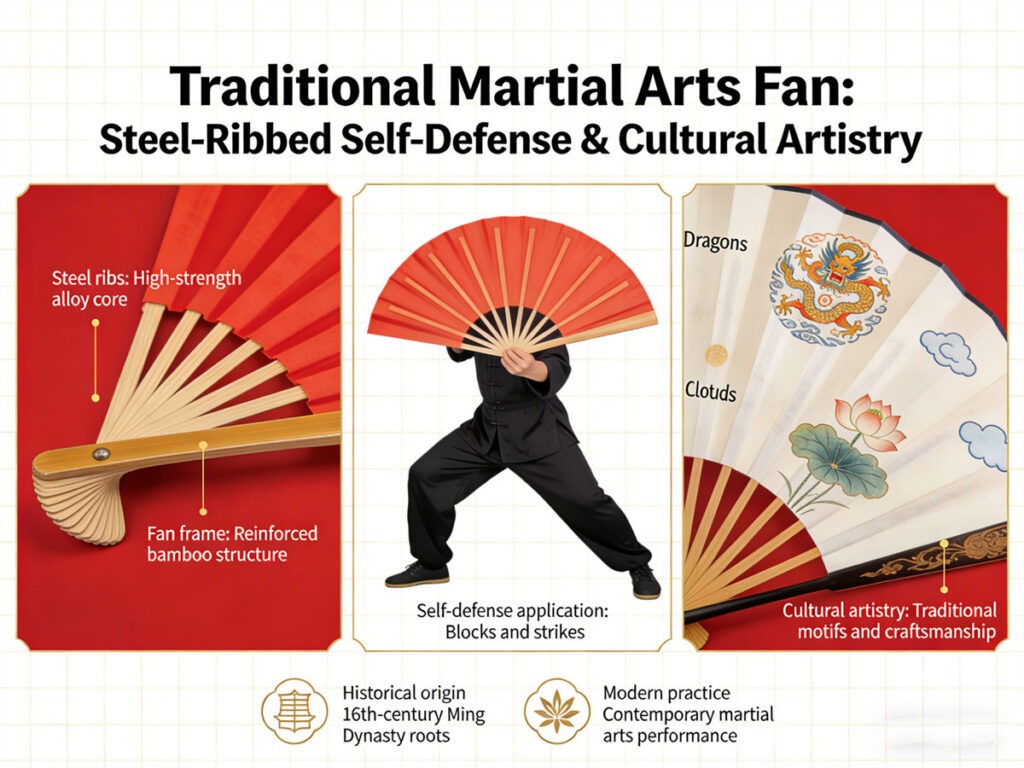
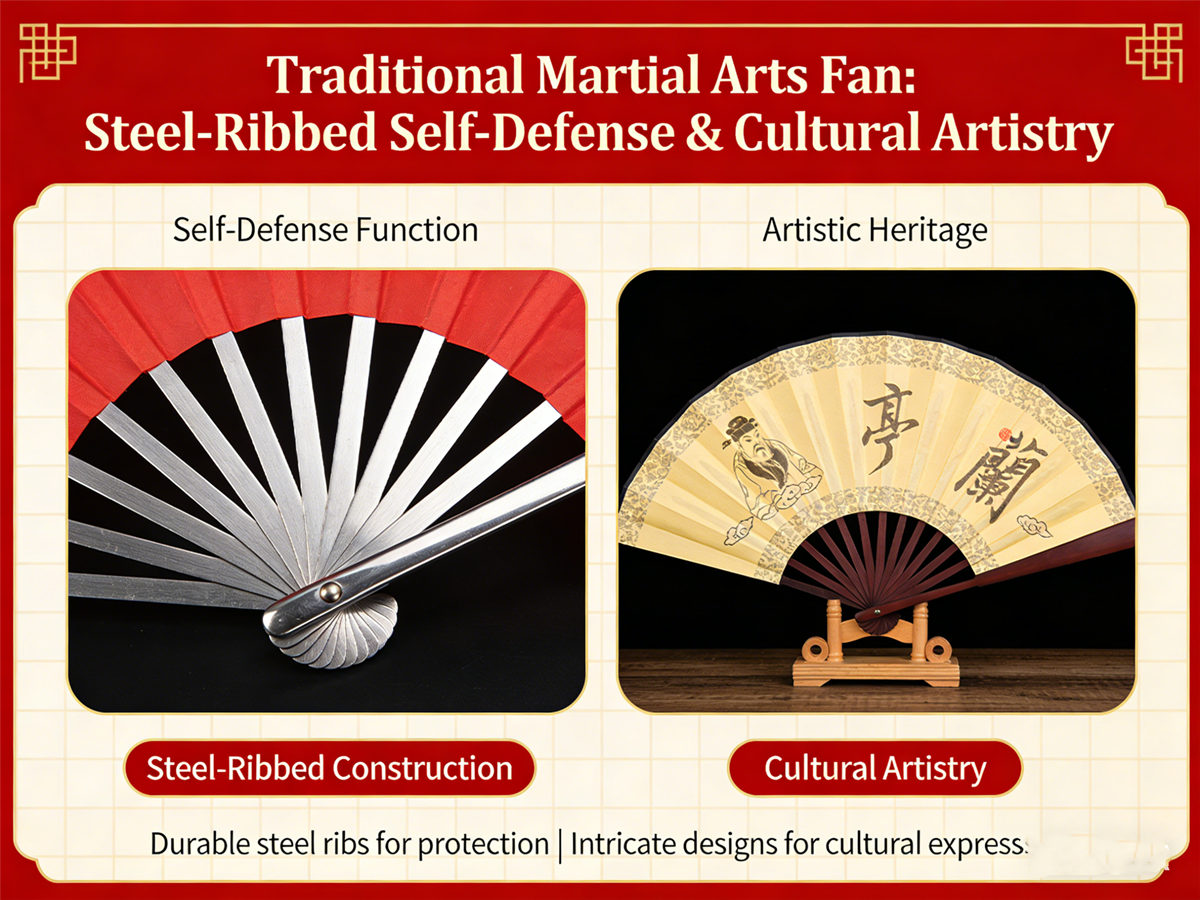
Unlike decorative folding fans made solely from bamboo and paper, a steel-ribbed martial arts fan incorporates metal reinforcement within its internal frame. The ribs, often crafted from steel or durable alloys, provide structural strength and resilience while maintaining a relatively lightweight profile. This internal reinforcement transforms a seemingly delicate object into a robust instrument capable of withstanding significant stress.
The outer surface may still feature silk, fabric, or artistic prints, preserving aesthetic appeal. However, beneath that artistry lies calculated engineering. The metal ribs allow the fan to maintain rigidity when opened and stability when closed, enabling controlled movements during defensive techniques.
Balance and Weight Distribution
Proper weight distribution is crucial. A well-designed martial arts fan balances durability with maneuverability. If the fan is too heavy, it becomes cumbersome and impractical for fluid motion. If too light, it may lack the structural integrity necessary for controlled defensive application. Achieving this balance requires precision craftsmanship and thoughtful material selection.
3. Martial Application and Defensive Techniques
The defensive use of the martial arts fan is rooted in traditional training systems that emphasize discipline, control, and adaptability.
Open and Closed Positions
When opened, the fan can be used to redirect force, obscure vision, or create momentary distraction. The broad surface area offers leverage for deflection techniques, allowing practitioners to redirect incoming movement rather than meet force with force.
When closed, the reinforced spine functions as a compact baton-like instrument. In this configuration, it can be used for controlled striking, joint manipulation, or blocking techniques. The transition between open and closed positions highlights the versatility of the tool.
Distance and Precision
Unlike larger defensive implements, the martial arts fan requires close-range engagement and precise technique. Its effectiveness relies on timing, positioning, and trained coordination rather than brute strength. Practitioners typically learn through structured martial arts disciplines, where emphasis is placed on restraint and proportional response.
It is important to recognize that proper instruction and ethical understanding are central to safe practice. Without training, misuse can lead to unintended injury.
4. Cultural Symbolism and Artistic Expression
Beyond its practical applications, the martial arts fan carries profound cultural meaning.
Symbol of Status and Refinement
Historically, fans were symbols of education, refinement, and social standing. Scholars, nobles, and military leaders often carried ornate fans as part of their attire. The integration of steel reinforcement into certain designs did not diminish this symbolism; instead, it demonstrated the harmony between intellect and preparedness.
Artistic Craftsmanship
Modern steel-ribbed fans often feature intricate calligraphy, painted landscapes, or symbolic motifs. These artistic elements transform the fan into a canvas that reflects cultural heritage and aesthetic philosophy. The craftsmanship required to combine metal reinforcement with delicate artistic surfaces showcases the balance between strength and beauty.
Collectors and martial artists alike appreciate this dual nature, recognizing that the value of the fan extends beyond its mechanical structure.
5. Modern Interest: Training, Collection, and Responsible Use
In contemporary times, the martial arts fan appeals to a diverse audience, including traditional martial artists, cultural historians, and enthusiasts of unique defensive tools.
Training and Discipline
Those who incorporate the fan into martial practice typically do so within structured systems that emphasize discipline and ethical conduct. Training focuses on fluid motion, controlled application, and situational awareness. The goal is not aggression, but refinement and preparedness.
Collector Appeal
Many individuals are drawn to steel-ribbed fans for their craftsmanship and historical resonance. Display pieces often highlight decorative elements and high-quality materials, making them suitable for cultural appreciation rather than practical use.
As with any object that can function defensively, legal awareness remains essential. Regulations regarding reinforced or weaponized items vary by jurisdiction, and responsible ownership requires thorough research.
6. Choosing Quality and Understanding Responsibility
Selecting a high-quality martial arts fan involves evaluating both craftsmanship and intent. Look for solid metal reinforcement, smooth opening mechanisms, and balanced weight. Inferior construction can compromise durability and safety, particularly if the fan is used for training.
Equally important is understanding the legal and ethical implications of ownership. While a martial arts fan may appear decorative, steel reinforcement can influence its classification under certain laws. Researching local regulations is a necessary step before purchase.
Some individuals exploring traditional or compact defensive tools may also encounter items such as a brass knuckle, which are often subject to stricter legal limitations. Online platforms like brassknucklesmater.com may provide product information for various self-defense items, but buyers must independently verify compliance with regional laws and exercise responsible judgment.
The traditional martial arts fan remains a compelling symbol of balance—strength concealed within elegance, discipline woven into artistry. Its evolution from cultural accessory to reinforced defensive tool reflects centuries of innovation shaped by social constraints and creative adaptation. For those who approach it with respect, knowledge, and responsibility, it stands as both a testament to heritage and a reminder that true mastery lies not in force alone, but in controlled and thoughtful application.