
Mar
Knowledge of Weapons, Weapons How
How to Choose the Right Brass Knuckles: Material, Fit, and Function for Beginners
1. Understanding What Brass Knuckles Are and Why Choice Matters
For beginners exploring the topic of brass knuckles, the first and most important step is understanding what they are and why careful selection is essential. Brass knuckles are metal devices designed to fit over the fingers, reinforcing the knuckles and redistributing force during impact. While their structure may appear simple, differences in material, craftsmanship, size, and ergonomics can significantly affect comfort, durability, and overall practicality.
Choosing the right brass knuckles is not simply about appearance or weight. It involves evaluating how the piece fits your hand, how it is constructed, and whether it complies with local regulations. Many first-time buyers focus solely on design or price, overlooking functional details that directly influence safety and usability.
Before making any purchase decision, it is critical to research the legal status of brass knuckles in your jurisdiction. Laws vary widely, and responsible ownership begins with compliance. With that foundation in place, beginners can move forward with a clearer understanding of what factors truly matter.
2. Material Matters: Comparing Common Metal Options
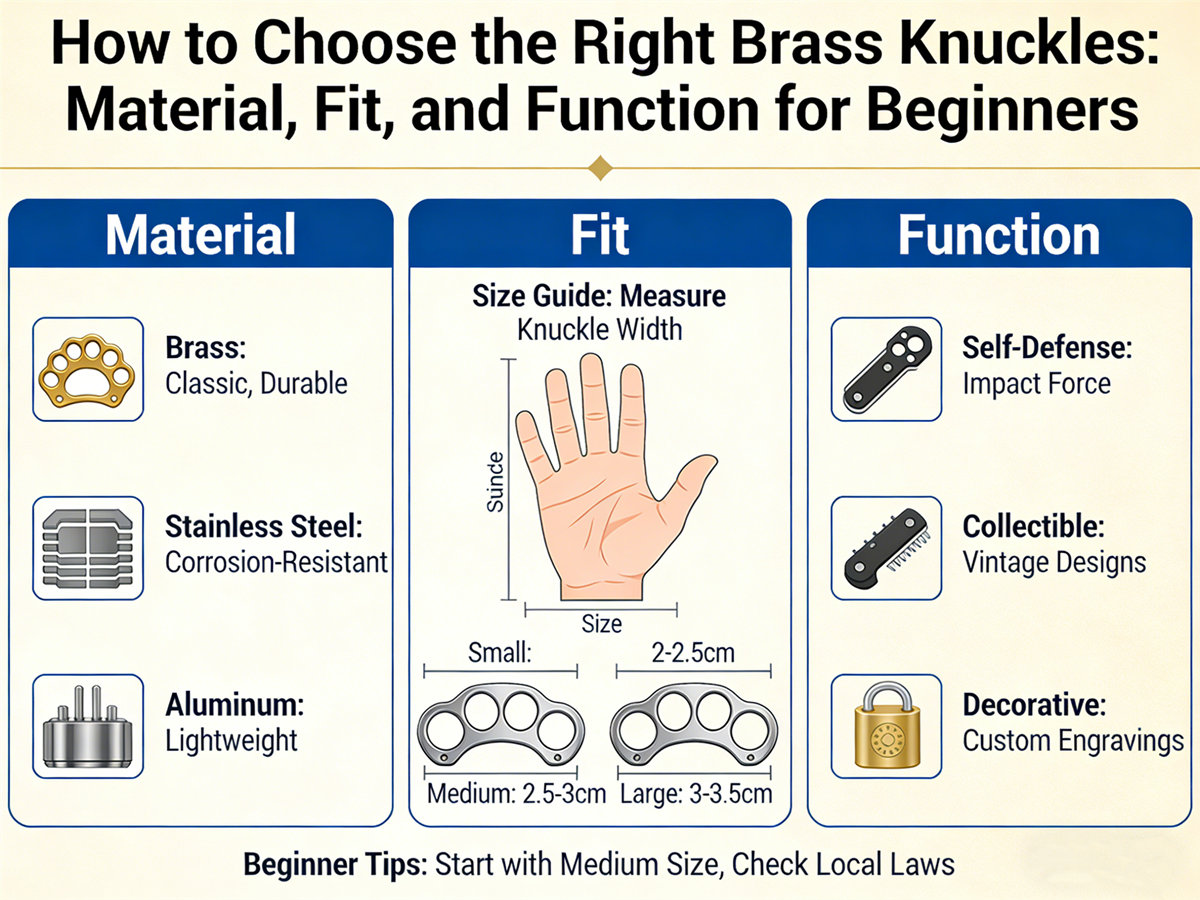
The material used in manufacturing brass knuckles directly impacts their weight, durability, corrosion resistance, and feel in hand.
Traditional Brass
Brass remains one of the most recognizable and widely used materials. It offers solid durability, natural corrosion resistance, and a distinctive gold-toned appearance. Brass is relatively dense, providing a balanced weight that many users find substantial without being overly heavy.
Steel and Stainless Steel
Steel variants are typically heavier and extremely strong. Stainless steel offers enhanced corrosion resistance compared to carbon steel, making it more suitable for long-term storage in humid environments. However, the additional weight may not feel comfortable for every user, particularly beginners unfamiliar with carrying heavier objects.
Aluminum and Alloy Blends
Aluminum options are lighter and often more affordable. While they may not provide the same mass as brass or steel, they can still offer durability depending on manufacturing quality. Alloy blends vary widely, so attention to craftsmanship and finishing is essential.
Material choice ultimately depends on personal preference, intended use, and comfort level, but quality machining and solid construction should never be compromised.
3. Fit and Ergonomics: Why Proper Sizing Is Critical
One of the most overlooked aspects of selecting brass knuckles is proper fit. A poorly sized piece can cause discomfort, instability, or even injury.
Finger Hole Dimensions
Finger holes must accommodate your fingers without excessive tightness or looseness. If the holes are too small, circulation may be restricted, causing discomfort. If too large, the knuckles may shift during movement, reducing control and increasing risk.
Palm and Grip Alignment
The rear bar should sit flush against the palm, distributing force evenly across the hand. Misalignment can create pressure points or cause slippage. A well-fitted piece feels stable and secure without requiring excessive grip strength.
Trying to approximate fit based solely on product images can be misleading. Detailed measurements and clear sizing specifications are essential, especially for beginners purchasing online.
4. Design and Functional Features to Consider
While basic models share a similar structure, brass knuckles may include design variations that affect usability and comfort.
Rounded vs. Angular Edges
Rounded edges typically provide a smoother feel and reduce discomfort against the palm. Angular designs may appear more aggressive but can create pressure points if not ergonomically shaped.
Weight Distribution
Balanced weight distribution ensures that the knuckles feel stable rather than front-heavy. Excessive forward weight can strain the wrist during extended handling.
Finish and Surface Treatment
Polished finishes enhance visual appeal but may become slippery if hands are sweaty. Matte or textured finishes often provide better grip. Protective coatings can also improve resistance to tarnish and corrosion.
These functional details, though subtle, can significantly influence overall satisfaction and long-term durability.
5. Legal Awareness and Responsible Ownership
Before purchasing brass knuckles, beginners must thoroughly research local laws and regulations. In many jurisdictions, possession is restricted or prohibited. In others, ownership may be permitted but carrying them in public could be illegal.
Ignorance of the law does not exempt individuals from consequences. Responsible ownership includes verifying current statutes, understanding use-of-force regulations, and recognizing the legal implications of carrying or deploying any impact device.
Legal considerations should always outweigh aesthetic preference or curiosity. Informed compliance ensures both personal protection and public safety.
6. Practical Considerations for Beginners
For first-time buyers, simplicity is often the best approach. Highly decorative or complex designs may look appealing but can compromise comfort or functionality.
Beginners should prioritize:
- Solid, one-piece construction
- Smooth, ergonomic shaping
- Accurate sizing information
- Clear material specifications
- Reputable manufacturing standards
Avoid impulsive purchases driven by dramatic styling or unrealistic expectations. Brass knuckles are not magical solutions to personal safety concerns. They are tools whose practicality depends on context, legality, and responsible handling.
7. Researching Sellers and Making an Informed Purchase
When evaluating brass knuckles, the reputation of the seller matters as much as the product itself. Look for clear product descriptions, transparent material information, and accurate measurements. Quality sellers provide detailed specifications rather than vague marketing claims.
For those researching a brass knuckle online, platforms such as brassknucklesmater.com may offer product listings and design variations. However, verifying local laws and ensuring responsible compliance remains the buyer’s responsibility before completing any purchase.
Choosing the right brass knuckles involves more than selecting a visually appealing piece. Material quality, ergonomic fit, functional design, and legal awareness all play essential roles. By approaching the process thoughtfully and prioritizing safety and compliance, beginners can make informed decisions grounded in knowledge rather than assumption.