
Sep
Knowledge of Weapons, Weapons What
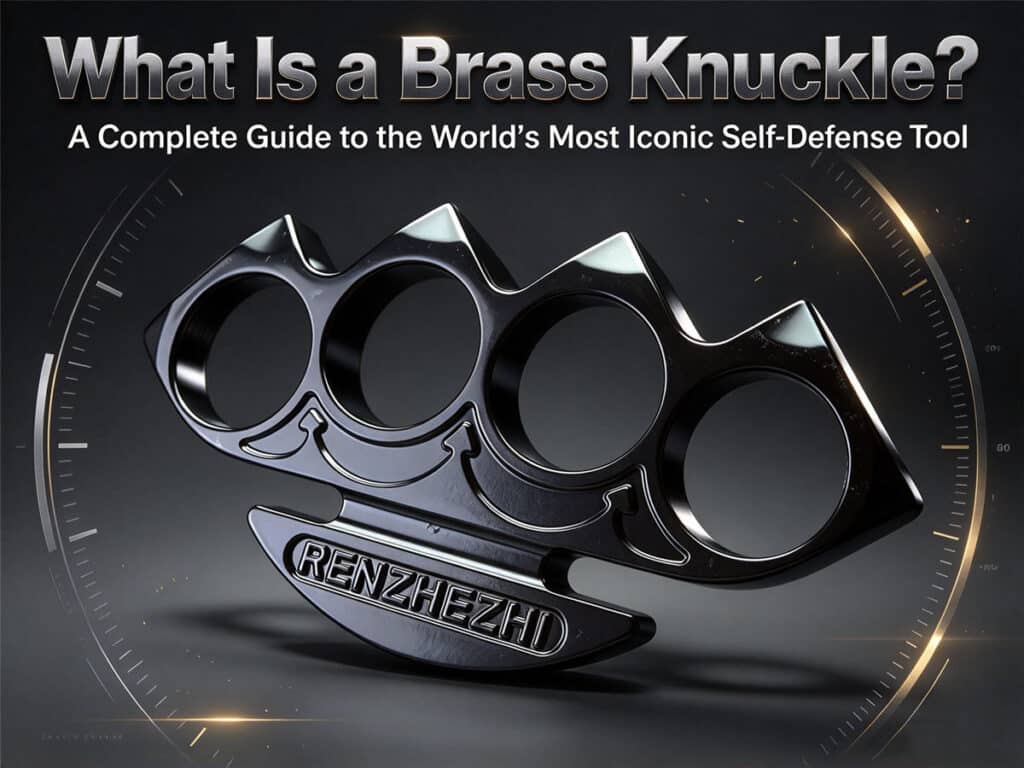
What Is a Brass Knuckle? A Complete Guide to the World’s Most Iconic Self-Defense Tool
There’s a reason brass knuckles have outlasted nearly every other hand-held self-defense tool in history. Swords evolved. Shields disappeared. Blackjacks faded into obscurity. But that compact, unmistakable frame with its finger holes and solid striking bar — it endures. It has endured for centuries, across continents, through wars and cultural upheavals, and it continues to find new audiences today among EDC collectors, self-defense advocates, and anyone who appreciates a tool that does exactly what it promises without apology.
If you’ve ever held one, you understand the appeal immediately. It feels purposeful. Solid. Ready. And if you haven’t — if you’re still in the research phase, trying to figure out what a brass knuckle actually is before deciding whether it belongs in your collection or your carry rotation — you’re in the right place. At Brass Knuckles Master, we’ve spent years working with these designs up close, and we wrote this guide to give you the kind of clear, honest understanding that product pages alone can’t provide.
What Exactly Is a Brass Knuckle?
Strip away the mythology, the movie scenes, and the legal debates, and a brass knuckle is mechanically simple. It’s a fitted frame — traditionally made from brass, though modern versions use steel, aluminum, titanium, and even polymer — designed to be worn across the knuckles of a closed fist. Finger holes keep it locked in place. A rigid striking surface sits on top. And when you throw a punch wearing one, the force that would normally spread across your soft knuckle tissue instead concentrates into that single, unyielding contact point.
That’s the core idea, and it hasn’t changed in centuries.
You’ll hear people call it different things — knuckle duster, knucks, iron fist, paperweight (that last one is a wink and a nod, if you know what we mean). But they’re all describing the same fundamental concept: a device that multiplies the effectiveness of a punch through rigid material and smart geometry.
Why the Design Works So Well
The physics are straightforward. A bare-knuckle punch delivers force across roughly two to three square inches of compressible skin and muscle. That energy disperses on impact — your hand absorbs a significant portion of it, which is why bare-knuckle fighters break their own fingers almost as often as they damage their opponents.
A brass knuckle changes that equation entirely. The rigid metal bar doesn’t compress. Instead, it focuses your punching force into a much smaller, much harder contact area, directing virtually all of that energy into the target while the frame itself absorbs the shock and distributes it across your palm. You hit harder. Your hand stays intact. It’s an elegant solution to a brutal problem, and it’s one of the main reasons this design has survived essentially unchanged for so long.
A Brief History That Explains Why This Tool Still Matters
Understanding what a brass knuckle is means understanding where it came from, because the history reveals something important about its staying power.
From Roman Gladiators to Civil War Soldiers
The earliest ancestor of the modern knuckle duster dates back to ancient Rome, where gladiators strapped metal-studded leather wraps called caestus around their fists for arena combat. These were crude, ugly things — more leather and brute force than precision engineering — but they proved the concept. Reinforce the fist with rigid material, and you have a weapon.
By the 18th and 19th centuries, blacksmiths had refined the idea into something closer to what we recognize today. The classic four-hole frame took shape during this period, and soldiers in the American Civil War carried hand-forged versions alongside their rifles. When trench warfare made close-quarters combat a daily reality in both World Wars, the knuckle duster was integrated into military trench knives — hybrid tools that gave soldiers a blade for utility and a reinforced fist guard for the moments when fighting got personal.
How It Crossed Into Civilian Life
After the wars, veterans brought these tools home. Manufacturers noticed the demand. Civilian versions appeared, marketed squarely at self-defense. And somewhere along the way, the brass knuckle crossed a cultural threshold — it stopped being purely a weapon and became something more layered. A collector’s piece. A fashion statement. A symbol of uncompromising toughness that showed up in movies, in street culture, in jewelry design, and in the pockets of people who simply wanted to feel a little more prepared when they walked out the door.
That cultural versatility is rare for any tool, and it’s a big part of why interest in brass knuckles continues to grow in 2026.
The Different Types — And Why Your Choice Matters More Than You’d Think
One of the most common misconceptions about brass knuckles is that they’re all basically the same. They’re not. The number of finger holes, the overall size, and the intended carry style each create a meaningfully different experience in your hand.
Four-Finger: The Classic
This is the design most people picture — a full-width frame with four connected finger holes and a broad striking surface that spans your entire fist. Maximum contact area. Maximum stability. Maximum impact. If you’re looking for the purest expression of what a brass knuckle can do, this is it. BKM’s Four-Finger Brass Knuckle collection includes everything from polished brass to 24K gold-plated finishes, each one precision-fit for a secure, confident grip.
Two-Finger: The Balanced Carry
Two-finger designs trim the bulk while keeping the essential functionality. They’re lighter, pocket-friendlier, and still deliver a clear force advantage over a bare fist. For anyone who wants serious capability without the full-frame profile, the two-finger layout hits a sweet spot between portability and performance.
One-Finger: The Discreet Option
A single finger hole. A small, focused striking surface. Often designed to double as a ring or pendant when not in use. One-finger brass knuckles won’t match the raw power of a four-finger frame, but they offer something the bigger designs can’t — near-invisible carry. BKM’s One-Finger Brass Knuckle selection is built for people who value discretion above all else.
Knuckle Ring: Where Defense Meets Design
This is where things get interesting. A brass knuckle ring looks like an ordinary piece of jewelry until you need it to be something more. It’s the ultimate crossover — part accessory, part backup tool, entirely conversation-starting.
Materials That Define Character
The material your brass knuckle is made from doesn’t just affect how it looks. It changes how it feels in your grip, how it carries in your pocket, and how it performs under real-world conditions.
Solid brass is the classic choice — heavy, warm to the touch, and capable of developing a rich patina over time that makes each piece uniquely yours. There’s a tactile satisfaction to holding a solid brass knuckle that lighter materials simply can’t replicate. For collectors and purists, nothing else quite compares.
Stainless steel offers a different kind of appeal. It’s clean, corrosion-resistant, and almost entirely maintenance-free. Brushed or polished, it has a cool industrial confidence that suits daily carry. If you want a brass knuckle you can pocket every day without thinking about tarnish or upkeep, stainless steel is the practical answer.
Aviation-grade aluminum trades some heft for portability. At roughly a third the weight of brass or steel, aluminum designs practically disappear in your pocket — which is exactly the point for people who carry all day and want to forget it’s there until they need it.
And then there’s titanium, the premium option that combines steel-level strength with aluminum-level weight. It resists corrosion, handles extreme conditions, and carries a feel that justifies its higher price tag. For those who want the best strength-to-weight ratio available, titanium is the material that delivers.
If you want to go deeper on how these materials compare in real-world use, our guide to Brass Knuckle Materials breaks it all down.
The Legal Landscape You Need to Understand
We’d be doing you a disservice if we didn’t address this directly. Brass knuckles exist in a complicated legal space, and ignoring that reality doesn’t make it go away.
In the United States, there’s no single federal law. Each state draws its own lines. Texas has moved to legalize them in recent years. California and New York still classify them as prohibited weapons. Internationally, many countries — the UK, Canada, Australia — ban them outright. Even within a single state, the distinction between owning, carrying, and using a brass knuckle can matter legally, and some jurisdictions allow possession for display or collection while prohibiting public carry.
At BKM, we always tell our customers the same thing: check your local laws before you buy. We’ve published a comprehensive state-by-state and global overview to help you know exactly where you stand. Understanding the law isn’t just responsible — it’s essential.
What Sets BKM Apart in a Crowded Market
Plenty of places sell metal frames with holes in them. What we do differently at Brass Knuckles Master comes down to engineering, intention, and the belief that a tool this simple deserves to be built with real care.
Every BKM brass knuckle is designed around the human hand — not just in terms of finger spacing and grip comfort, but in how weight distributes across the frame, how the striking surface angles on impact, and how the whole piece feels after an hour in your pocket versus five seconds in your fist. We test for impact resistance. We test for grip security under stress. We test for long-term durability in the kind of conditions that separate shelf pieces from real carry tools.
Our collection spans the full range, from bold statement pieces like the Gold Cross Brass Knuckle 24K Plated to understated, every-day-carry designs in brushed stainless steel. Whether you’re buying your first brass knuckle or adding to a collection you’ve been building for years, we build gear that earns its place.
A brass knuckle is more than a shaped piece of metal. It’s a design that has survived centuries of warfare, weathered every cultural shift thrown at it, navigated a maze of legal restrictions, and come out the other side still relevant — still effective — and still one of the most direct, honest self-defense concepts ever conceived. There are no batteries to die, no mechanisms to fail, no learning curve that falls apart under stress. Just a solid frame, a firm grip, and the confidence that comes from carrying a tool that does exactly what it’s supposed to do.
At Brass Knuckles Master, we don’t try to reinvent that concept. We refine it. Better materials. Tighter tolerances. Designs that respect both the history and the modern hand. Whether you’re drawn to a heavy, patina-rich piece for your collection or a lightweight titanium design for daily carry, the principle stays the same — find the brass knuckle that fits your hand, matches your lifestyle, and meets the legal requirements where you live. That’s what good brass knuckle self defense is really about: not the flashiest gear, but the right gear, chosen with care and carried with confidence. If you’re exploring brass knuckle types for the first time or comparing brass knuckle materials across brands, take your time, do it right, and when you’re ready, explore the full Brass Knuckle collection at BrassKnucklesMaster.com to see what decades of focused craftsmanship look like up close.