
Sep
Knowledge of Weapons, Weapons What
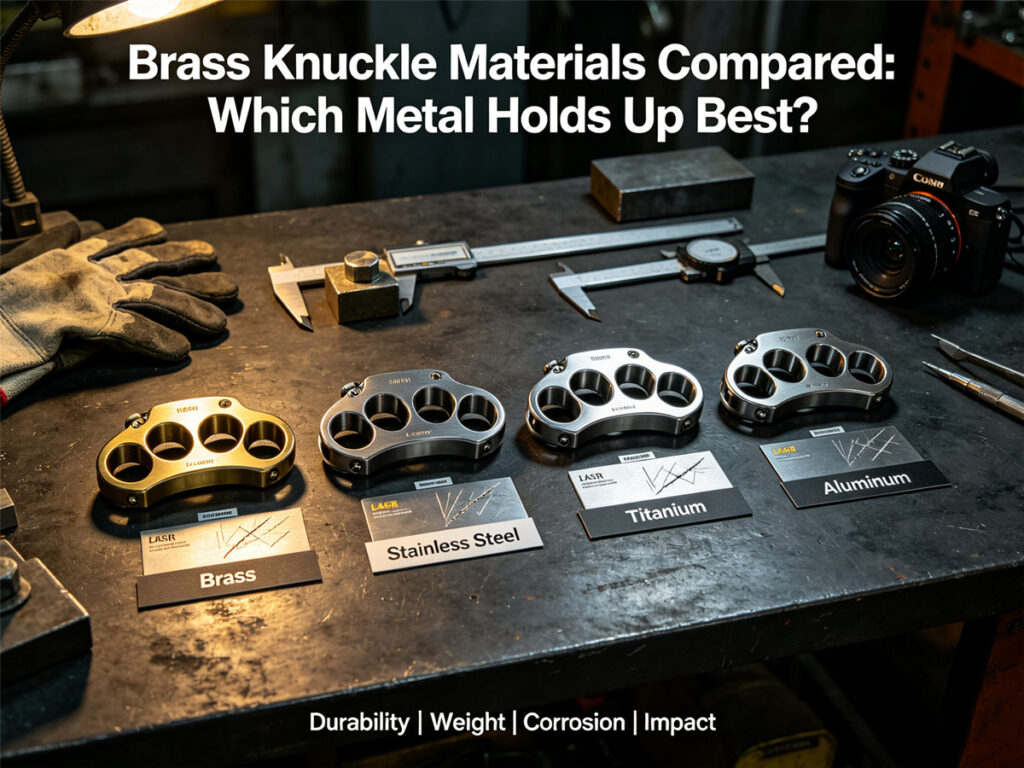
Brass Knuckle Materials Compared: Which Metal Holds Up Best?
Pick up two different brass knuckle designs and you’ll feel the difference before you even swing. One sits warm and solid in your grip. The other feels ice-cold and almost weightless. The reason is simple — the metal that shapes a knuckle duster changes everything about how it performs, how long it lasts, and how it feels in your hand on a bad day.
At Brass Knuckles Master, we’ve spent years working with every material worth considering. We’ve tested alloys in the shop, carried them in the field, and listened to thousands of customers tell us what worked and what didn’t. This guide breaks down the metals that matter — brass, steel, aluminum, zinc alloy, titanium, and carbon steel — so you can match your choice to your lifestyle instead of guessing.
Why Material Matters More Than Shape
A sleek profile means nothing if the metal bends on impact. A lightweight design fails you if it cracks after a month of carry. The material defines the brass knuckle in ways that shape alone never can. It determines weight, durability, corrosion resistance, and how the piece ages over years of ownership.
Think of it like choosing a knife blade. Two knives can look identical, but one holds an edge for weeks and the other dulls after a single session. Metals behave the same way. The alloy behind a knuckle duster decides whether you’re holding a tool built for decades or one that looks good on day one and disappoints by day thirty.
What This Comparison Covers
We’re comparing six materials head to head. Each section covers how the metal feels in hand, how it handles repeated stress, what kind of maintenance it demands, and who it suits best. No charts. No spec-sheet regurgitation. Just the real differences that matter when you’re picking a piece you plan to rely on.
Brass — The Classic That Earned Its Reputation
When most people picture a knuckle duster, they see brass. There’s a reason for that. Brass has been the go-to material for self-defense tools for over a century, and it didn’t earn that status by accident. It’s a copper-zinc alloy that balances strength, weight, and workability in a way few other metals can match.
A solid brass piece carries a satisfying heft — heavy enough to feel serious, light enough to carry without fatigue. The warmth is what surprises people. Where steel feels clinical and cold, brass absorbs your body heat within seconds of gripping it. That subtle detail makes a real difference during extended carry.
The Patina Factor
Over time, raw brass develops a natural patina — a darkened, antiqued surface that collectors genuinely love. Each piece ages differently based on how you handle it, where you carry it, and how often you use it. Some owners polish their brass weekly to keep it bright. Others let the patina build because it adds character. At BKM, we appreciate both approaches. The patina doesn’t weaken the metal. It’s purely cosmetic, and it tells the story of the piece.
Brass Maintenance
Brass requires moderate care. A soft cloth and occasional brass polish keep it looking sharp. If you prefer the aged look, simply wiping it down after handling is enough. Brass resists corrosion reasonably well in dry climates, though humidity accelerates the patina process. It won’t rust like carbon steel, but it will tarnish — and that’s part of its charm.
Steel — Maximum Hardness for Maximum Impact
Stainless steel brings raw, uncompromising strength to the table. If brass is the gentleman’s choice, steel is the workhorse. It’s the hardest common material used in brass knuckle manufacturing, which means it transfers more force on impact and resists deformation better than anything else in its price range.
Steel pieces are noticeably heavier than brass or aluminum. That extra weight isn’t a flaw — it’s a feature for people who want maximum momentum behind every strike. The mass does the talking. Stainless steel also shrugs off moisture and sweat, which means you can carry it in any climate without worrying about corrosion. If you want the kind of knuckle duster that feels like an extension of your fist rather than something you’re holding, steel delivers that experience.
Brass vs Steel Knuckles — The Real Trade-Off
The brass vs steel knuckles debate comes down to preference and purpose. Steel outperforms brass in hardness and corrosion resistance. It won’t tarnish or develop patina. It stays looking new with almost zero effort. But it’s colder to the touch, heavier in the pocket, and some people find it less comfortable during prolonged carry.
Brass wins on feel and aesthetics. Steel wins on durability and low maintenance. Neither is objectively better — they serve different priorities. At Brass Knuckles Master, we carry both because our customers are split on what matters more, and both arguments have merit.
Aluminum — Light Enough to Forget You’re Carrying It
Aluminum is the lightweight champion. If your primary concern is portability — something that rides in your pocket or bag without dragging your pants down — aluminum is worth a serious look. It cuts the weight of a comparable brass piece nearly in half, which changes the carry experience entirely.
The trade-off is hardness. Aluminum is softer than brass, steel, or titanium. It can scratch and dent more easily, and it doesn’t transfer impact force with the same authority as heavier metals. For everyday carry and personal security, it’s more than capable. For someone who prioritizes durability above all else, it might feel like a compromise.
Modern Aesthetics
Aluminum takes anodized finishes beautifully. Where brass leans traditional and steel leans tactical, aluminum pieces often come in matte black, gunmetal grey, or even colored finishes that look distinctly modern. If the classic golden knuckle duster look isn’t your style, aluminum gives you options that other materials simply don’t offer as naturally.
Zinc Alloy — The Smart Middle Ground
Zinc alloy is the unsung hero of the brass knuckle world. It’s affordable, easy to cast into complex shapes, and lands right in the middle on weight — not as heavy as steel, not as light as aluminum. For manufacturers, zinc alloy’s low melting point and excellent fluidity mean intricate designs come out clean and detailed. For buyers, that translates into more options at friendlier price points.
A zinc alloy brass knuckle often looks nearly identical to a solid brass piece at first glance. The difference reveals itself over time. Zinc alloy is softer than brass and more prone to surface wear. It can chip or crack under extreme stress where brass would simply dent. But for everyday carry and personal security use, it holds up well and keeps more money in your pocket.
Who Should Choose Zinc Alloy
If you’re buying your first knuckle duster and want to explore different styles before committing to a premium material, zinc alloy is a smart entry point. It lets you test grip comfort, finger spacing, and weight distribution without a significant investment. Many of our customers at BKM start with zinc alloy and later upgrade to brass or steel once they know what they prefer.
Titanium — The Premium Performer
Titanium sits at the top of the material hierarchy. It offers the best strength-to-weight ratio of any metal on this list — stronger than aluminum, lighter than steel, and nearly impervious to corrosion. If you could engineer the perfect brass knuckle material from scratch, you’d end up describing titanium.
The catch is cost. Titanium is significantly more expensive than brass, steel, or any other option here. It’s harder to machine, which adds to manufacturing costs, and that price passes through to the buyer. Titanium knuckles are a premium product for people who want the absolute best performance regardless of budget.
Why Titanium Feels Different
Titanium has a unique tactile quality. It’s warmer than steel but cooler than brass, landing in a comfortable middle ground. It’s also hypoallergenic, which matters for people with metal sensitivities. The surface develops a subtle oxide layer that protects against scratches and corrosion simultaneously. For many enthusiasts, once they handle titanium, every other material feels like a compromise.
Carbon Steel — Old-School Toughness With a Catch
Carbon steel deserves mention because it’s one of the hardest materials available for self-defense tools. It takes and holds sharp edges well, resists bending, and delivers exceptional impact force. Traditional combat knuckle duster designs were often forged from carbon steel for exactly these reasons.
The problem is rust. Carbon steel has virtually no corrosion resistance on its own. Without a protective coating or regular oiling, it will oxidize quickly — especially in humid environments or after contact with sweat. That oxidation isn’t the attractive patina that brass develops. It’s actual rust that eats into the metal and weakens it over time.
Keeping Carbon Steel in Shape
If you choose carbon steel, maintenance isn’t optional — it’s essential. A thin coat of oil after every use, proper storage in a dry environment, and periodic inspection for rust spots will keep it performing for years. Some carbon steel pieces come with protective coatings like cerakote or bluing, which dramatically reduce rust risk. At BKM, we recommend carbon steel only for owners who are willing to commit to that upkeep routine.
How to Match Material to Your Life
The right brass knuckle material depends on how you plan to carry and use your piece. There’s no universal answer, but there are clear patterns that make the decision easier.
If you value tradition and a warm, lived-in feel, brass is your metal. It’s the material that made the knuckle duster famous, and it ages like a good leather jacket. If you want the hardest, most resilient option at a reasonable price, stainless steel won’t let you down. For those who prioritize portability above everything else, aluminum disappears in your pocket. Zinc alloy is the practical choice for buyers who want variety without overspending. Carbon steel appeals to purists who don’t mind the extra care. And titanium? It’s for the person who wants the best and doesn’t flinch at the price tag.
At Brass Knuckles Master, we design and stock pieces across every material listed here because we believe the best knuckle duster is the one that fits your hand, your routine, and your standards. Browse our full brass knuckle collection to find the piece that matches how you carry. If you want a deeper dive into choosing the right alloy, our material breakdown guide walks through the decision in even more detail.
The metal you choose says something about what you expect from your gear. Pick the one that earns your trust — because on the day you actually need it, nothing else matters.