
Oct
History of Weapons, Weapons How
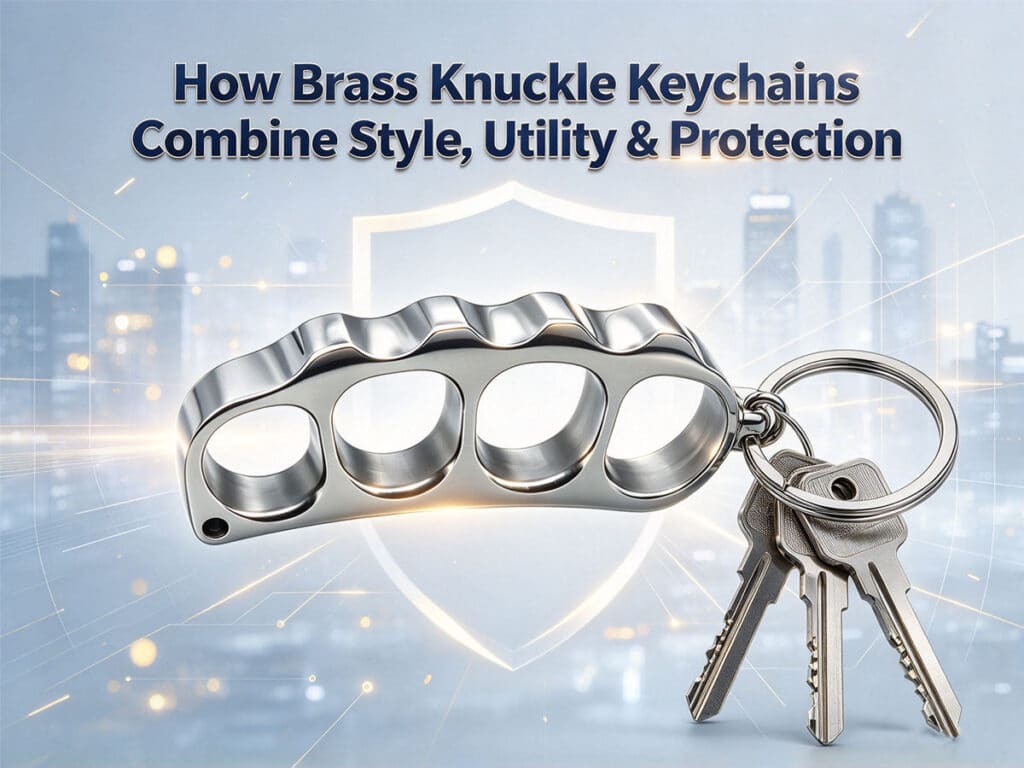
How Brass Knuckle Keychains Combine Style, Utility & Protection
Why Brass Knuckle Keychains Have Become a Distinctive Everyday Carry Accessory
There is something appealing about an accessory that does more than simply look good, and that idea has helped brass knuckle keychains find a place within the broader everyday-carry market. Instead of being treated purely as decorative keyrings, these compact accessories combine a distinctive industrial appearance with practical portability, giving users a small item that can remain attached to their keys, bag, or everyday-carry setup without requiring an additional case or dedicated storage space. The attraction is not only about appearance; it is also about the feeling of preparedness that comes from carrying a compact, purpose-designed object that is always close at hand.
The modern keychain market has increasingly moved toward products that combine several functions into one compact form, particularly as people look for ways to reduce unnecessary bulk while keeping useful tools accessible. A well-designed keychain can therefore serve as a small everyday utility item while also expressing personal taste through its shape, finish, material, and overall construction. This is part of the reason that brass knuckle keychains appeal to people who appreciate bold accessories, industrial design, and practical everyday-carry products.
At the same time, products in this category should be viewed responsibly. Laws concerning knuckle-style objects, self-defense implements, and other potentially regulated items differ substantially between countries, states, and municipalities, so anyone considering carrying one should check the applicable local regulations before purchasing or carrying it. The practical value of an everyday-carry accessory ultimately depends not just on its design, but also on whether it can be carried legally and comfortably as part of a person’s normal routine.
Style: Where Industrial Design Meets Everyday Accessories
One of the strongest characteristics of brass knuckle-inspired keychains is their visual identity. Traditional keychains are often designed around simple shapes, logos, colors, or novelty figures, whereas a knuckle-inspired design has a more structured and recognizable silhouette that immediately communicates an industrial aesthetic. That makes the accessory particularly attractive to people who prefer motorcycle-inspired fashion, tactical aesthetics, alternative fashion, streetwear, or rugged metal accessories.
Material and Finish Create the Character
Material selection plays a major role in how an accessory looks and feels. Metal construction can provide a substantial sensation in the hand, while polished surfaces create a cleaner appearance and darker coatings can produce a more understated industrial character. Brushed, matte, polished, antique, and textured finishes can each change the personality of the same basic design, which means that users can choose an accessory according to their existing clothing, bags, watches, or other EDC equipment rather than treating it as an isolated object.
Good design also depends on details that are easy to overlook, including smooth edges, consistent surface finishing, secure keyring attachment points, and proportions that prevent the accessory from becoming unnecessarily bulky. These details matter because a keychain is something people interact with repeatedly throughout the day, and an attractive design loses much of its appeal if it constantly catches on fabric, weighs down a pocket, or interferes with the other keys attached to the ring.
Utility Makes a Keychain More Than a Decorative Object
The most convincing everyday-carry accessories are useful even when nothing unusual happens, because a product that provides ordinary utility has a much better chance of being carried consistently. This is an important principle behind the modern keychain multi-tool concept, where compact tools are designed to remain accessible for small everyday problems rather than being stored away until an emergency occurs.
Small Functions Can Solve Everyday Problems
Depending on the specific design, a compact keychain accessory may incorporate practical functions such as a bottle opener, screwdriver tip, attachment loop, carabiner, light, or emergency-oriented features. These functions do not necessarily need to be complicated; in fact, simplicity can be an advantage because the user can understand the purpose of each feature immediately without carrying a large multi-tool.
The key is to distinguish genuinely useful features from an exaggerated list of functions added primarily for marketing. A small tool that performs two or three functions reliably can be more useful in everyday life than a much larger accessory with ten poorly executed features. Size is also important because the whole philosophy of keychain equipment depends on portability. If an accessory becomes so heavy that it makes the keyring uncomfortable to carry, users may eventually remove it and leave it at home.
This philosophy is reflected in the broader EDC approach discussed in EDC keychain essentials, where compactness, accessibility, and practical utility are treated as important considerations when selecting everyday-carry equipment.
Protection Is About Preparedness, Not Just Appearance
The word “protection” is one of the reasons these accessories attract attention, but it is useful to approach the subject from the perspective of general preparedness rather than assuming that a particular object can guarantee personal safety. A keychain can provide a sense of readiness, but no small accessory substitutes for situational awareness, avoiding unnecessary confrontation, seeking assistance, or leaving an unsafe environment whenever possible.
For many users, the value of a safety-oriented keychain is psychological as much as physical: having a familiar object attached to the keys can make a person feel more prepared when walking to a vehicle, traveling, commuting, or navigating unfamiliar surroundings. That sense of preparation can encourage people to think ahead about practical safety habits, including keeping a phone charged, knowing emergency contacts, paying attention to surroundings, and understanding local emergency procedures.
Layered Preparedness Is More Useful Than a Single Object
A sensible everyday-carry approach treats any compact accessory as one component within a larger safety routine rather than as a solution to every possible situation. A flashlight can improve visibility, a personal alarm can attract attention, and an appropriate vehicle emergency tool can address problems that have nothing to do with interpersonal conflict. For drivers, for example, dedicated car safety tools can provide functions specifically intended for vehicle emergencies.
This broader perspective also helps explain why utility-focused accessories have become increasingly popular: they can contribute to preparedness without requiring the user to carry a large collection of specialized equipment. The goal is not to turn an ordinary keyring into a miniature tactical kit, but rather to select a few compact items that genuinely fit the person’s lifestyle and are easy to access when needed.
How Ergonomics and Portability Affect Everyday Use
Design becomes particularly important when an accessory is intended to remain attached to a keyring throughout the day. A product can look impressive in photographs but still be inconvenient if the edges are uncomfortable, the attachment point is weak, or its shape makes it difficult to separate from other keys. Everyday usability therefore begins with proportions, weight distribution, surface finishing, and the placement of the keyring opening.
The ideal compact accessory should integrate naturally with the things people already carry. It might sit beside a vehicle key, attach to a backpack zipper, clip onto an EDC pouch, or remain with a house-key ring, depending on the user’s routine. A secure attachment point is especially important because the accessory is likely to experience repeated movement, friction, and contact with other metal objects.
Portability also influences how often the item is actually used. A product that weighs very little and occupies minimal space can remain on a keyring for months without becoming an annoyance, whereas an oversized accessory may gradually become something that is removed whenever the user wants to travel lightly. In this sense, compact design is not merely an aesthetic feature; it directly affects whether the product becomes a genuine everyday-carry item.
Choosing Materials and Construction With a Practical Mindset
Materials determine much more than appearance. They influence weight, corrosion resistance, surface durability, comfort, and the overall service life of a keychain. Metal alloys are commonly attractive because they can provide a substantial feel in a relatively compact package, while other lightweight materials may be preferable for users who want to minimize the weight of their keyring.
Surface treatment is another consideration, particularly for people who carry their keys outdoors, travel frequently, or live in humid environments. A quality finish can help maintain the appearance of the accessory, while smooth and properly finished surfaces reduce the chance of unnecessary snagging or discomfort during normal handling. Manufacturing consistency matters as well, since poorly finished edges, weak attachment points, or inconsistent machining can turn an attractive design into an inconvenient everyday object.
Buyers interested in the technical side of compact tools can also explore resources covering tactical keychain accessories, particularly when comparing utility-oriented features such as emergency tools, cutters, screwdrivers, and other compact functions. However, specifications should always be evaluated in the context of the actual task the tool is designed for rather than assuming that a longer feature list automatically represents better quality.
Making a Brass Knuckle Keychain Part of a Personal Style
Perhaps the most interesting aspect of these accessories is the way they occupy the space between fashion and function. Unlike a conventional tool that is usually purchased only because it solves a particular mechanical problem, a keychain is visible and frequently handled, which gives its design a stronger personal dimension. The shape, finish, color, and material can become part of the owner’s everyday style in much the same way as a watch, wallet, belt buckle, or piece of jewelry.
A minimalist metal finish can complement a clean everyday wardrobe, while a darker industrial finish can work naturally with outdoor clothing, motorcycle gear, or streetwear. Some users may prefer a simple design that blends into their existing keys, while others may specifically want a distinctive accessory that becomes a recognizable part of their EDC setup. This flexibility is one reason compact metal accessories continue to attract collectors and everyday users alike.
Ultimately, the strongest appeal of a brass knuckle-inspired keychain comes from its ability to combine several ideas in one small object: style, utility, portability, durability, and preparedness. The most practical approach is to select a design that genuinely fits your daily routine, understand exactly what its features are intended to do, maintain it properly, and verify local laws before carrying it. When those considerations come together, a keychain can become much more than a place to attach keys—it can be a carefully chosen part of an individual’s everyday-carry system and personal style.