
Nov
Knowledge of Weapons, Weapons Why
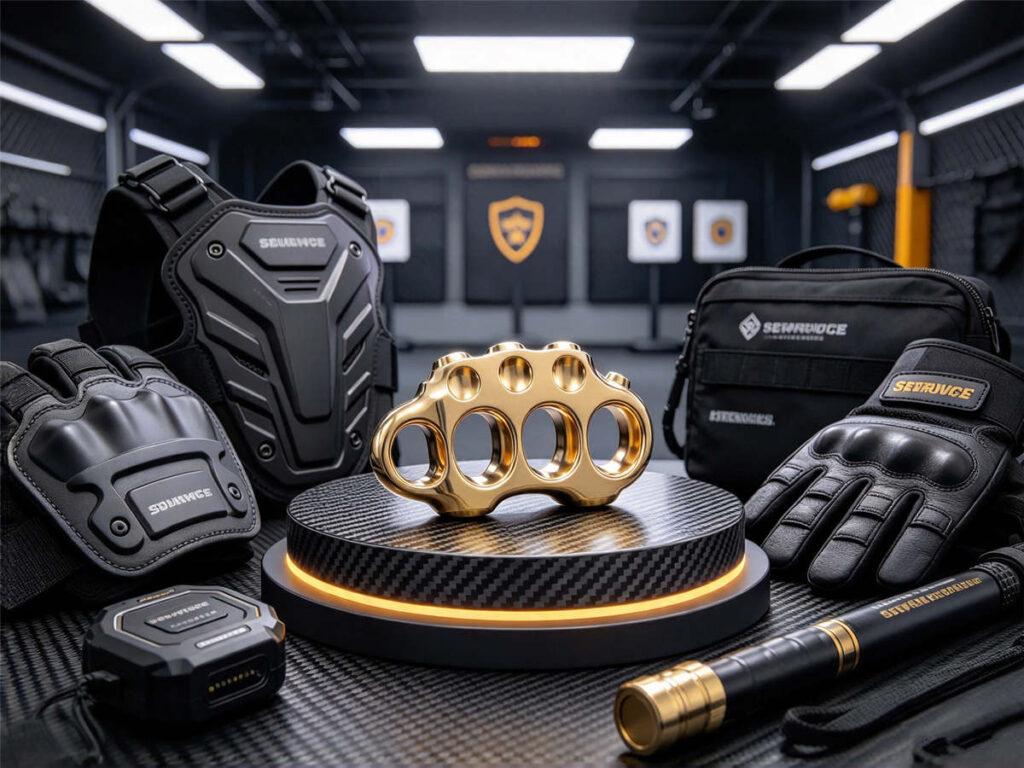
Why Tactical Brass Knuckles Are Still Popular for Self Defense
The Surprising Staying Power of a Centuries-Old Tool
Walk into any self-defense forum, scroll through the comments under a personal safety video, or check search trends for “selfdefence” tools, and you’ll notice something odd: in an era of smart alarms, GPS trackers, and personal safety apps, one of the most consistently searched items is a chunk of shaped metal that predates the automobile.
Tactical brass knuckles — sometimes spelled “brass kunckle” by searchers, and known in the UK as a “kunckle duster” or knuckle duster — refuse to fade away. They show up in movies, video games, and streetwear fashion. They sit in glove compartments and jacket pockets around the world. And every year, millions of people type some version of “brass knuckles for self defense” into a search engine, trying to figure out whether this old-school tool deserves a place in their everyday carry.
The short answer: it depends on you, your local laws, and how honestly you assess your own readiness. The long answer is what this article is for. We’ll look at why these tools remain popular, what they genuinely do well, where they fall short, the legal reality you need to understand before buying anything, and how to evaluate quality if you decide a pair is right for you.
No hype, no scare tactics — just a clear-eyed look at one of the most talked-about self-defense tools in history.
What Exactly Are Tactical Brass Knuckles?
A Quick History Lesson
The concept is older than you might think. Weighted hand weapons appear in historical records going back centuries — Roman caestus gloves used in gladiatorial contests were an early ancestor, and forged “knuckle dusters” circulated widely during the American Civil War era as trench and close-quarters weapons.
The modern design, though, is simple and instantly recognizable: a curved metal piece, usually cast from brass or another dense alloy, with four finger holes. When worn, the tool reinforces the hand, channels the force of a punch through a hard, concentrated surface, and protects the knuckles and fingers from the damage a bare-fisted strike would cause.
How They Actually Work
A lot of people misunderstand the physics. Tactical brass knuckles don’t magically make someone a fighter. What they do is change the mechanics of a strike in three ways:
- Force concentration. The same amount of kinetic energy delivered through a small, hard edge does far more tissue damage than a diffuse, padded fist.
- Hand protection. Bare-knuckle punching is notoriously dangerous for the puncher — broken metacarpals are so common in untrained fighters that doctors call it a “boxer’s fracture.” The rigid frame spreads impact load and keeps the hand intact.
- Grip and leverage. The solid body gives the hand something firm to clench, which can make palm strikes and controlled strikes more stable.
It’s worth saying plainly: this is an impact weapon. It amplifies whatever force the user delivers. That’s exactly why it’s effective — and exactly why it’s legally restricted in so many places, which we’ll get into shortly.
Why They’re Still Popular in 2026
With pepper spray, stun devices, and personal alarms widely available, why does a tool from the 1800s still dominate self-defense searches? A few reasons stand out.
1. Radical Simplicity
A tactical brass knuckle has no batteries to charge, no cartridge to expire, no trigger to fumble, and no moving parts to fail. In a high-stress moment — when fine motor skills degrade and adrenaline floods the system — simplicity is not a nice-to-have. It’s the whole point. Compare that to a pepper spray canister that needs its safety mechanism flipped, or a stun device that needs contact and a button press held for several seconds. The knuckle duster is already in your hand. There is nothing to deploy.
2. Psychological Confidence
Ask any self-defense instructor and they’ll tell you: the biggest variable in surviving a bad situation is mindset. People who carry a tool they trust walk differently, make eye contact, and project the kind of awareness that predators tend to avoid. Whether or not a brass knuckle is ever used, many owners describe a genuine confidence shift — similar to what others report from carrying pepper spray or a personal alarm. Confidence changes behavior, and changed behavior often prevents the confrontation entirely.
3. Affordability
A quality pair of tactical brass knuckles typically costs a fraction of what a stun device, a quality folding knife, or even a reliable pepper spray refill subscription costs. For students, night-shift workers, and anyone on a tight budget, that price point matters. There are no consumables, no replacements, and no maintenance costs over the life of the tool.
4. Discretion and Everyday Carry
Unlike a knife or a baton, a compact knuckle duster fits in a pocket, clips to a keychain (where legal), or slips into a bag’s organizer pocket without printing or drawing attention. Paperweights and belt-buckle-style designs even exist for collectors. For people who want something unobtrusive, discretion is a genuine part of the appeal.
5. Pop Culture Keeps the Flame Alive
From action movies to fighting games, the brass knuckle silhouette is burned into the popular imagination. That cultural presence fuels search volume — including the common misspellings “brass kunckle” and “kunckle duster” that bring tens of thousands of people to pages like this one every month. Pop culture doesn’t make a tool effective, but it does keep people curious enough to research it seriously.
The Honest Pros and Cons
Every self-defense tool is a trade-off. Here’s the unvarnished breakdown.
The Advantages
- No deployment steps. It works the moment it’s on your hand. Under adrenaline, that simplicity can be decisive.
- Durable for life. Solid brass or steel doesn’t expire, leak, corrode meaningfully, or break under normal use. Buy once, own for decades.
- Effective hand protection. For a trained striker, the tool meaningfully reduces self-injury risk during a strike.
- Compact and concealable. Pocket-sized, lightweight, and discreet in most carry configurations.
- Inexpensive. Low entry cost with zero ongoing expenses.
- Multi-purpose designs. Many modern “tactical” versions double as bottle openers, paperweights, or belt accessories — useful where open carry of a weapon is restricted and the item is sold as a novelty (though laws on intent can still apply).
The Disadvantages and Real Risks
- Requires proximity. This is the big one. A knuckle duster only works at arm’s length. Against a longer weapon, multiple attackers, or someone who keeps distance, it offers nothing. Pepper spray works from 6–10 feet; a knuckle duster works from zero feet.
- Escalates any confrontation. Striking someone with a metal impact weapon can cause serious, lasting injury — and courts treat that accordingly. What started as “defending yourself” can quickly become a felony charge if the force used exceeds what the situation legally justifies.
- Severely restricted or illegal in many places. In several U.S. states, the UK, Canada, Australia, and much of Europe, carrying brass knuckles is a criminal offense, even unloaded in a bag. This alone disqualifies the tool for many readers. (Details below.)
- Zero training = zero benefit. An untrained user swinging wildly is more likely to hurt their own wrist than stop an attacker. The tool rewards people who already understand striking basics.
- No deterrence at a distance. Unlike a visible alarm or a spray canister, a knuckle duster doesn’t discourage an attack from across the street. It only matters once you’re already in grappling range — the worst place to be.
- Legal exposure while carrying. Even where ownership is legal, carrying a concealed impact weapon can trigger charges like “possession of an offensive weapon” depending on jurisdiction and circumstances.
The bottom line: tactical brass knuckles are a close-range force multiplier for people who train, in places where they’re legal, who fully understand the legal and medical stakes. For most people, most of the time, distance tools like pepper spray are the more rational first choice.
Real-World Use Scenarios: Where They Fit — and Where They Don’t
Abstract pros and cons are one thing. Let’s ground this in situations people actually describe.
Scenario 1: The Late-Night Walk to the Car
A hospital nurse finishing a night shift walks through a dim parking garage. She keeps her keys and a compact knuckle duster in her jacket pocket, hand already around them — a habit her self-defense class calls “pre-failure positioning.”
Does it fit? Partially. The confidence and awareness benefits are real, and if someone grabs her at close range, having a solid object already in hand is better than nothing. But a layer-based approach would serve her better: park under lights, walk with coworkers, keep a phone ready, and consider pepper spray for reach. The knuckle duster is her last-resort layer, not her plan.
Scenario 2: Jogging on Trails
A runner regularly uses isolated trails before dawn. He’s had two encounters with an aggressive off-leash dog.
Does it fit? Interestingly, this is one of the more defensible use cases people report — a hard object in hand is genuinely useful against an animal attack, where legal restrictions are often more relaxed and there’s no “excessive force against a human” problem. Still, a runner’s grip on a knuckle duster compromises his natural arm swing, and many prefer a compact spray designed for outdoor use.
Scenario 3: Home Defense
A homeowner keeps a pair in a nightstand drawer.
Does it fit? Rarely. Home defense is about distance, barriers, and time. If someone is in your home, your goals are to get behind a locked door, call emergency services, and — if a confrontation is unavoidable — keep maximum distance. A bat, a spray, or (where legal) a firearm does the distance job better. A knuckle duster only matters in a grappling situation, which is the outcome every home defense plan tries to avoid.
Scenario 4: The Bar Confrontation That Should Never Happen
Someone carries a knuckle duster socially “just in case,” gets into a shouting match, and throws a punch.
Does it fit? No — and this is the scenario that gives the tool its bad name. Mutual combat you chose to enter is not self-defense, and striking someone with a metal impact weapon in that context can convert a misdemeanor into a felony charge with serious injury liability attached. Every reputable seller and instructor says the same thing: these tools are for escaping danger, not winning fights.
The Pattern
Notice the theme across the legitimate scenarios: the knuckle duster works as one layer in a larger safety strategy, carried by someone who has thought about escape first, force second, and law always. It is a tool for the moment everything else has failed — not a substitute for awareness and avoidance.
Legal Considerations: Read This Before You Buy Anything
We can’t stress this enough, so it gets its own section: the legality of brass knuckles varies dramatically — and ignorance of the law is never a defense.
- United States: Rules are state-by-state and sometimes city-by-city. Some states permit ownership and even open carry; others ban possession outright, and a few criminalize sale and manufacture separately. Texas, for example, moved to legalize carrying many knuckles in 2019, while several other states still classify them as prohibited weapons.
- United Kingdom: Brass knuckles (“knuckle dusters”) are classified as offensive weapons. Sale, purchase, and carrying are illegal, full stop.
- Canada and Australia: Prohibited or controlled weapons in most circumstances.
- Much of Europe: Heavily restricted; many countries treat them as illegal weapons regardless of intent.
Three practical rules that apply almost everywhere:
- Check your exact state/provincial and local law before purchasing — not after. Laws on carrying are often stricter than laws on owning, and intent matters in many statutes.
- Never travel with them. Airports treat metal knuckles as weapons, and crossing borders with one can be a serious offense even between jurisdictions where ownership is legal.
- “Sold as a novelty” is not legal protection. A belt buckle or paperweight design might let a shop sell the item, but if you carry it as a weapon, you can still be charged as if it were one.
If you’re unsure, a quick call to your local non-emergency police line or a consultation with a criminal defense attorney costs far less than a felony charge.
[Internal link suggestion: link to your “Self Defense Laws by State: What You Can Legally Carry” article]How to Choose Quality Tactical Brass Knuckles
If they’re legal where you live and you’ve decided a pair belongs in your kit, here’s what separates a well-made tool from a cheap knock-off.
Material Matters
- Solid brass is the classic choice: dense, corrosion-resistant, with a satisfying heft that signals quality immediately. It develops a patina over time.
- Stainless steel offers greater hardness and scratch resistance at a slightly lower weight-to-strength ratio.
- Zinc alloy castings dominate the budget market. Quality varies enormously — inspect edges and finish carefully, as porous castings can crack under stress.
- Weight: Most quality pairs fall between roughly half a pound and a full pound. Too light and the tool loses effectiveness; too heavy and it’s miserable to actually carry.
Fit and Ergonomics
This is the most overlooked factor. Finger holes that are too large let the tool shift during a strike; holes that are too small become painful within minutes. Look for:
- Rounded, deburred interior edges on every finger hole
- Finger holes sized for your hands — many manufacturers offer small/medium/large sizing
- A palm grip contour that lets you clench fully without pressure points
- Smooth exterior finish with no sharp casting seams
Design Features Worth Considering
Modern tactical versions add thoughtful details: contoured “true knuckle” ridges that align with your natural knuckle line, spikes or studs (legal considerations apply — some jurisdictions treat spiked variants as distinctly more serious weapons), belt-clip and keychain attachments, and dual-function designs like bottle openers. Choose based on your actual use case, not on which version looks most aggressive.
Red Flags to Walk Away From
- Sellers who won’t state the material or weight
- Razor-sharp unfinished edges (a sign of poor casting — these cut your hand)
- No sizing information on finger holes
- Sellers who make wild claims (“guaranteed to stop any attacker”) — reputable sellers talk about legality, training, and responsible use
Brass Knuckles vs. Other Self Defense Tools
How does the knuckle duster stack up against the alternatives? A quick, honest comparison:
| Tool | Effective Range | Ease of Use | Legality (US) | Best For |
| Tactical brass knuckles | Arm’s length | Very easy (no deployment) | Restricted/banned in many states | Trained users, close-range backup |
| Pepper spray | 6–10 feet | Easy, but needs aiming/deployment | Legal in most states (restrictions vary) | Most people, most situations |
| Personal alarm | N/A (deterrent) | Extremely easy | Legal nearly everywhere | Attention-drawing, all ages |
| Stun device | Contact range | Moderate | Restricted in several states | Committed carriers, close range |
| Tactical pen | Arm’s length | Requires training | Legal almost everywhere | Discreet EDC, office-friendly |
| Folding knife | Arm’s length | Significant training needed | Varies by blade length/type | Those with knife skills |
The pattern is clear: for the average person, distance and deterrence beat raw striking power. Pepper spray’s combination of range, legality, and low training burden is why it remains the most-recommended tool among self-defense instructors. Brass knuckles earn their place as a specialist tool — for the trained user who understands its limits and their local law.
Training and Responsible Ownership
Owning any self-defense tool comes with responsibilities that go beyond the purchase. If you carry brass knuckles where it’s legal to do so:
Get actual training. A beginner striking class or self-defense course teaches you how to make a proper fist, how to strike without breaking your wrist, and — more importantly — how to create escape opportunities. The tool is only as sensible as the hands using it.
Rehearse the draw. Fumbling with a tool you’ve never practiced with is worse than having nothing. If it lives in your pocket, practice accessing it smoothly — at home, safely, repeatedly.
Know your state’s self-defense framework. “Stand your ground” and “duty to retreat” doctrines differ by state, and the proportionality of force rules apply everywhere. A metal impact weapon is considered deadly or serious-bodily-injury force in many jurisdictions — legal to use only against a matching level of threat.
De-escalate first, always. The best self-defense outcome is the confrontation that never happens. Verbal de-escalation, situational awareness, and simply leaving are more effective than any tool — including this one.
FAQ: Your Top Questions Answered
Q1: Are brass knuckles legal to own and carry?
It depends entirely on your location. In the U.S., laws vary by state — some allow ownership and carry, others ban possession entirely. In the UK, Canada, Australia, and much of Europe, they’re prohibited weapons. Always check your specific state or country’s law before purchasing, and remember that carrying is often more restricted than owning.
Q2: Do brass knuckles actually work for self defense, or are they just a movie prop?
They genuinely work — for what they are. The physics of force concentration and hand protection are real, and that’s precisely why militaries issued knuckle-style weapons in both World Wars. But “works” means “amplifies a close-range strike by a trained hand.” It does nothing at distance, requires real training to use safely, and can escalate legal consequences dramatically. It’s a legitimate close-range tool with serious limitations — not a magic solution.
Q3: What’s the difference between “brass kunckle” and “kunckle duster”?
Nothing but spelling and regional flavor. “Knuckle duster” (often searched as “kunckle duster”) is the traditional British term for the same tool Americans call “brass knuckles” (with “brass kunckle” being a very common misspelling). “Tactical brass knuckles” usually refers to modern versions made from updated alloys with design improvements like contoured grips. The function is identical.
Q4: Can brass knuckles break your hand or hurt the user?
The irony of a poorly made or poorly fitted pair is real. Cheap castings with sharp interior edges can lacerate your own fingers, and striking with a rigid tool while using bad wrist alignment can cause sprains or fractures. This is why fit matters (sized finger holes, rounded edges) and why basic striking instruction is strongly recommended before relying on any impact tool.
Q5: What should I look for when buying tactical brass knuckles online?
Four things: verified material (solid brass or stainless steel beats anonymous “metal alloy”), stated weight (roughly 0.5–1 lb for a full-size pair), finger hole sizing options, and a seller who discusses legality and responsible use rather than making aggressive marketing claims. Be aware that some payment processors and shipping carriers restrict weapon-adjacent products, so buy from established retailers with clear return policies.
Q6: Is pepper spray a better first choice than brass knuckles for most people?
For most people, yes. Pepper spray works from several feet away, is legal in far more places, requires minimal training, and creates an escape opportunity rather than a fight. Brass knuckles make sense as a close-range backup for trained users in jurisdictions where they’re legal — but as a first and only self-defense tool, distance beats proximity almost every time.
Q7: Can I travel or fly with brass knuckles?
No. Airlines and the TSA classify metal knuckles as prohibited weapons in both carry-on and checked luggage, and carrying them across state or national borders can be a criminal offense even if both endpoints technically allow ownership. Leave them home when you travel.
Final Thoughts: An Old Tool That Earned Its Reputation — With Caveats
Tactical brass knuckles have survived a century and a half for understandable reasons. They’re simple, durable, affordable, and effective at the one thing they do. For a trained user, in a legal jurisdiction, as one layer of a broader safety plan, they remain a legitimate close-range option — and the enduring search interest in “brass kunckle,” “kunckle duster,” and “selfdefence” tools shows no signs of slowing down.
But the honest picture includes the caveats: severe legal restrictions across much of the world, the proximity problem, the escalation risk, and the training requirement. If you take one thing from this article, let it be this: the most valuable self-defense tools are awareness, avoidance, and a plan to escape. Everything you carry is a backup for the day those fail.
Choose accordingly — and choose legally.