Oct
Knowledge of Weapons
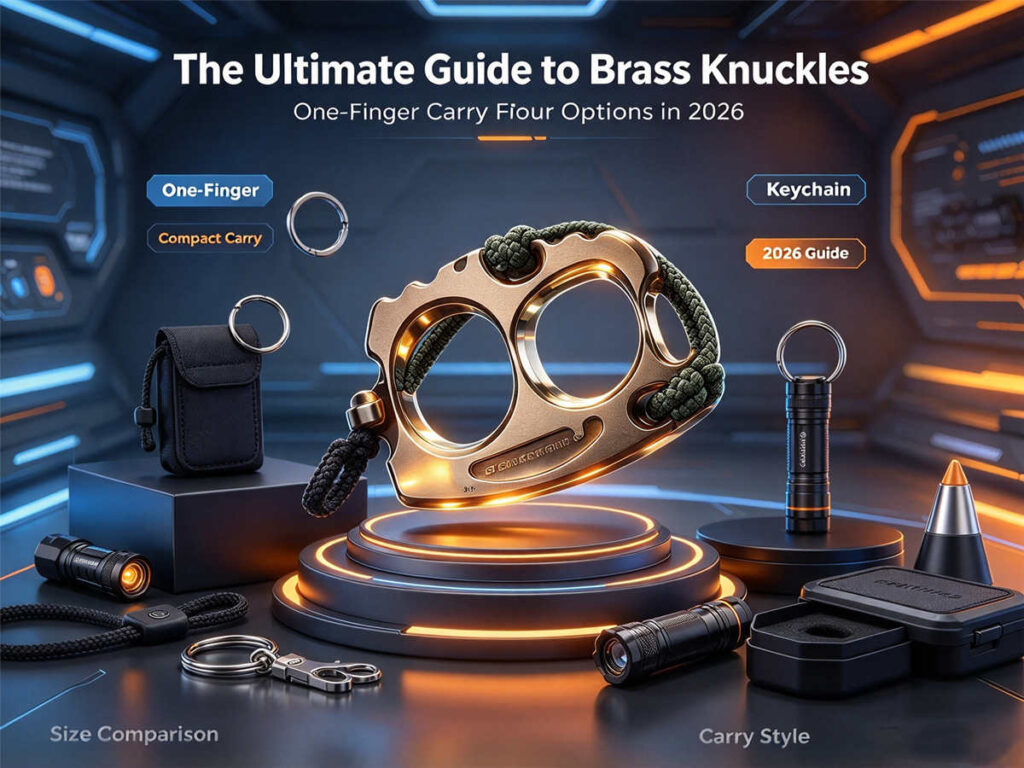
The Ultimate Guide to Brass Knuckles: One-Finger, Two-Finger & Four-Finger Options in 2026
Brass knuckles have a long history as distinctive metal accessories, collectibles, and objects associated with personal protection. Over the years, their designs have expanded beyond the traditional full-hand style, with one-finger, two-finger, and four-finger variations appearing in different shapes, materials, and finishes. For anyone researching these products in 2026, understanding the differences between the designs is important, but so is recognizing their legal restrictions, safety concerns, and the alternatives available for everyday preparedness.
Whether you have encountered a compact one-finger design online, are curious about the traditional four-finger model, or simply want to understand how these products compare, this guide explains the main categories from a practical and responsible perspective. It also looks at materials, construction, collecting considerations, and everyday carry alternatives such as a tactical pen or keychain multi tool.
1. Understanding Brass Knuckles and Their Different Designs
A Brass Knuckle is generally a rigid hand-held object designed with openings or spaces for the fingers and a frame that rests across part of the hand. Traditional examples were commonly made from brass or other metals, although contemporary products may use stainless steel, aluminum alloys, and decorative materials. Their recognizable shape has made them familiar in historical collections, popular culture, and discussions about personal safety.
The three main formats discussed in this guide are distinguished primarily by their overall design and the number of fingers accommodated by the frame. A one-finger model is usually compact and visually different from the traditional design, a two-finger model has a larger frame, and a four-finger model follows the familiar full-hand appearance.
It is important not to confuse appearance with suitability. A smaller product is not automatically safer or more appropriate to carry, and a larger design is not necessarily a practical everyday accessory. These products can be classified as weapons under local laws, regardless of their marketing descriptions, decorative finishes, or intended use.
Why the Designs Attract Different Interest
The different formats appeal to different audiences for several reasons. Collectors may be interested in historical styling, unusual shapes, manufacturing details, or the way a particular design reflects a period in popular culture. Other buyers may simply be comparing product dimensions and materials before deciding whether an item belongs in a private collection.
In 2026, online product descriptions can sometimes blur the distinction between novelty accessories, collectible objects, and weapons. Reading the actual product specifications and checking applicable laws is therefore more useful than relying on a product title or promotional photograph alone.
2. One-Finger Brass Knuckles: A Compact and Distinctive Format
One-finger brass knuckles are among the more unusual variations because their appearance differs considerably from the traditional four-finger frame. Depending on the model, they may resemble a small ring-shaped object, a compact metal accessory, or a decorative piece with a finger opening.
Their small dimensions can make them visually interesting to collectors who prefer unusual designs, especially when compared with larger traditional examples. They may also appear in product listings alongside keychain accessories, although this does not mean that every one-finger design is a lawful or appropriate keychain item.
Appearance, Size, and Construction
When examining a one-finger product as a collectible, pay attention to the finish, surface quality, manufacturing consistency, and whether the item has clearly documented dimensions. A clean finish and consistent edges can indicate more careful manufacturing, while rough surfaces, visible casting defects, or incomplete product information should encourage additional caution.
Material descriptions deserve equal attention. Brass, stainless steel, and aluminum have different weights, appearances, and maintenance requirements, so the name of the material should be verified rather than assumed from the product’s color. A gold-colored finish, for example, does not necessarily mean that an object is made from solid brass.
What Collectors Should Consider
A compact design may be easier to display or store than a larger object, but portability should not be confused with permission to carry it in public. In many jurisdictions, size does not remove an item from weapon regulations, and a small object can still be prohibited.
For that reason, a one-finger model is best approached with the same care as any other weapon-associated collectible: research its legal classification, understand where it can be possessed, and avoid treating it as an ordinary fashion accessory without checking the relevant rules.
3. Two-Finger Brass Knuckles: A Middle-Sized Design
The two-finger format occupies a middle position in the familiar design range. It generally has a frame with two finger openings and a more compact overall appearance than a traditional four-finger model. Its proportions are one reason it receives attention in product comparisons and collector discussions.
However, the number of openings alone does not establish quality, safety, or legal status. Two products with similar appearances may differ in material, dimensions, manufacturing quality, and legal classification. Buyers should avoid assuming that a particular design is suitable for everyday possession simply because it is smaller than a traditional model.
Design Details Worth Understanding
For a collection or product reference, the most useful details are objective ones: the stated material, overall dimensions, finish, approximate weight, country of manufacture, and whether the seller provides clear photographs from several angles. These details make it easier to distinguish between products that may look similar in a single promotional image.
A responsible product description should also avoid vague claims that suggest guaranteed protection or imply that an object is suitable for every situation. No compact metal accessory can replace sound judgment, situational awareness, emergency planning, or professional assistance when a situation becomes dangerous.
Comparing It with Other Formats
The two-finger design is visually distinct from both the one-finger and four-finger formats, but a simple ranking of the three would be misleading. The right way to compare them is to consider their construction, intended classification, display requirements, and legal status rather than treating size as a measure of effectiveness.
For collectors, the middle-sized format may offer a different visual profile within a broader display. For anyone considering public carry, however, the relevant question is not whether it is more compact, but whether possession and carry are lawful in the specific location.
4. Four-Finger Brass Knuckles: The Traditional Full-Frame Style
The four-finger model is the design most commonly associated with the traditional image of brass knuckles. Its frame typically contains four openings and has a larger, more recognizable outline than the one-finger and two-finger variations. Because of its historical appearance, it is often the format people picture when discussing knuckle dusters.
For collectors, this traditional silhouette can be an important part of a themed display, particularly when comparing different materials, finishes, and manufacturing periods. It is also a design that should be treated carefully because its appearance can make its weapon classification more apparent.
Traditional Appearance and Materials
Classic examples are associated with brass, while modern versions may be advertised in stainless steel, aluminum, or other metal alloys. Each material has its own visual and maintenance characteristics. Brass often develops a darker patina over time, stainless steel generally has a cleaner metallic appearance, and aluminum can provide a lighter decorative object.
A polished surface may look attractive in photographs, but finish alone does not tell you whether a product is well manufactured. Look for consistent edges, an even surface, accurate material information, and photographs that show the complete object rather than relying on a highly edited product image.
Collecting and Display Considerations
A four-finger model may be a recognizable centerpiece in a historical or novelty collection, but its storage and display should reflect its nature as a potentially regulated weapon. Keep it secured, away from children and unauthorized users, and do not display or transport it in a way that could create unnecessary alarm or violate local rules.
Collectors should also retain product documentation where available. Information about the manufacturer, material, purchase date, and product description can be useful when organizing a collection or checking the item’s legal status.
5. Materials, Finish, and Build Quality: What to Look for in 2026
Material and construction details are important when evaluating any metal collectible, and brass knuckle products are no exception. A product photograph can make two items look almost identical even when their materials, dimensions, and manufacturing standards are very different. Taking time to review the specifications helps avoid paying a premium for a poorly documented item.
Common Material Descriptions
- Brass: A copper-and-zinc alloy traditionally associated with the classic appearance of these products. It can develop a natural patina and may require occasional cleaning if the owner wants to maintain a bright finish.
- Stainless steel: A widely used metal known for its corrosion resistance and relatively straightforward maintenance. The exact grade should be confirmed when the seller provides that information.
- Aluminum alloy: Often lighter than brass or steel and available in different surface finishes. The specific alloy and manufacturing process can affect its durability and appearance.
- Decorative coatings: Some products use colored, plated, or painted finishes. These coatings should not be mistaken for the underlying material.
Checking Product Information
A reliable listing should identify the material, dimensions, finish, and manufacturer as clearly as possible. If the description uses broad terms such as premium metal or heavy-duty alloy without providing meaningful specifications, treat those claims cautiously.
It is also worth checking the seller’s return policy and whether the product photographs accurately represent the item being sold. A reputable seller should not need to rely on exaggerated promises, misleading safety claims, or unclear descriptions to explain what a product is.
6. Legal Restrictions and Responsible Ownership in 2026
Legal considerations are among the most important parts of researching brass knuckles, and they should be addressed before a purchase or any decision about possession. Regulations differ significantly between countries, states, counties, and cities. Some places prohibit possession entirely, while others regulate sale, concealed carry, public carry, or possession in specific locations.
In the United States, for example, rules are not uniform across all states. A product that may be legally possessed under one state’s law could be restricted or prohibited in another. Local rules may also apply in places such as schools, government buildings, airports, public transportation facilities, and private properties with their own entry policies.
Check the Law Before Buying or Carrying
Do not assume that an item is legal because it is sold online, described as a collectible, or advertised as a keychain accessory. Marketing terminology does not determine legal classification. The physical characteristics of the object and the wording of the applicable law may matter more than the seller’s chosen category.
Before purchasing or transporting any brass knuckle product:
- Check the current laws in your state and local jurisdiction.
- Review restrictions on possession, sale, transport, and concealed carry separately.
- Check rules that apply to schools, workplaces, public buildings, and travel.
- Do not take the item across state or national borders without checking the laws on both sides.
- Seek qualified legal advice if the applicable rules are unclear.
Laws can change, so information from an old article or an online discussion may no longer be accurate in 2026. Official government sources and qualified legal professionals are more reliable than product advertisements or informal social media advice.
Safe Storage and Ownership
Where possession is lawful, responsible ownership still matters. Store weapon-associated collectibles securely, prevent access by children or unauthorized people, and avoid carrying them into places where they may be prohibited. If an object is part of a private collection, a secure display or storage arrangement is generally more appropriate than treating it as an ordinary everyday accessory.
7. Everyday Carry Alternatives: Tactical Pens and Keychain Multi Tools
For many people, the real goal behind researching brass knuckles is broader than collecting: they want to feel prepared for ordinary inconveniences and unexpected situations. Fortunately, everyday carry does not need to revolve around a weapon-associated object. Practical tools can address common daily needs while keeping the focus on utility, planning, and responsible ownership.
A well-organized everyday carry setup should reflect the places you visit, the activities you perform, and the rules that apply to the items you bring with you. It should also remain simple enough that you can use and maintain each item without carrying unnecessary equipment.
The Tactical Pen
A tactical pen is first and foremost a writing instrument, often made with a more substantial body than an inexpensive disposable pen. Depending on its design, it may feature a metal construction, a secure pocket clip, replaceable ink refills, and an emergency-oriented feature such as a glass-breaking component.
Its everyday value comes from ordinary functions: taking notes, signing documents, recording information, and keeping a dependable writing tool close at hand. Before purchasing one, check its writing performance, dimensions, refill compatibility, and any restrictions that may apply to its additional features.
For a more detailed introduction, read What Is a Tactical Pen? A Complete Guide to the EDC Tool That Does More.
The Keychain Multi Tool
A keychain multi tool is another practical option for people who prefer compact equipment with clearly defined everyday functions. Depending on the model, it may include a bottle opener, screwdriver, small wrench, or other utility features. Not every model includes the same components, so reviewing the actual specifications is essential.
For commuters and drivers, a dedicated emergency tool may also be worth considering, provided it is designed for the intended purpose and its instructions are understood before an emergency occurs. A keychain accessory should not be treated as a substitute for a proper vehicle emergency kit, first-aid supplies, or a reliable roadside assistance plan.
You can explore more selection advice in the Keychain Multi Tool Guide: How to Pick the Right One for Your Everyday Carry.
Building a Balanced Everyday Carry Kit
A sensible everyday carry kit is not measured by how many objects fit in a pocket. It is measured by whether the items solve realistic problems without adding unnecessary weight, complexity, or legal uncertainty. A small flashlight can help when visibility is poor, a dependable pen can handle everyday writing, and a compact multi-tool can assist with simple household or travel tasks.
For more ideas, see the Everyday Carry Tool Guide: Build a Kit That Works as Hard as You Do. The most useful approach is to choose tools based on genuine needs, verify their features, and understand any restrictions before taking them into public spaces.
The one-finger, two-finger, and four-finger brass knuckle formats each have a distinct appearance and place in discussions of historical design and collecting. The best way to understand them is to compare their construction and documented characteristics without assuming that a smaller format is automatically safer or that a traditional design is appropriate for public carry. In 2026, informed decisions should begin with current legal research, responsible storage, and a clear distinction between collectible objects and practical everyday tools. For daily preparedness, a well-chosen tactical pen, flashlight, or keychain multi tool may offer more straightforward utility without making a weapon-associated item the center of your routine.