
Oct
History of Weapons
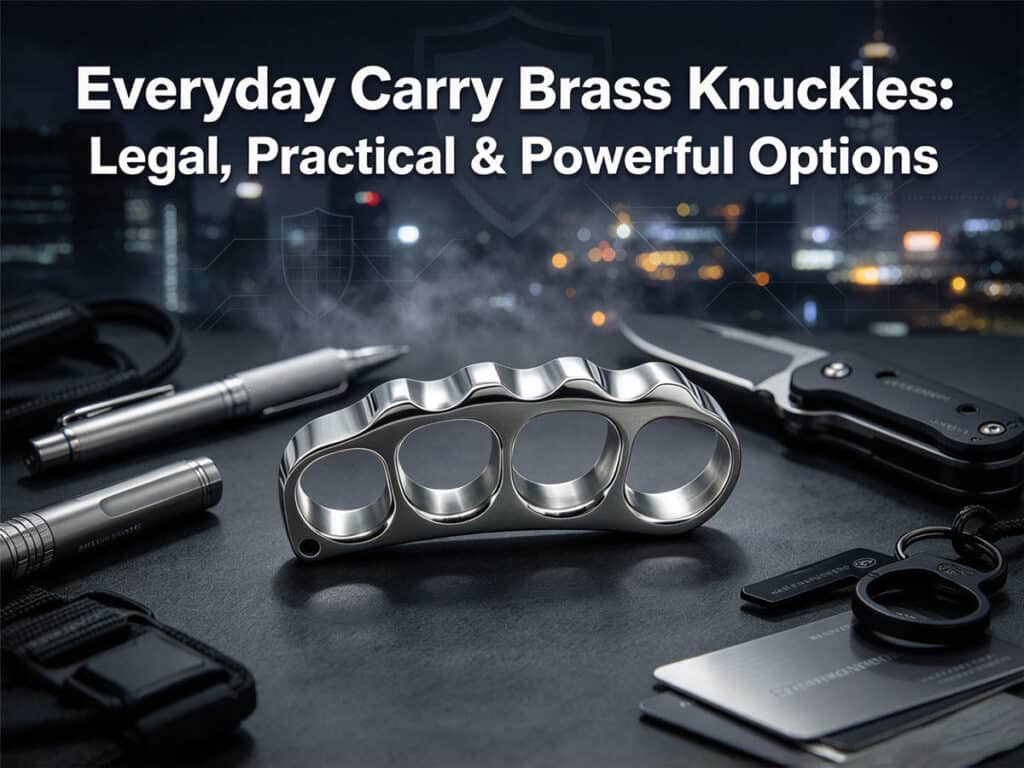
Everyday Carry Brass Knuckles: Legal, Practical & Powerful Options
Everyday carry has always been about finding the right balance between convenience, preparedness, and personal style, and few compact accessories attract as much attention as brass knuckles and knuckle-style keychain tools. Their compact shape, distinctive appearance, and association with personal protection have made them part of a broader EDC conversation, but carrying one responsibly requires more than choosing an attractive design. The most important considerations include local laws, intended purpose, construction quality, portability, and whether a particular item actually fits naturally into your daily routine. For people interested in compact personal-safety equipment, a useful starting point is to explore a everyday carry tool guide and consider how a specialized item fits alongside ordinary EDC essentials rather than treating any single object as a complete safety solution.
The modern market also includes products that combine the visual character of traditional knuckle designs with practical keychain functions, giving buyers alternatives that emphasize utility, emergency preparedness, or discreet everyday carry rather than simply focusing on defensive capability. Understanding those differences is essential because a product that looks similar to a traditional weapon may be treated very differently under local law, and legal definitions can depend on the exact design, jurisdiction, manner of carry, and intended use.
Understanding the Legal Side Before You Carry
The word “legal” should never be treated as a universal product characteristic when discussing brass knuckles or related personal-protection accessories. Laws governing these objects can vary substantially between countries, states, provinces, cities, and other jurisdictions, while some regulations distinguish between possession, public carry, concealed carry, transportation, and use. Because of these differences, a product that can legally be purchased in one location may still be restricted when carried somewhere else.
Why Product Design Matters
Traditional metal knuckles, knuckle guards, kubotan-style tools, reinforced keychains, and ordinary multitools may appear related from a visual perspective, but legislation may define them differently. Some jurisdictions focus on an item’s physical design, while others consider its intended purpose or whether it is designed primarily as a weapon. This makes it risky to rely on a product description, an online marketplace listing, or a general statement such as “legal in most places.”
Before purchasing or carrying a self defense keychain, brass-knuckle-style accessory, or other compact protection tool, check the legislation that applies specifically to your location and circumstances. If you travel, check the rules at your destination as well, because crossing a border or entering another jurisdiction can change the legal position even when you have carried the same item responsibly at home.
Responsible EDC Starts With Awareness
Legal compliance is part of responsible everyday carry, just like understanding how an ordinary tool should be stored or transported. A useful resource from BKM also emphasizes that regulations surrounding knuckle-style keychains and similar products can vary, particularly where local definitions of weapons are broader than the general category might suggest. Self-defense keychain guidance can therefore be useful as background, but local government legislation and qualified legal advice should take priority when there is uncertainty.
What Makes a Good EDC Knuckle-Style Accessory?
Once legal considerations have been addressed, the next question is practical: what makes an item genuinely suitable for everyday carry? The answer is rarely the number of features printed on the packaging. A useful EDC accessory should be compact enough to carry consistently, durable enough to withstand normal daily wear, comfortable enough not to become annoying, and designed around functions that actually fit the owner’s routine.
For many people, the best option is not necessarily the most aggressive-looking product but a compact tool that provides several legitimate everyday functions. A keychain accessory might incorporate a bottle opener, small screwdriver, attachment point, emergency feature, or other utility function, allowing it to earn its place on a keyring even when there is no safety-related reason to use it.
Size and Weight
Portability is one of the defining characteristics of EDC equipment. An accessory that is excessively large, heavy, sharp-edged, or awkwardly shaped can interfere with keys, scratch other belongings, or become uncomfortable in a pocket. This is especially important for people who carry their keys throughout the day, because even a relatively small increase in weight becomes noticeable when combined with multiple keys, access cards, and other accessories.
A compact profile is therefore more than an aesthetic choice. It determines whether the item actually remains part of your everyday setup. The broader philosophy behind a good EDC keychain is simple: the accessory should become part of your routine rather than something you remember only when you think you might need it.
Materials, Construction, and Long-Term Durability
Material selection has a significant effect on how an EDC accessory looks, feels, and performs over years of ordinary carrying. Since keychain tools are frequently exposed to friction, moisture, drops, temperature changes, and contact with other metal objects, construction quality matters considerably more than an impressive product photograph might suggest.
Stainless Steel
Stainless steel is a common choice for compact EDC equipment because it combines strength, durability, and reasonable corrosion resistance. It also gives a product a substantial feel without requiring complicated construction. For a keychain accessory intended to survive years of daily contact with keys and other objects, a properly finished stainless-steel body can provide a practical combination of durability and maintenance.
Titanium and Lightweight Materials
Titanium is often selected for premium EDC products because of its excellent strength-to-weight characteristics and resistance to corrosion. Lightweight aluminum alloys can also be useful when reducing carry weight is the primary objective, although they generally do not provide the same characteristics as hardened steel in applications where high structural strength is important.
Regardless of material, buyers should look closely at machining quality, edge finishing, attachment points, surface treatment, and overall fit. A beautifully finished product with a weak attachment loop or poorly designed keyring connection can be much less useful than a simpler accessory that has been engineered around everyday abuse.
Utility Should Be Part of the Everyday Carry Equation
The strongest argument for a compact keychain accessory is often not its appearance but its usefulness on ordinary days. A tool that can open a package, tighten a small screw, attach securely to a bag, assist with an emergency situation, or perform another legitimate task has a reason to remain in your daily rotation even when there is no perceived personal-safety concern.
This is where modern keychain designs have moved beyond traditional novelty accessories. Instead of carrying an object exclusively for one unlikely situation, many EDC enthusiasts prefer compact tools that combine several practical functions in a small package. The result is a more balanced approach to preparedness, because the item remains useful during normal activities while still providing additional capabilities for unexpected circumstances.
A well-designed keychain multi-tool demonstrates this principle particularly well. Rather than measuring value by how intimidating a product looks, consider whether its features solve problems you actually encounter. Someone who drives every day may value automotive emergency functions, while someone who spends more time outdoors may prioritize compact utility tools, and an office worker may prefer something minimalist that takes up almost no pocket space.
Powerful Does Not Have to Mean Aggressive
The word “powerful” is often used in EDC marketing, but power can mean several different things. It can refer to material strength, durability, versatility, emergency usefulness, or the ability to perform a demanding task despite a very small physical footprint. In that sense, a compact tool can be genuinely powerful without being designed or carried primarily as a striking weapon.
This distinction is especially useful when considering brass-knuckle-inspired accessories. The recognizable shape may appeal to people who enjoy industrial styling or tactical aesthetics, while the actual value of the product may come from its construction and utility. A reinforced keychain that incorporates practical features can therefore appeal to the same EDC audience without making aggressive use the central purpose of the accessory.
Personal safety also involves choices that do not involve physical confrontation. Situational awareness, maintaining distance from potentially dangerous situations, keeping a phone charged, carrying a flashlight, knowing emergency contacts, and having access to vehicle safety equipment can all contribute to preparedness. BKM’s discussion of safety keychains similarly emphasizes choosing equipment that fits naturally into an individual’s routine rather than assuming that one object can solve every personal-safety situation.
Choosing Between Traditional Brass Knuckles and Modern Alternatives
For someone researching everyday carry options, it is useful to separate traditional brass knuckles from modern knuckle-style accessories and multifunctional keychain tools. Traditional brass knuckles are primarily associated with their weapon function, which can create significant legal and practical considerations. Modern alternatives may instead emphasize compact utility, emergency functions, or decorative styling while using a similar general visual language.
The right choice depends on what the buyer actually wants from an EDC item. If the primary objective is everyday utility, a compact multitool or emergency keychain can provide more legitimate daily functions. If appearance matters, there are numerous machined-metal accessories that offer an industrial or tactical aesthetic without requiring the product to be treated as a dedicated weapon. If emergency preparedness is the priority, purpose-built vehicle safety equipment may be more appropriate than a knuckle-shaped accessory.
Think About Your Routine First
Start by considering where the item will spend most of its time. Will it remain on a house-key ring, attach to a vehicle key, hang from a backpack, or stay inside an EDC pouch? Will you be carrying it through workplaces, schools, airports, government buildings, or other locations where additional restrictions may apply? Will you travel internationally with it? These questions can eliminate unsuitable choices before appearance or marketing claims become distractions.
The best everyday carry setup is rarely the largest one. It is the setup that provides useful capability while remaining comfortable, lawful, and easy to integrate into daily life. A compact flashlight, reliable multitool, emergency keychain, and appropriate vehicle-safety equipment can often complement one another far more effectively than relying on a single specialized item.
Building a Responsible Everyday Carry Setup
A thoughtful EDC system should be viewed as a collection of complementary tools rather than a collection of objects chosen solely because they look tactical. Start with everyday necessities such as a phone, identification, keys, and a small flashlight, then add tools according to actual needs. Drivers may benefit from keeping dedicated emergency equipment within immediate reach, while commuters may prioritize compact utility and low weight, and outdoor users may require more specialized equipment suited to their environment.
The same principle applies when considering a brass-knuckle-style keychain. Ask whether the product is legal where you live, whether it remains legal where you plan to travel, whether its construction is reliable, whether it adds useful functions to your EDC system, and whether you are comfortable explaining its purpose if questioned. These considerations are more valuable than simply choosing the most imposing-looking design.
Ultimately, effective EDC is about preparation without unnecessary complexity. A well-selected accessory should be something you can carry comfortably every day, understand clearly, maintain properly, and use responsibly within the law. For readers exploring compact gear, EDC keychain essentials provide another useful perspective on combining portability with everyday functionality.
For anyone researching everyday carry brass knuckles, legal brass knuckles, brass knuckle keychains, self defense keychains, EDC keychain tools, and other compact personal-safety accessories, the most responsible approach is to consider legality, construction, portability, practical utility, and personal circumstances together. A powerful EDC option is not simply the product that looks toughest; it is the one that fits your routine, serves a legitimate purpose, complies with applicable laws, and forms one sensible part of a broader approach to everyday preparedness.