
Sep
Knowledge of Weapons, Weapons What
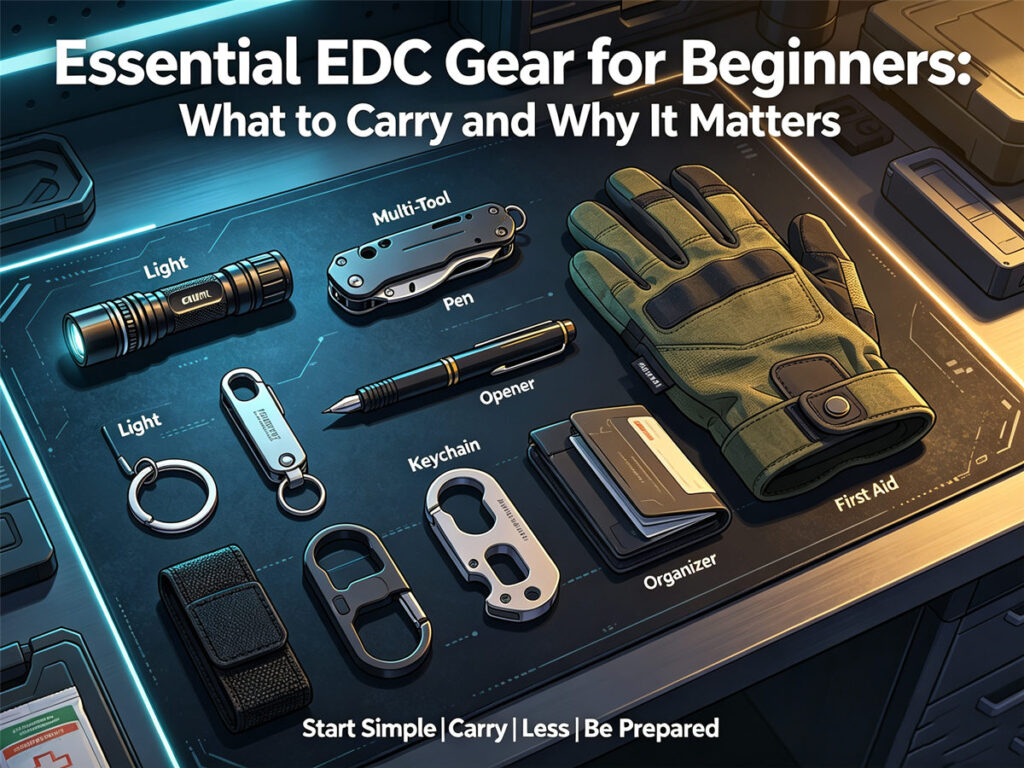
Essential EDC Gear for Beginners: What to Carry and Why It Matters
You walk out the door every morning. Keys, phone, wallet — the three items nobody forgets. But what about the moments in between? The dead phone battery on a dark walk home. The stuck seatbelt after a minor fender bender. The small cut that needs a bandage, not an ER visit. Everyday carry isn’t about paranoia. It’s about closing the gap between “I wish I had that right now” and “I’ve got it covered.”
At Brass Knuckles Master, we’ve spent years helping people build their first real carry setup. We know the feeling — standing in front of a display of knives, multitools, and flashlights, wondering which three items actually deserve a permanent spot in your pocket. This guide cuts through the noise. No gear snobbery. No fifty-item lists. Just the essentials that earn their weight every single day.
1. Why EDC Matters More Than You Think
Most people don’t think about preparedness until they need it. A dead flashlight in a power outage. A loose screw with no tool in sight. A moment of vulnerability walking through an unfamiliar neighborhood. EDC gear exists for those exact moments — the small emergencies that don’t make the news but still catch you off guard.
The philosophy is simple: carry fewer things, but carry the right things. A well-chosen everyday carry setup doesn’t add bulk to your life. It removes friction. You stop borrowing tools. You stop wishing you’d grabbed that one thing. You start handling small problems before they become big ones.
The Preparedness Mindset
EDC isn’t about tactical cosplay or looking like a character from an action movie. It’s a practical habit. You carry a pen because you might need to write something down. You carry a flashlight because your phone’s LED isn’t a real light source. You carry a self-defense tool because you’d rather have it and not need it than the other way around. That’s the entire philosophy — nothing dramatic, just deliberate.
Building Confidence Through Readiness
There’s a quiet confidence that comes from knowing you’re prepared. You stop avoiding dark parking lots. You stop hoping the restaurant has a clean knife when you need one. You handle things. At BKM, we hear this from customers all the time — the gear changes how they move through the world, not because it’s flashy, but because it’s reliable.
2. A Reliable Knife: Your Most Versatile Tool
If you could only carry one tool every day, a good folding knife would be the answer for most experienced EDC enthusiasts. It cuts boxes, opens packages, slices fruit, trims loose threads, and handles a hundred tasks you never planned for. A pocket knife with a sturdy clip disappears into your waistband and forgets it’s there until you need it.
What to look for as a beginner: a blade length between 2.5 and 3.5 inches, a reliable locking mechanism (liner lock or frame lock), and a pocket clip that keeps it accessible. You don’t need exotic steel — a solid stainless blade holds up fine for daily tasks. At BKM, our survival knife collection includes pocket-friendly options built for exactly this kind of everyday use.
Why a Dedicated Knife Beats Your Keys
Your car key can slice tape in a pinch. A dedicated pocket knife does it cleanly, safely, and without risking a trip to urgent care. The difference isn’t just sharpness — it’s ergonomics. A proper folding knife gives you a secure grip, a controlled blade angle, and a locking mechanism that keeps the blade where it belongs. That’s the difference between a tool and a liability.
3. A Compact Flashlight: See What Your Phone Can’t Show You
Your phone has a light. It also has a battery that dies by 3 PM. A dedicated EDC flashlight solves both problems — it’s brighter, more reliable, and designed to be held and aimed like an actual tool, not a glowing rectangle.
Look for something in the 100-500 lumen range with a rechargeable battery. Clip it to your pocket or toss it in your bag. You’ll use it more than you expect: finding dropped keys under your car seat, navigating a dark staircase, or signaling for help if you’re stranded. A flashlight is one of those items you don’t appreciate until the moment you need it — and then you’re glad it’s there.
Beyond Darkness: Everyday Uses You Didn’t Expect
Flashlights aren’t just for nighttime. Inspecting a used item before you buy it. Checking under the hood of your car. Looking into a dimly lit cabinet. Once you start carrying one, you’ll wonder how you ever managed without it. The best EDC flashlights are the ones that disappear into your carry until they’re needed.
4. A Self-Defense Tool: Carry Confidence, Not Fear
This is where EDC gets personal. A self-defense tool isn’t about looking for trouble — it’s about having an answer if trouble finds you. For beginners, the options range from tactical pens to keychain tools to brass knuckles, and the right choice depends on your comfort level, your local laws, and how you plan to carry it.
At BKM, we believe self-defense gear should feel natural in your hand. Our keychain multi-tool collection is designed for people who want protection without the bulk. These tools clip onto your existing keyring, so you’re never “gearing up” — you’re just carrying your keys like you always do, except now they do more.
Choosing Your First Self-Defense Item
Start with something that fits your lifestyle. If you carry keys, a keychain self-defense tool makes sense — it’s always with you, no extra thought required. If you prefer something more substantial, BKM’s tactical pen collection offers a writing tool that doubles as a striking implement. And for those who want maximum impact in a compact package, our brass knuckle collection delivers serious stopping power in a size that fits your pocket. Whatever you choose, check your local laws before you buy — responsible carry starts with knowing the rules.
5. A Multitool or Keychain Tool: Small Size, Big Problem-Solver
Not every problem needs a full toolkit. Sometimes you just need a screwdriver, a bottle opener, or a pair of pliers — and you need them right now. A compact multitool or keychain tool handles those small, unexpected tasks that pop up throughout the day.
The beauty of a keychain multi-tool is that it lives on your keys. You don’t have to remember it. You don’t have to dig through a bag. It’s just there, ready to tighten a loose screw, pry open a stubborn package, or pop the top off a cold drink at the end of a long day. For beginners, this is one of the easiest EDC additions because it requires zero habit change — it just makes your existing keys smarter.
Car Safety Tools: The Overlooked Essential
One category of multitools that beginners often overlook is the car safety tool. A glass breaker and seatbelt cutter combo can be the difference between a scary situation and a tragic one. These tools are small enough to clip to your visor or toss in your center console, and they’re designed for one purpose: getting you out of a vehicle when the doors won’t open. It’s the kind of gear you hope you never use — but if you ever need it, nothing else will do.
6. An EDC Pouch: Keep It Together
As your carry grows, so does the need to organize it. An EDC pouch — sometimes called a pocket organizer — keeps your tools from rattling around loose in your bag or pockets. It creates a single grab-and-go package for your flashlight, knife, pen, and multitool.
A good EDC pouch has elastic loops or elastic slots that hold each item in place. You open it, grab what you need, and close it back up. No digging. No forgetting. At BKM, our EDC carry pouch is built with this exact philosophy — organized access to the tools that matter most.
Why Organization Changes Everything
The difference between a pile of gear and a real EDC setup is organization. When everything has a place, you know exactly what you’re carrying. You stop leaving your flashlight at home. You stop losing your pen at the bottom of your bag. An organized carry means you’re actually prepared, not just hoping you remembered everything on your way out the door.
7. Building Your First EDC Setup: Where to Start
You don’t need to buy everything at once. The best EDC setups are built over time, one piece at a time, based on what you actually use. Start with a knife and a flashlight — those two items alone will handle 80% of your daily needs. Add a self-defense tool when you’re ready. Toss in a multitool when you realize how often you need one.
The key is to start simple and iterate. Carry a new item for a week. If you reach for it, keep it. If it sits untouched, swap it out for something more useful. EDC is personal — there’s no universal “right” setup, only the setup that works for your life.
Common Beginner Mistakes
The biggest mistake beginners make is carrying too much, too fast. You don’t need a survival kit in your pockets. You need three to five items that you actually use every day. Another common pitfall is buying cheap gear that breaks after a week. Invest in quality from the start — a well-made knife or flashlight lasts years, not months.
Everyday carry isn’t a hobby. It’s a way of moving through the world with intention. The gear you carry says something about how you approach life — with preparation, with awareness, with the quiet confidence that you can handle whatever the day throws at you. At Brass Knuckles Master, we build gear for people who take that seriously. Not because they expect the worst, but because they refuse to be caught off guard.
If you’re ready to build your first real EDC setup, explore the full BKM collection — from self-defense tools to everyday carry essentials, everything we make is designed to earn its place in your pocket. Use code BKM15 for 15% off when you buy two or more.