
Nov
Knowledge of Weapons
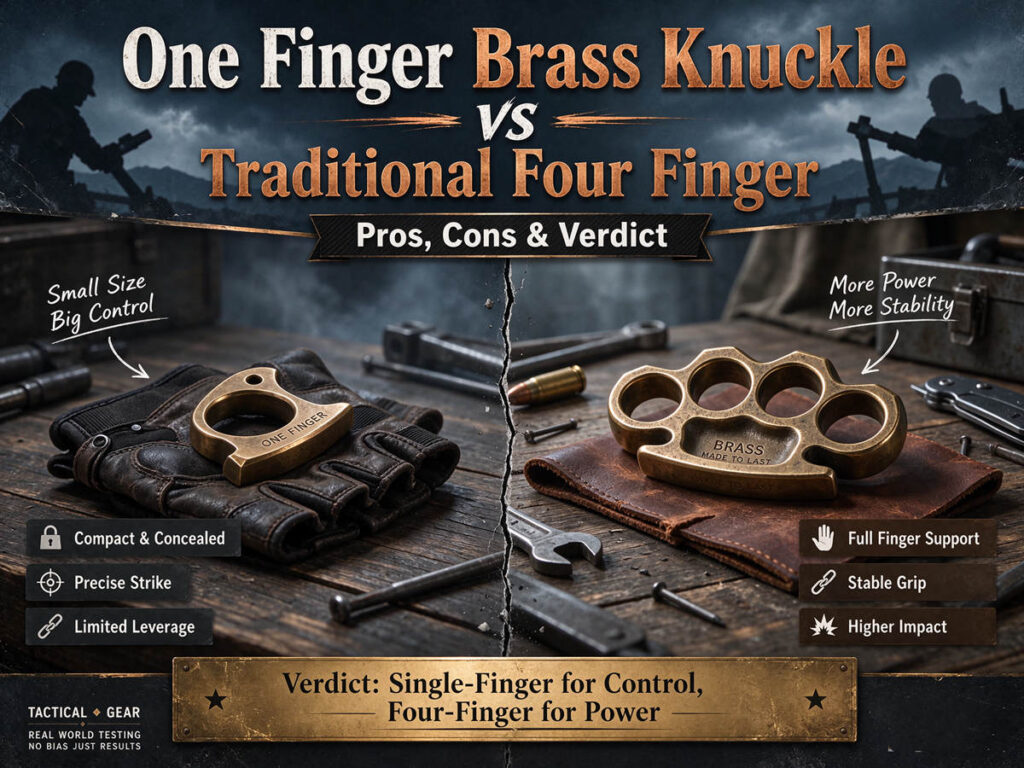
One Finger Brass Knuckle vs Traditional Four Finger – Pros, Cons & Verdict
Brass knuckles have a long history as distinctive metal accessories, collectible objects, and recognizable pieces of traditional self-defense equipment. Over time, their designs have evolved into numerous variations, with differences in size, shape, construction, appearance, and intended handling characteristics. Among the designs that attract particular attention from collectors and enthusiasts are the One Finger Brass Knuckle and the traditional four-finger brass knuckle, two styles that look noticeably different and represent different approaches to compact metal construction.
When comparing a One Finger Brass Knuckle vs Traditional Four Finger design, the most obvious difference is the number of finger openings, but there is considerably more to consider than appearance alone. Dimensions, material quality, craftsmanship, portability, historical significance, legal restrictions, and collector preferences all contribute to how these designs are evaluated. A smaller design may appeal to someone who appreciates compact objects, while a traditional four-finger model may be more interesting to collectors who prefer the familiar historical silhouette.
In this guide, we examine both styles from a design, collecting, practicality, and legal-awareness perspective, helping readers understand their differences without overlooking the responsibilities associated with owning regulated metal accessories.
1. Understanding One Finger Brass Knuckles and Traditional Four-Finger Designs
Before comparing their advantages and disadvantages, it is useful to understand what distinguishes these two designs and why manufacturers and collectors continue to pay attention to their different appearances.
What Is a One Finger Brass Knuckle?
A One Finger Brass Knuckle is a compact design characterized by a single finger opening rather than the multiple openings found in traditional models. Its smaller visual profile gives it a distinctive appearance, and its simplified structure can make it an interesting example of alternative metal accessory design.
Unlike conventional four-finger models, which generally feature a recognizable horizontal arrangement of several openings, the one-finger variation emphasizes a more minimal silhouette. Depending on the manufacturer, examples may feature rounded edges, decorative surfaces, polished finishes, engraved details, or different metal compositions.
For collectors, the appeal often comes from its unusual proportions and distinctive appearance. It represents a departure from the traditional brass knuckle shape, making it visually different from the more familiar designs commonly found in historical collections and product catalogs.
What Is a Traditional Four-Finger Brass Knuckle?
Traditional four-finger brass knuckles are the familiar designs most people recognize from historical photographs, movies, museums, and popular culture. Their characteristic construction includes four finger openings arranged within a single metal frame, creating a distinctive appearance that has remained recognizable across generations.
Although the name suggests brass construction, modern examples may be manufactured from different metals or alloys, depending on the manufacturer and product specification. Finishes can include polished metal, antique-style surfaces, decorative engraving, and other treatments.
For collectors, traditional four-finger examples often have strong historical and cultural associations because their recognizable outline has appeared in numerous historical contexts and popular representations.
2. One Finger Brass Knuckle: Pros and Cons
The one-finger design stands apart primarily because of its compact appearance and simplified visual structure. However, a smaller design should not automatically be considered more useful, safer, or more practical, since physical characteristics and legal considerations depend on the individual product and its intended classification.
Advantages of One Finger Designs
Compact visual profile: One of the most noticeable characteristics is the smaller overall appearance compared with many conventional four-finger models. This gives the design a different aesthetic and makes it particularly interesting to collectors who appreciate minimalist metal accessories.
Distinctive appearance: Traditional four-finger brass knuckles have an instantly recognizable outline, whereas one-finger variations offer a less conventional appearance. This difference can make them stand out in a collection featuring historical metal objects and alternative designs.
Design variety: Because the one-finger format is less visually standardized, manufacturers may experiment with different decorative details, surface treatments, and exterior shapes. Collectors can therefore encounter considerable variation between individual examples.
Interest among specialty collectors: People who collect unusual metal accessories may appreciate one-finger designs as examples of how a familiar historical object has been reinterpreted through different manufacturing and styling approaches.
Disadvantages of One Finger Designs
Less historical familiarity: Compared with traditional four-finger models, one-finger variations may have a less recognizable historical identity, which can make them less attractive to collectors who prioritize conventional examples.
Greater variation between products: A compact design does not necessarily follow a universal specification. Differences in material, dimensions, finish, and manufacturing quality can make direct product comparisons difficult.
Potential legal restrictions: A smaller size does not automatically make an item legal to own, purchase, transport, or possess. Applicable laws may classify one-finger variations according to their characteristics and intended function rather than their appearance alone.
Limited mainstream collector recognition: Traditional designs have a much longer-established visual presence in popular culture, while alternative variations may appeal to a narrower collecting audience.
3. Traditional Four-Finger Brass Knuckle: Pros and Cons
Traditional four-finger designs remain the most recognizable variation in the broader brass knuckle category. Their familiar shape, historical associations, and distinctive metal construction explain why they continue to attract attention from collectors and enthusiasts.
Advantages of Traditional Four-Finger Designs
Recognizable historical appearance: The four-opening arrangement is strongly associated with the traditional image of brass knuckles, giving these designs a familiar identity among collectors and people interested in historical metal accessories.
Established design tradition: Traditional models have appeared in many different forms throughout history, creating a broader visual reference for comparing decorative styles, construction methods, and manufacturing details.
Variety of collectible finishes: Depending on the example, collectors may encounter brass-colored finishes, stainless-steel construction, antique-style treatments, engraved surfaces, and other decorative characteristics.
Strong visual identity: Their distinctive silhouette makes traditional four-finger designs immediately recognizable, which can be an important consideration when building a themed collection or studying historical objects.
Disadvantages of Traditional Four-Finger Designs
Larger appearance: Compared with compact alternatives, conventional four-finger examples often have a more substantial visual profile, which may not suit collectors who prefer smaller decorative objects.
Material and weight differences: Not every product marketed under the same category is manufactured identically. Metal composition, thickness, dimensions, and finishing processes can create considerable differences in weight and overall appearance.
Storage considerations: Larger metal objects may require more dedicated storage space, particularly when collectors maintain multiple examples or display pieces in protective cases.
Legal limitations: Traditional four-finger brass knuckles are prohibited or restricted in various jurisdictions. Their familiar appearance should not be mistaken for permission to purchase, carry, transport, or possess them.
4. Key Differences: One Finger vs Traditional Four Finger
Although both designs belong to the same general category, their visual characteristics and collecting appeal can be quite different. The following comparison highlights the main distinctions without assuming that either format offers a functional advantage.
| Comparison Factor | One Finger Brass Knuckle | Traditional Four-Finger |
|---|---|---|
| Basic appearance | Single-opening design | Four-opening design |
| Visual profile | Generally more compact | Generally more substantial |
| Design identity | Alternative and unconventional | Traditional and recognizable |
| Historical familiarity | Less established | Widely recognized |
| Decorative possibilities | Varies by manufacturer | Varies by manufacturer |
| Material options | Product-dependent | Product-dependent |
| Collector appeal | Specialty and alternative designs | Traditional and historical styles |
| Legal status | Depends on jurisdiction and product | Depends on jurisdiction and product |
Size and Construction
The most apparent difference is the overall construction. A one-finger model has a simplified opening arrangement, while a traditional four-finger design has a more recognizable multi-opening frame.
However, the number of openings alone does not determine an item’s quality. Material composition, manufacturing consistency, surface treatment, and finishing standards are more meaningful factors when evaluating an object as a collectible.
Appearance and Aesthetic Preferences
Appearance is one of the most subjective aspects of this comparison. Some collectors appreciate the unusual proportions of one-finger variations, while others prefer the traditional silhouette because of its historical associations.
Neither preference is inherently better. The choice depends on whether someone values unconventional styling, historical familiarity, decorative details, or consistency with an existing collection.
Material and Manufacturing Quality
Regardless of the design, buyers researching metal collectibles should pay attention to accurate material descriptions, reliable manufacturer information, consistent finishing, and transparent product specifications.
A polished appearance does not necessarily indicate superior construction, and a product description that uses terms such as premium metal or heavy-duty material should be supported by verifiable information rather than marketing language alone.
5. Which Design Is Better for Collectors?
For people interested in collecting historical or decorative metal accessories, the decision between one-finger and four-finger designs should begin with the purpose of the collection rather than assumptions about practical performance.
When One Finger Designs May Be More Interesting
A one-finger variation may be particularly interesting to collectors who appreciate unconventional shapes, smaller decorative objects, and alternative interpretations of recognizable historical designs.
It can also add visual diversity to a collection that already contains conventional examples. Instead of displaying several objects with similar outlines, collectors can explore how different manufacturers interpret the same general design category.
When Traditional Four-Finger Designs May Be More Interesting
Traditional four-finger models may appeal more strongly to people interested in historical references, familiar silhouettes, and the cultural representation of brass knuckles.
Their recognizable appearance makes them relevant to collections focusing on historical metal accessories, popular culture, industrial design, or the evolution of distinctive objects.
What Should Collectors Examine Before Purchasing?
Before acquiring any item in this category, collectors should investigate several points:
- Material transparency: Look for accurate information about the metal or alloy used in construction.
- Manufacturing details: Check whether the manufacturer provides reliable specifications and clear product information.
- Surface quality: Examine visible finishing, polishing, decorative work, and signs of manufacturing defects.
- Authenticity: Be cautious about unsupported historical claims, misleading descriptions, or products advertised as rare without credible documentation.
- Legal compliance: Confirm the applicable rules governing ownership, purchasing, shipping, transportation, and possession in the relevant jurisdiction.
These considerations are more useful than relying exclusively on the number of openings or the visual size of a product.
6. Legal Considerations and Responsible Ownership
One of the most important aspects of comparing one-finger and traditional four-finger brass knuckles is understanding that their legal status can vary considerably between locations.
A common misconception is that a smaller variation automatically falls outside regulations applying to traditional brass knuckles. In reality, legal definitions differ between countries, states, and municipalities, and authorities may consider the item’s physical characteristics, construction, and intended function.
For example, regulations in some jurisdictions prohibit possession or carrying of brass knuckles, while other locations impose specific restrictions on sales, transportation, or concealed possession. Online availability does not establish legality, and a seller’s willingness to ship an item does not guarantee that a buyer can legally receive or possess it.
In the United States, state and local laws should be checked independently because restrictions are not necessarily uniform across the country. Buyers should also consider federal and state shipping requirements where applicable.
Responsible research should include checking current official legislation, consulting relevant government resources, and obtaining qualified legal advice when the applicable rules are unclear. This is especially important when purchasing products across state or national borders.
A responsible collector should also distinguish between historical interest and practical use. Items that are restricted or potentially dangerous should never be treated as ordinary fashion accessories simply because they have decorative finishes or unusual shapes.
7. Final Verdict: One Finger or Traditional Four Finger?
So, which design deserves more attention? The answer depends on what someone values most when comparing these two variations.
The One Finger Brass Knuckle stands out for its unconventional appearance, simplified visual structure, and appeal among people interested in alternative metal designs. It may be an interesting addition to a specialized collection, particularly when the goal is to explore different interpretations of a familiar object.
Traditional four-finger brass knuckles, on the other hand, remain the more recognizable design, with stronger historical associations and a familiar silhouette that has become part of popular culture. For collectors who prioritize traditional styling and historical context, this format may be more appealing.
From a design and collecting perspective, neither style can be declared universally superior. Material quality, reliable documentation, manufacturing standards, authenticity, and legal compliance should carry more weight than assumptions based on size or appearance.
For readers exploring the wider subject, brassknucklesmaster.com can serve as a starting point for researching product categories, design variations, and related information. Whatever the preferred aesthetic, informed decisions should always prioritize accurate product descriptions, responsible ownership, and compliance with applicable laws.
Ultimately, the most meaningful distinction between these designs is not simply one opening versus four openings, but the different visual identities and collecting interests they represent.