
Oct
Knowledge of Weapons
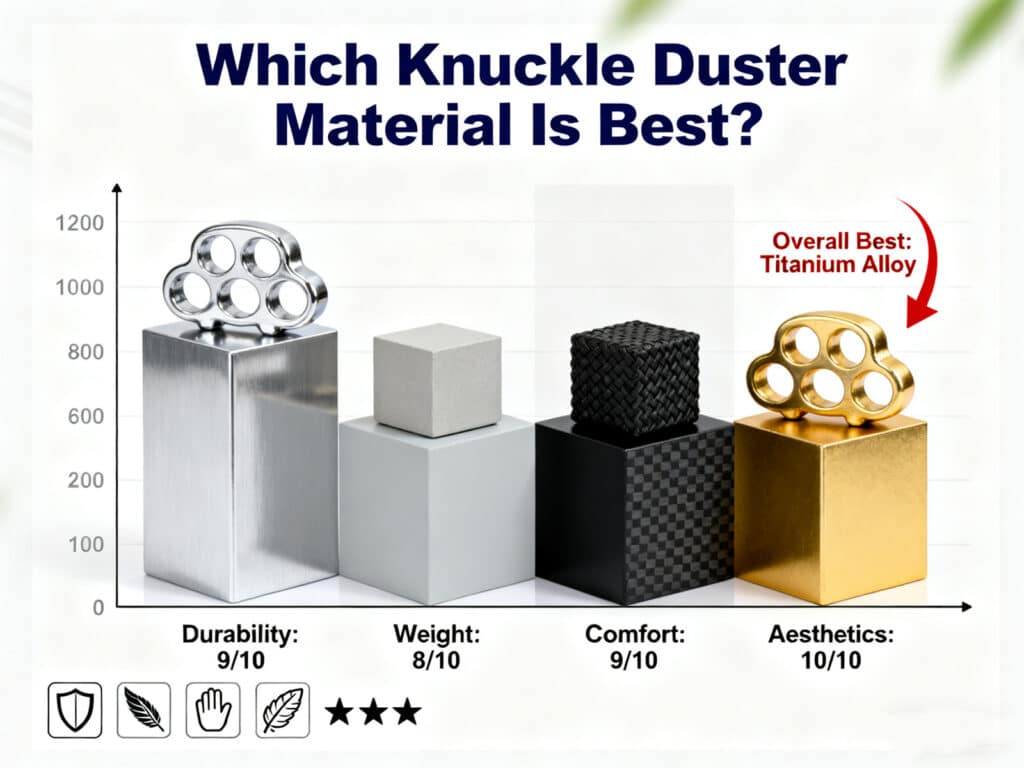
Which Knuckle Duster Material Is Best?
Which Knuckle Duster Material Is Best?
Few objects carry the same mix of intrigue, controversy, and craftsmanship as the knuckle duster. Also known as brass knuckles or knucks, this compact hand-held tool has traveled a long path from 19th-century military trenches and street skirmishes to modern collections, martial arts demonstrations, and handmade craft showcases. Its design is deceptively simple — a contoured grip fitted with reinforced rings that sit over the knuckles — yet behind this simplicity lies a world of material choice, design philosophy, and practical understanding that separates a crude piece of metal from a refined instrument of balance, weight, and form.
When it comes to selecting or crafting a knuckle duster, material matters more than anything else. The feel in the hand, the distribution of mass, the durability under pressure, the ease of shaping, and even the aesthetic finish — all of these depend directly on what the piece is made from. Today, a wide range of materials are used: brass, steel, aluminum, titanium, polymer composites, and even exotic woods or carbon fiber. Each carries its own advantages and trade-offs, shaped by centuries of experimentation and evolving attitudes toward craftsmanship, legality, and functionality.
Understanding which material is best depends not only on strength or hardness but on how the object is intended to be used — whether for collection, display, training, or personal expression. This post explores five essential aspects of knuckle duster materials, combining practical analysis with a respect for craft and design principles inspired by traditions that value both utility and art.
1. Brass: The Traditional Standard of Balance and Weight
When most people imagine a knuckle duster, they picture one made of brass — the classic golden alloy that gave the weapon its popular name, “brass knuckles.” Brass remains the most iconic material in this field for good reason: it offers an ideal combination of density, malleability, and aesthetic appeal that few other metals can match.
Strength and Feel
Brass has a moderate density that creates a satisfying heft without being cumbersome. This weight gives the user a natural sense of momentum and stability in the hand. Unlike steel, which can sometimes feel too rigid or heavy, brass balances impact efficiency with control. Its slight softness also contributes to shock absorption, making it more forgiving on the hand during use.
Workability and Finish
From a craftsperson’s perspective, brass is a joy to work with. It can be cut, filed, and polished to a mirror-like sheen or aged to a muted patina that evokes history and personality. Its tactile warmth contrasts beautifully with its mechanical purpose. For many collectors and artisans, brass represents not just function but heritage — a link to the early designs forged in the industrial age when metal craftsmanship was as much art as engineering.
Drawbacks
Brass does have its downsides. It is prone to tarnish and oxidation over time, requiring occasional cleaning or polishing to maintain its luster. It is also less corrosion-resistant than stainless steel and softer than modern alloys, meaning it can dent or deform under extreme impact. Still, for many enthusiasts, these marks of wear only enhance its authenticity — the natural patina becoming part of the object’s evolving character.
2. Steel and Stainless Steel: The Modern Workhorse of Durability
In the world of utility and performance, steel — particularly stainless steel — has become the material of choice for those seeking maximum strength and longevity. Steel knuckle dusters feel unyielding, dense, and often slightly intimidating, embodying a mechanical precision that appeals to modern sensibilities.
Superior Hardness and Endurance
Steel’s defining trait is its exceptional hardness and tensile strength, making it nearly impervious to deformation. A stainless steel duster can withstand significant force without bending, cracking, or warping. This durability makes it ideal for collectors who value structural perfection or for martial arts practitioners who require realistic training tools that maintain form under stress.
Corrosion Resistance
Stainless steel’s chromium content offers excellent protection against rust and environmental wear, ensuring the piece retains its finish for decades. This makes it suitable for humid climates or storage conditions that would damage other metals.
Workability and Aesthetic Options
While harder to machine than brass, steel can be forged, water-cut, or CNC-milled into precise designs. The resulting finish can range from brushed matte to polished chrome, giving a clean, modern appearance that suits minimalist design preferences. For artisans working with metalcrafts — including some modern designers — steel’s versatility allows for a range of creative interpretations that balance strength with visual appeal.
Drawbacks
The main disadvantage of steel is its weight. Depending on the design, it can feel overly heavy or fatiguing, particularly in larger or double-finger models. Additionally, its hardness translates into less energy absorption, which can be harsh on the hand. This makes steel ideal for display or durable performance models but less comfortable for prolonged handling.
3. Aluminum and Titanium: The Lightweight Revolution
As modern engineering advanced, new alloys entered the scene, offering strength comparable to steel but at a fraction of the weight. Among these, aluminum and titanium have emerged as two of the most significant innovations in knuckle duster design.
Aluminum: Accessible and Adaptable
Aluminum alloys are light, easy to machine, and highly resistant to corrosion. An aluminum knuckle duster is comfortable to hold for extended periods and easy to carry discreetly due to its low weight. Despite being softer than steel, it retains impressive resilience when shaped properly, particularly in aircraft-grade variants like 6061 or 7075 aluminum.
From a craftsman’s perspective, aluminum offers nearly limitless creative potential. It can be anodized in different colors — black, bronze, gunmetal, even vivid blues and reds — creating aesthetic diversity unseen in traditional metals. For modern makers, aluminum represents the intersection of engineering precision and artistic freedom.
The primary downside is that aluminum can deform more easily under extreme stress. It’s best suited for display pieces, training tools, or lightweight carry models where practicality and style outweigh raw impact durability.
Titanium: The Elite Choice
If aluminum represents accessibility, titanium stands for perfection. Revered for its incredible strength-to-weight ratio, titanium combines the lightness of aluminum with the resilience of steel. It is biocompatible, corrosion-proof, and nearly indestructible under normal conditions.
A titanium knuckle duster feels remarkably balanced — dense enough to command respect but light enough for effortless movement. Its subtle gray sheen exudes sophistication, often favored by collectors who appreciate precision machining and high-end materials.
Titanium’s only real drawback is its cost. The metal itself is expensive, and its machining demands specialized equipment due to its hardness and heat resistance. As a result, titanium dusters are rare and often considered premium or custom-grade pieces.
4. Non-Metal Alternatives: Polymer, Carbon Fiber, and Wood
While metal dominates traditional and performance-oriented designs, alternative materials have carved out their own niche — especially for those seeking legal, lightweight, or creative interpretations of the form.
High-Impact Polymer
Modern polymers such as G10, nylon composites, and polycarbonate blends offer impressive toughness and flexibility. These materials are virtually immune to corrosion, lightweight, and easy to mold into ergonomic shapes. A polymer knuckle duster is ideal for training or self-defense simulations where safety and discretion matter.
They are, however, less effective in terms of impact transfer due to their lower density. This makes them suitable as utility tools (e.g., paperweights, grip aids, or novelty collectibles) rather than functional striking instruments. Still, the accessibility and versatility of polymers have allowed designers to experiment freely with form and color, expanding the aesthetic possibilities of the knuckle duster beyond traditional metalwork.
Carbon Fiber
Carbon fiber combines strength and elegance in equal measure. Known for its high tensile strength and low weight, carbon fiber offers an ultramodern feel — strong enough to resist cracking, light enough to handle comfortably, and visually stunning with its signature woven pattern.
Crafting carbon fiber dusters requires specialized layering and resin curing techniques, producing pieces that are both visually distinctive and structurally advanced. They appeal to those who value innovation and precision craftsmanship.
Exotic Woods and Hybrid Designs
In some artistic communities, wood — especially stabilized or laminated hardwoods — has found its place as a creative medium for knuckle dusters. While not suited for heavy impact, wood offers warmth, natural grain beauty, and a sense of organic craftsmanship. Some makers combine wood with metal cores or resin infill to create hybrid pieces that merge functionality with aesthetic charm.
Such designs are less about utility and more about the artistry of form — where craftsmanship transforms a simple object into a symbolic or decorative statement.
5. Choosing the Best Material: Purpose, Legality, and Craft Philosophy
Selecting the “best” knuckle duster material ultimately depends on purpose, personal preference, and philosophy of use. The right choice balances the intended function — whether practical, artistic, or collectible — with legal and ethical considerations that vary widely by region.
Purpose and Context
If one seeks historical authenticity and tactile balance, brass remains the timeless choice — solid, traditional, and rich with heritage. For durability and precision, stainless steel offers unmatched toughness. Those prioritizing lightweight comfort might favor aluminum, while collectors with a taste for the exceptional may gravitate toward titanium. For creative experimentation or legal safety, polymer and carbon fiber provide excellent modern alternatives.
Each material represents not just a technical difference but a mindset — the brass craftsman’s warmth, the steelworker’s precision, the modern designer’s innovation. Understanding the spirit behind the material is part of what makes collecting or crafting these tools so meaningful.
Legal and Ethical Dimensions
It’s important to note that in many countries and regions, carrying or using knuckle dusters is restricted or prohibited. Collectors and artisans should always verify local laws before acquiring or producing such items. In many cases, these pieces are best appreciated as artifacts of design and engineering, rather than weapons.
The Daoist Approach to Craft
Interestingly, the philosophy of material choice mirrors broader themes found in Daoist thought — the balance between softness and strength, emptiness and form, purpose and restraint. To choose a material well is to understand not only its physical properties but its relationship to intention. The most skillful artisan does not fight the material but allows its nature to guide the work.
In this spirit, modern platforms celebrate craftsmanship that blends traditional technique with mindful design — reminding us that even in something as rugged as a knuckle duster, there can exist elegance, balance, and respect for form.
In the end, the question of which knuckle duster material is best cannot be answered by hardness charts or density tables alone. It is answered by the purpose it serves, the hand that holds it, and the mind that shaped it. Brass glows with nostalgia, steel commands respect, aluminum inspires creativity, titanium elevates performance, and modern composites embody innovation. Each material tells a story — a story not only about function but about craft, culture, and the quiet dialogue between human intention and elemental matter.
The best material, then, is the one that harmonizes purpose with essence — where the object becomes more than metal or fiber, and craftsmanship becomes a form of philosophy.