
Jun
Knowledge of Weapons, Weapons What
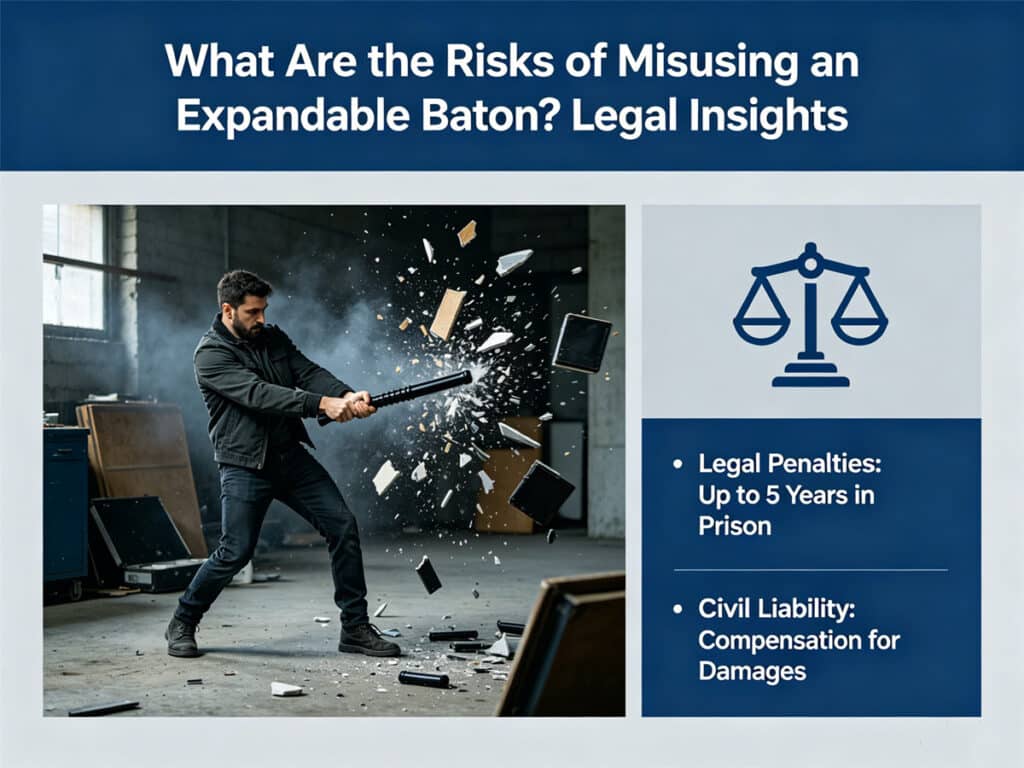
What Are the Risks of Misusing an Expandable Baton? Legal Insights
Expandable batons have earned recognition among security professionals, law enforcement officers, and prepared civilians as versatile tools for personal protection, offering a balance between reach and portability that few other defensive implements can match. However, their very effectiveness introduces substantial responsibilities, as improper handling or deployment can transform a legitimate self-defense instrument into a source of serious legal and personal consequences. This discussion explores the multifaceted risks associated with misusing an expandable baton, providing clear legal insights drawn from established principles across various jurisdictions while emphasizing the importance of responsible ownership and training.
Understanding Expandable Batons as Defensive Tools
Expandable batons, often constructed from durable steel or alloy materials with telescoping mechanisms, provide users with a compact carry option that extends into a longer impact weapon when needed. These tools deliver significant striking power capable of creating distance from threats and delivering controlled force to subdue aggressors without necessarily resorting to lethal measures. Their popularity stems from the ease with which they collapse for discreet everyday carry, making them appealing to those who navigate unpredictable urban environments or high-risk professions on a regular basis.
Yet this same convenience demands a deep appreciation for the physics involved, where the extended length amplifies momentum and potential injury severity far beyond that of an unaided hand strike. Many individuals underestimate how quickly a defensive action can escalate when an expandable baton enters the equation, particularly because the tool’s design encourages instinctive swinging motions that may exceed proportionate responses in rapidly evolving situations. Proper understanding begins with recognizing that these implements function best as extensions of trained judgment rather than standalone solutions, requiring users to internalize principles of de-escalation and threat assessment long before any physical engagement occurs.
The psychological aspect also merits attention, as carrying such a tool can foster heightened confidence that sometimes leads to premature deployment when verbal commands or retreat might have sufficed. This dynamic illustrates why comprehensive education about the expandable baton forms the foundation for safe and lawful use, transforming potential liability into measured capability.
Proper Usage Principles and Training Requirements
Effective and defensible application of an expandable baton relies heavily on structured training that covers deployment techniques, target selection, and force continuum integration. Professional instruction typically emphasizes striking areas with lower injury potential, such as large muscle groups or extremities, while strictly avoiding vulnerable zones like the head or neck unless facing imminent deadly threats. Such training programs stress the importance of maintaining situational awareness throughout any confrontation, ensuring that baton use aligns with immediate necessity rather than frustration or anger.
Without adequate preparation, users frequently encounter difficulties in controlling the baton’s extension or retracting it swiftly after initial deployment, factors that can prolong encounters and increase documentation challenges in subsequent legal reviews. Regular practice sessions help develop muscle memory for smooth operation under stress, yet many civilians acquire these tools without investing equivalent effort in skill development, creating dangerous gaps between equipment possession and practical competence.
Law enforcement models often incorporate scenario-based exercises that simulate real-world variables, including low-light conditions, multiple assailants, and environmental hazards, providing insights that translate well to civilian contexts when properly adapted. Those who commit to ongoing training report greater precision in application and stronger articulation of their actions during official inquiries, highlighting how preparation directly mitigates many risks associated with misuse.
Common Training Oversights to Avoid
Inadequate focus on retraction techniques or failure to understand jurisdictional force policies represents frequent shortcomings that undermine otherwise well-intentioned users, often surfacing only after an incident has occurred.
Legal Frameworks Governing Expandable Baton Possession and Use
Legal treatment of expandable batons varies considerably by location, with some regions classifying them as restricted weapons subject to licensing requirements while others permit open possession with limitations on carry methods or prohibited locations. Understanding these distinctions becomes essential because what qualifies as lawful self-defense in one jurisdiction might constitute brandishing or assault in another, particularly when the baton’s telescoping nature raises questions about intent and readiness. Courts frequently examine factors such as the user’s training level, the specific circumstances prompting deployment, and whether lesser alternatives were reasonably available before approving baton use as justified.
Federal and state statutes in many areas draw distinctions between law enforcement and civilian applications, imposing stricter standards on private citizens who must demonstrate that their actions adhered to reasonable person standards under similar conditions. Precedents involving expandable baton cases often hinge on video evidence, witness statements, and medical documentation of injuries, underscoring the necessity of maintaining detailed records of training and carry habits.
Ignorance of local ordinances does not provide protection in legal proceedings, which is why diligent research into applicable laws, including restrictions in schools, government buildings, or public transportation, forms a non-negotiable aspect of responsible ownership. Consulting with legal professionals familiar with weapons regulations can clarify gray areas and help tailor carry practices to remain compliant across different environments.
Criminal Liabilities Arising from Baton Misuse
Misuse of an expandable baton can quickly escalate into criminal charges ranging from simple assault to aggravated battery or even manslaughter depending on the severity of resulting injuries and the perceived intent behind the action. Prosecutors often highlight the weapon’s classification as a force multiplier when arguing that its deployment represented excessive force, particularly in situations where the threat level did not objectively warrant such intervention. Cases involving unwarranted baton strikes have resulted in felony convictions that carry lasting consequences, including loss of employment opportunities, firearm rights restrictions, and permanent criminal records that affect multiple aspects of personal and professional life.
The expandable nature of these tools sometimes complicates legal defenses because courts may question why a user chose to carry and deploy a weapon specifically designed for impact rather than simpler alternatives. Factors such as alcohol consumption, prior verbal aggression, or failure to retreat when possible can further undermine claims of self-defense, transforming what the user viewed as protection into prosecutable misconduct. High-profile incidents have demonstrated how public perception and media coverage can influence charging decisions, adding layers of complexity that extend beyond purely legal considerations into social and reputational domains.
Sentencing Considerations in Baton-Related Cases
Judges frequently consider the defendant’s criminal history, evidence of training, and demonstrated remorse when determining appropriate penalties, which can range from probation and fines to significant periods of incarceration in severe instances.
Civil Consequences and Personal Liability Exposure
Beyond criminal proceedings, civil lawsuits represent another substantial risk area for those who misuse expandable batons, as injured parties may pursue compensation for medical expenses, lost wages, pain and suffering, and punitive damages in cases where gross negligence appears evident. Insurance policies sometimes exclude coverage for intentional acts or weapons-related incidents, leaving individuals personally responsible for substantial financial judgments that can accumulate rapidly through legal fees and court-mandated payments.
Plaintiff attorneys commonly emphasize the disparity in force when arguing cases involving batons against unarmed individuals, even when initial aggression came from the other party, making thorough documentation of events critically important for mounting successful defenses. Reputation damage often accompanies such lawsuits, affecting relationships, career prospects, and community standing in ways that extend far beyond monetary settlements.
Responsible carriers frequently review their personal liability insurance options and consider specialized riders that address defensive tool usage, recognizing that comprehensive protection encompasses both legal compliance and financial preparedness for unforeseen outcomes.
Psychological and Situational Factors Contributing to Misuse
The decision to deploy an expandable baton under stress involves complex psychological elements, where adrenaline, fear, or overconfidence can impair judgment and lead to applications that appear disproportionate in hindsight. Tunnel vision, a common stress response, may cause users to overlook de-escalation opportunities or misread threat cues, resulting in escalated force levels that invite legal scrutiny. Situational awareness training helps counteract these tendencies by promoting calm assessment even amid chaos, yet many individuals overlook this component when focusing primarily on physical techniques.
Environmental variables such as crowded spaces, poor lighting, or the presence of bystanders introduce additional complications that can transform a seemingly straightforward defensive action into a liability nightmare if collateral injuries occur. Understanding these contributing factors encourages more measured approaches to personal safety planning, where the expandable baton serves as one component within a broader strategy rather than the primary focus.
Best Practices for Responsible Carry and Risk Reduction
Minimizing the dangers associated with expandable baton ownership requires adopting comprehensive practices that include regular legal education, consistent training regimens, appropriate selection of equipment matched to user capabilities, and clear documentation of all related activities. Maintaining a detailed log of practice sessions, certifications, and relevant incidents provides valuable support in any potential legal review while demonstrating commitment to lawful use. Selecting quality batons from reputable manufacturers ensures reliable performance characteristics that reduce the likelihood of mechanical failures during critical moments.
Integration with other defensive tools and strategies creates layered protection approaches that decrease reliance on any single implement, thereby limiting exposure to claims of excessive force. Community engagement with like-minded individuals through forums or professional organizations can provide ongoing insights into evolving best practices and legal developments affecting baton carriers.
In reflecting on the broader landscape of personal protection tools, it is worth noting that many enthusiasts also explore complementary options such as a brass knuckle for added versatility in their everyday carry setups, with quality selections available through resources like brassknucklesmaster.com that emphasize responsible and informed choices.