
Jun
Knowledge of Weapons
Top 5 Tactical EDC Gear: Brass Knuckles, Batons & Survival Tools
In the realm of everyday carry (EDC) preparedness, tactical tools are not mere accessories—they are lifelines engineered for unpredictability. From urban self-defense scenarios to wilderness survival challenges, the right gear bridges the gap between vulnerability and control. This analysis explores five cornerstone categories of tactical EDC gear, emphasizing their engineering principles, material science, and real-world applications, while addressing the legal and ethical considerations that accompany their use.
1. Reinforced Brass Knuckles: The Controversial Force Multiplier
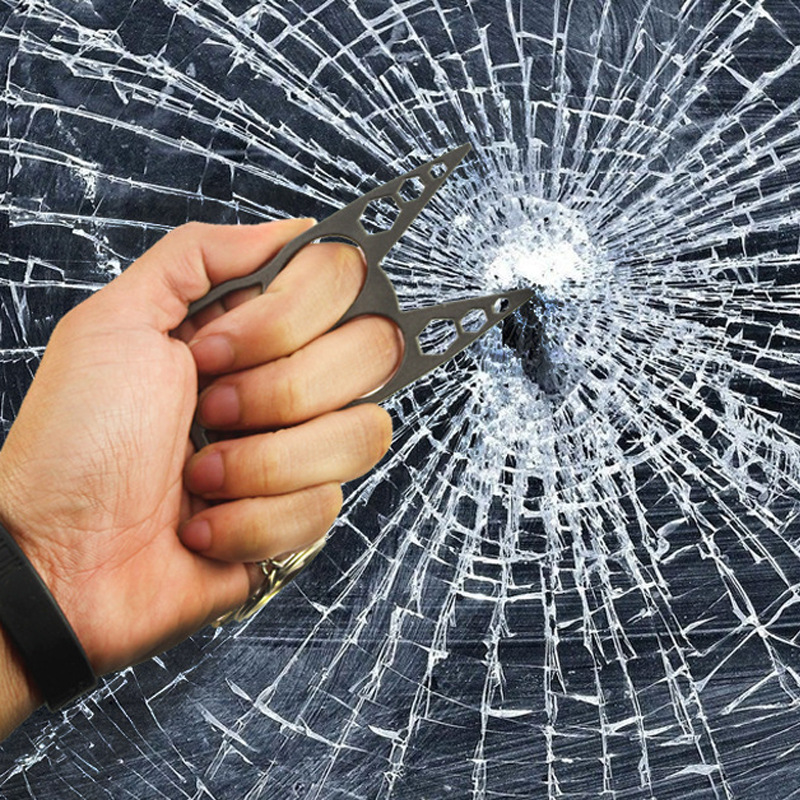
Brass knuckles, or knuckle dusters, have evolved from rudimentary street weapons to precision-engineered tools. Modern reinforced brass knuckles prioritize impact resistance and ergonomic design, leveraging high-density alloys like C36000 brass or 4140 steel to withstand repeated strikes without deformation. Unlike decorative variants, these heavy-duty versions feature:
- Anatomical Contouring: Molded finger grooves and palm swells distribute force evenly, reducing hand fatigue and improving strike accuracy.
- Anti-Slip Texturing: Laser-etched patterns or rubberized coatings ensure grip retention in wet conditions, critical for close-quarters defense.
- Legality-Driven Modularity: Some designs integrate non-lethal add-ons, such as flashlight mounts or glass-breaker tips, to comply with regional weapon laws.
Ethical Note: Legal restrictions vary globally, with jurisdictions like California and the EU banning possession outright. Users must prioritize local regulations and ethical deployment.
2. Tactical Batons: Collapsible Power Meets Precision Engineering
Tactical batons excel in scenarios requiring extended reach and controlled force application. Premium models, such as aircraft-grade aluminum batons, combine portability with devastating striking power:
- Multi-Stage Locking Mechanisms: A single flick activates rigid locking systems (e.g., tri-lock or rotating bolt), ensuring structural integrity during strikes.
- Weight Distribution: Tungsten-reinforced tips concentrate kinetic energy, enabling bone-breaking force while minimizing wielder exertion.
- Covert Carry: Retractable designs (e.g., 16-inch batons collapsing to 7 inches) facilitate discreet storage in backpacks or belt holsters.
Application Insight: Batons are favored by security personnel for crowd control but require rigorous training to avoid unintended lethal consequences.
3. Survival Knives: Full-Tang Blades for Extreme Scenarios
No EDC kit is complete without a full-tang survival knife, exemplified by models like the VESPA M390 blade and 8Cr13Mov fixed-blade knives from DHgate. These tools epitomize durability and versatility:
- Steel Grading: M390 steel offers exceptional edge retention and corrosion resistance, ideal for prolonged outdoor use, while 8Cr13Mov balances affordability with shock absorption.
- Multi-Functional Design: Many blades incorporate sawtooth spines for rope cutting, hollow handles for firestarter kits, or MOLLE-compatible sheaths for tactical vests.
- Stress Testing: Premium knives undergo batoning tests (splitting wood) and flex tests to ensure resilience under lateral pressure.
Pro Tip: Opt for a blade length between 4–6 inches to balance maneuverability and chopping efficiency.
4. Multi-Tool Kits: Modular Adaptability in Compact Forms
Modern tactical multi-tools transcend the Swiss Army knife archetype, integrating task-specific modules for specialized scenarios:
- High-Leverage Pliers: Forged from 420 stainless steel, these handle wire cutting, nail extraction, or even emergency sutures.
- Quick-Deploy Accessories: Spring-loaded screwdrivers, carbide glass breakers, and RFID-blocking compartments cater to urban survivalists.
- Customizable Inserts: Some kits allow users to swap tools based on mission parameters—e.g., adding a fish scaler for wilderness trips.
Design Flaw Alert: Avoid overly complex models; friction from multiple hinges can impede rapid deployment.
5. Discreet Carry Systems: Balancing Accessibility and Concealment
The effectiveness of EDC gear hinges on immediate accessibility paired with low-profile concealment. Innovations in this space include:
- Deep-Carry Clips: Titanium clips secure knives or batons inside pockets, preventing “printing” against clothing.
- Magnetic Retention Holsters: Rare-earth magnets enable one-handed tool retrieval while jogging or climbing.
- Body-Armor Integration: Modular sheaths attach to ballistic vests or belts, keeping gear accessible during high-mobility operations.
User Error Warning: Over-tightening retention systems can delay draw times—test adjustments under stress simulations.
By prioritizing material integrity, ergonomic innovation, and scenario-specific adaptability, these five tactical EDC categories empower users to confront adversity with engineered precision. Whether navigating a darkened alley or a remote forest, the right tools transform uncertainty into actionable confidence.