
Jun
Knowledge of Weapons, Weapons What
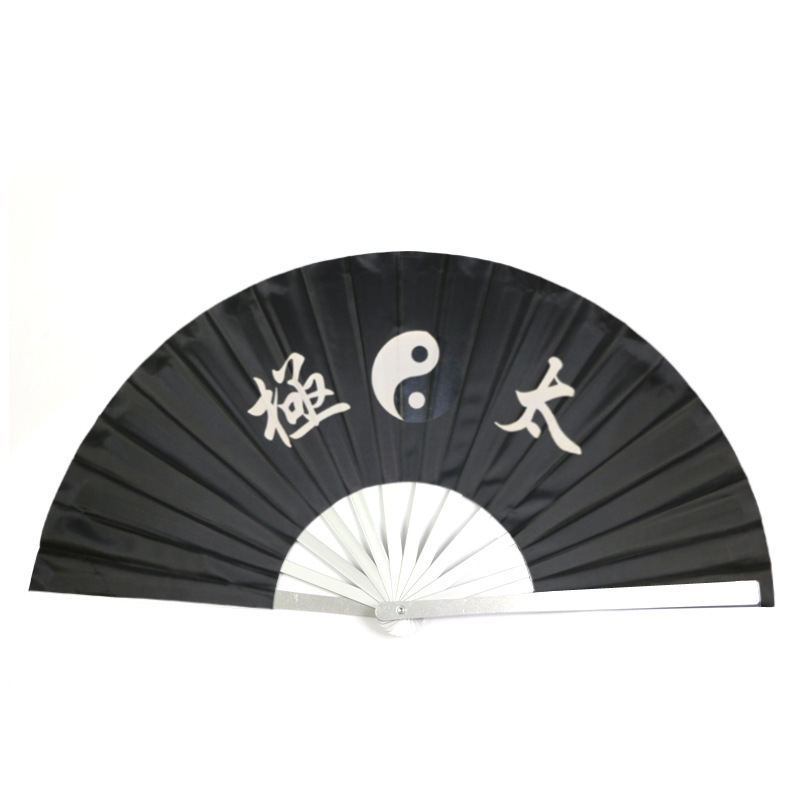
Lightweight Combat Fans: Training Techniques for Practical Self-Defense
In the evolving landscape of personal protection, lightweight combat fans emerge as sophisticated tools blending cultural heritage with tactical efficacy. Unlike overt weapons that escalate confrontations or face legal restrictions, these unassuming instruments leverage mechanical advantage and element of surprise to neutralize threats. Their effectiveness hinges not on raw power, but on precision biomechanics and disciplined training – transforming an everyday object into a discreet force multiplier. This analysis explores the systematic methodology required to master their defensive potential.
The Stealth Defender’s Edge – Psychology and Mechanics
Why Form Follows Function
The combat fan’s brilliance lies in its non-threatening appearance. Unlike conspicuous weapons whose very presence escalates tensions, the fan resides in that strategic gray area where passive readiness transforms into active defense only when threat proximity crosses irreversible thresholds. Biomechanically, its design exploits leveraged force principles: a 12–16-inch optimally weighted frame (often aircraft-grade aluminum or spring-tempered steel) converts wrist motion into focused kinetic energy at the tip, multiplying strike impact without telegraphing intent. Critically, deployment relies on grip versatility – transitions between closed (concealed) and open (defensive) positions must occur within 0.5 seconds under stress. This demands rehearsing draws from bags, sleeves, or waistbands until muscle memory overrides adrenaline-induced tremor.
Foundational Mechanics – Building Neural Pathways
Repetition Beyond Drills
True proficiency transcends choreographed patterns. Begin with isolation drills:
- Joint Mobilization: Rotational exercises enhancing wrist flexion/extension range (e.g., figure-eights with weighted fan replicas) to prevent torque injuries during rapid directional shifts.
- Pressure Sensitivity: Gripping variations (pinch, palm-shelf, extended-finger) adjusted dynamically to counter grabs or disarm attempts. A slack grip permits fluid redirection, while a locked grip stabilizes penetrating strikes.
Integrate environmental desensitization: practice blocking/striking sequences amidst auditory distractions (simulated crowds), low-light conditions, or confined spaces to forge adaptive reflexes. High-repetition, low-intensity sessions (20–30 minutes daily) prove more effective than sporadic high-intensity drilling for neuromuscular encoding.
Tactical Applications – Targeting Efficiency Over Force
Anatomical Precision
Combat fans excel in targeting neurovascular junctions where minimal force yields maximum disruption:
- Radial Nerve Strike: A flicking motion to the attacker’s forearm (3–4 inches above the wrist) induces temporary muscle paralysis.
- Temple/Submental Angle: Fan tip jabs to the cranial base or jaw hinge disrupt balance and cognitive function.
Leverage the fan’s dual profiles:
- Closed Position: Functions as a short baton — thrusting to the throat, ribs, or brachial plexus.
- Open Position: Creates deflective surfaces to parry blades or projectiles. Train the “fan block-redirect-strike sequence” against haymaker punches: deflect with the open fan’s spine, rotate closed mid-motion, and counterstrike the philtrum or clavicle.
Material Science and Maintenance – Ensuring Structural Integrity
Engineering the Invisible Shield
Fan durability depends on alloy composition and hinge mechanics. Aircraft-grade aluminum (7075-T6) offers optimal strength-to-weight ratios, while titanium variants resist corrosion in humid climates – critical for consistent deployment. Inspect pivot points weekly for metal fatigue; a stiffened hinge delays deployment by critical milliseconds. Apply graphite lubricant to rivets monthly to prevent particulate-induced friction. For wooden fans, treat with tung oil to maintain flexural strength – brittleness from dehydration causes catastrophic failure during impact.
Integrating with Existing Systems – Hybrid Defense Frameworks
Synergy with Martial Principles
Combat fans amplify, rather than replace, core martial skills:
- Footwork Synchronization: In Wing Chun or Silat, fan strikes integrate with triangle stepping to maintain balance during lateral strikes.
- Grappling Augmentation: Against clinches, use the closed fan as a fulcrum tool to pry into pressure points (e.g., radial groove of the wrist) while leveraging hip throws.
Train with asymmetrical loading: practice dominant/non-dominant hand transitions mid-engagement to adapt to injury or restricted mobility – a technique proven in firearm retention drills.
Scenario-Based Conditioning – Beyond the Dojo
Stress Inoculation Protocols
Technical proficiency crumbles under adrenaline without contextual rehearsal. Implement simulations mimicking:
- Crowded Transit: Defending seated against a standing attacker, using the fan to jam kicks or target femoral nerves.
- Weapon Diversion: Pairing fan parries with off-hand disarms against blunt weapons, emphasizing simultaneous defense-counter timing.
Incorporate cognitive load drills: solve arithmetic problems while executing fan sequences, or identify threat weapons mid-engagement to sharpen tactical processing under duress 2. Document performance metrics (e.g., strike accuracy under strobe lighting, deployment speed post-sprint) to quantify readiness thresholds.
Mastering the combat fan transforms apparent vulnerability into calculated advantage. Its power resides not in the tool, but in the practitioner’s ability to merge mechanical intelligence with situational ruthlessness – a convergence where elegance meets extremity.