
Aug
Knowledge of Weapons, Weapons How
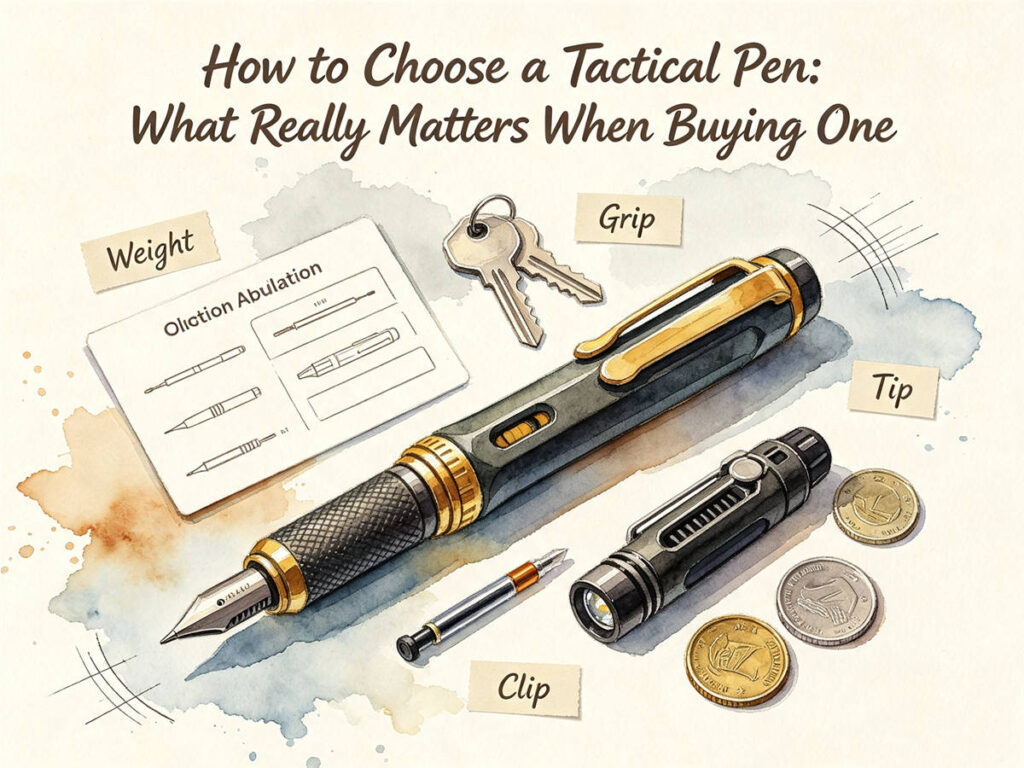
How to Choose a Tactical Pen: What Really Matters When Buying One
1. The Problem with Most “Best Tactical Pen” Lists
Search for tactical pen advice online and you will find dozens of articles ranking pens by price, by brand, or by a spec sheet that reads like a military procurement document. Titanium this, tungsten that, 20 different features you will never use. The information is not wrong, but it misses the point entirely.
The question is not “which tactical pen has the best specs?” The question is “which tactical pen will I actually carry, every day, without thinking about it?” At Brass Knuckles Master, we believe the best tactical pen is the one you forget is in your pocket — until you need it.
2. Start with How You Will Carry It
Before you look at materials, tips, or features, think about where this pen will live during your day.
Pocket Carry
If the pen is going in your front pants pocket, size and weight matter most. A pen longer than six inches starts to dig into your thigh when you sit. Anything heavier than two ounces becomes noticeable by afternoon. Look for a slim profile and a deep pocket clip that keeps the pen secure and flush against the fabric.
Bag or Briefcase Carry
If you are carrying in a bag or organizer, you have more flexibility with size and weight. A slightly larger pen with a thicker body might be more comfortable to write with during meetings, and the extra heft adds confidence if you ever need to use it defensively.
Shirt or Jacket Clip Carry
A pen clipped to a shirt pocket or jacket lapel is always visible, so aesthetics matter more here. Choose a design that looks professional and does not scream “tactical.” At BKM, our tactical pen is designed to look like a quality writing instrument — nothing more, nothing less.
3. Material: The Foundation of Every Decision
The material of your tactical pen determines its weight, durability, feel, and price. Here is what you need to know about the most common options.
Aircraft-Grade Aluminum
The most popular choice. Aluminum pens are lightweight — typically under 1.5 ounces — durable, and affordable. They resist corrosion and come in a range of anodized colors. If you are buying your first tactical pen, aluminum is the smart starting point.
Stainless Steel
Heavier than aluminum, which adds striking force but also adds fatigue if you write for extended periods. Steel pens are virtually indestructible and have a satisfying heft. The downside is weight — a steel pen in your shirt pocket pulls the fabric down noticeably.
Titanium
The premium option. Titanium offers the best strength-to-weight ratio of any common pen material. It is lighter than steel, stronger than aluminum, and develops a unique patina over time. It is also the most expensive, which puts it in the “investment” category rather than the “impulse buy” category.
What We Recommend
For most people, aluminum hits the sweet spot of weight, durability, and cost. If you want something that feels more substantial, go steel. If budget is not a concern and you want the lightest, strongest option, titanium is hard to beat.
4. Grip: The Feature Most People Underrate
A tactical pen is only useful if it stays in your hand when things go sideways. Grip texture is the single most overlooked factor when choosing a pen, and it makes the biggest difference in real-world use.
Knurled Patterns
Diamond or straight knurling provides excellent grip in dry conditions and decent grip when wet. It is the most common grip texture on tactical pens and works well for most people.
Grooved Bodies
Longitudinal or spiral grooves give a secure hold without the rough feel of knurling. They are more comfortable for extended writing sessions and still provide solid traction under stress.
Rubberized Sections
Some pens include rubber or silicone grip panels near the middle of the body. These are excellent for wet or sweaty hands but can attract lint and dust in a pocket.
Test Before You Commit
If possible, hold the pen before you buy. Grip it firmly, simulate a quick strike motion, and see if your hand slips. If you are buying online, read reviews that specifically mention grip quality — it is one of the few specs that really matters in daily use.
5. The Writing Experience: Do Not Compromise
This is the part that separates a tactical pen you carry from one that lives in a drawer. If the pen does not write smoothly and reliably, you will reach for your regular pen instead. And then the whole point of carrying a tactical pen disappears.
Ink Type
Standard ballpoint refills are the most common and easiest to replace. Gel refills write smoother but can skip in extreme temperatures. Pressurized cartridges (like Fisher Space Pen refills) write in any condition — wet, cold, upside down — but cost more per refill.
Refill Availability
Check what refills the pen accepts before you buy. Proprietary refills lock you into a single supplier and can be hard to find. Pens that accept standard Parker-style or Pilot-style refills give you the most flexibility.
Tip Retraction
Click-retract, twist-retract, and cap designs each have tradeoffs. Click mechanisms are fastest but can jam over time. Twist mechanisms are more reliable but slower to deploy. Caps are the simplest and most secure, but you need to store the cap somewhere while writing.
6. Extra Features: What Actually Matters
Tactical pens come with a long list of potential extras. Here is a quick breakdown of what is worth paying for and what is marketing noise.
Glass Breaker Tip — Worth It
A tungsten carbide or hardened steel tip that can break tempered glass in an emergency. This is the one extra feature that adds genuine, life-saving value. If your pen has it, you have a tool that could get you out of a submerged car or a locked vehicle.
DNA Collector — Nice to Have
A textured crown on the cap end designed to collect an attacker’s skin cells on contact. It is a passive feature that does not affect daily carry and adds an extra layer of utility.
Built-in Flashlight — Usually Not Worth It
Tiny LED lights built into pen caps are almost always too dim to be useful and add a point of failure. Carry a dedicated flashlight instead.
Whistle, Compass, Etc. — Skip
Gimmick features that add bulk without adding real value. A tactical pen should be a pen first, a defensive tool second, and everything else a distant third.
7. Putting It All Together
Choosing a tactical pen comes down to three questions: Will I carry it every day? Does it write well? Is it built to last? If you can answer yes to all three, you have found your pen.
At Brass Knuckles Master, our tactical pen is designed to answer all three without compromise. It carries like a pen, writes like a pen, and is built to handle whatever your day throws at it — from signing contracts to breaking a car window in an emergency.
Do not overthink the decision. Pick a pen that feels right in your hand, fits your carry style, and writes the way you want it to. Everything else is secondary. And if you want a place to start, explore the BKM tactical pen — it is the kind of tool that earns its place in your pocket the first day you carry it.