
Aug
Knowledge of Weapons
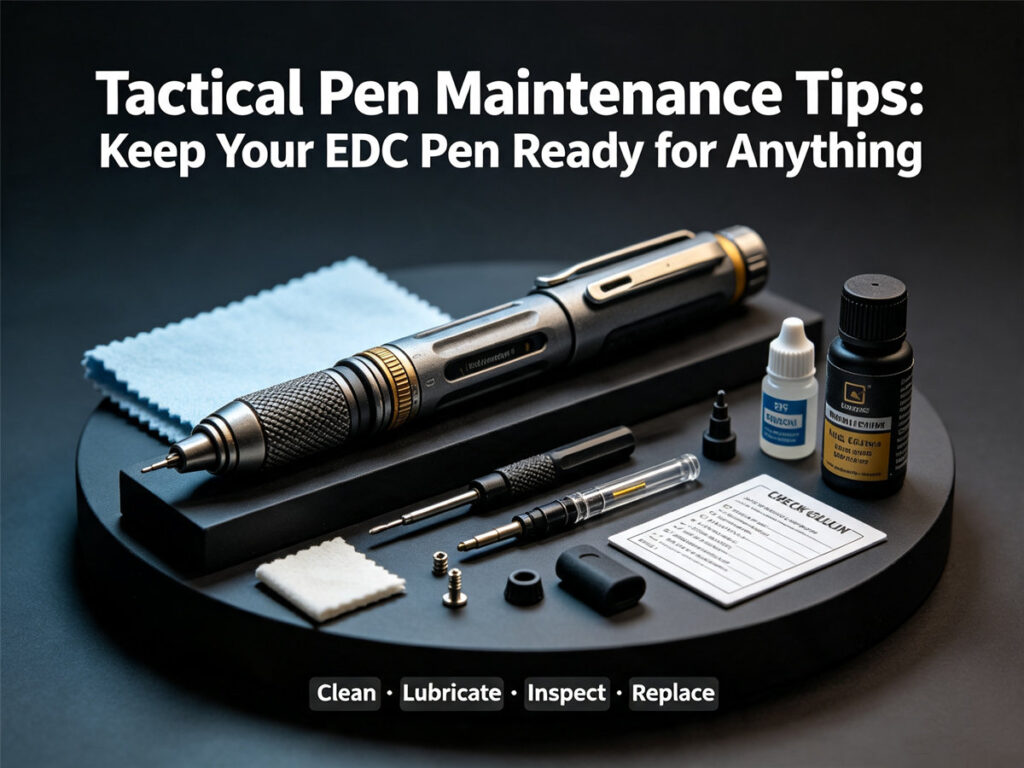
Tactical Pen Maintenance Tips: Keep Your EDC Pen Ready for Anything
1. Why Your Tactical Pen Deserves a Maintenance Routine
A tactical pen is not a disposable Bic. You bought it because it is built to last, built to perform, and built to be there when you need it. But “built to last” does not mean “never needs attention.” Like any tool you carry and use daily, a tactical pen accumulates wear — pocket lint in the threads, ink residue on the tip, skin oils on the grip, and microscopic grit that works its way into every moving part.
At Brass Knuckles Master, we build our pens to handle punishment. But a few minutes of maintenance every few weeks keeps that pen performing at the level you bought it for — smooth ink, solid action, and a body that looks as good as the day it arrived.
2. Cleaning the Body: A Two-Minute Job
The pen body collects everything your pockets and hands throw at it — lint, sweat, dust, and the occasional coffee splash. Cleaning it takes almost no time.
What You Need
- A soft microfiber cloth
- Isopropyl alcohol (70% or higher)
- A cotton swab
- Warm water
The Process
Dampen the microfiber cloth with a small amount of isopropyl alcohol and wipe down the entire body. The alcohol dissolves skin oils and evaporates quickly without leaving residue. For textured grip sections — knurling, grooves, or fluted patterns — use a cotton swab to get into the crevices where grime accumulates.
For aluminum pens with anodized finishes, avoid abrasive cleaners or rough scrubbing pads. The anodized layer is durable but not indestructible — repeated abrasive cleaning will dull the finish over time. A damp cloth and mild soap work perfectly fine for routine cleaning.
How Often
Wipe down the body once a week if you carry daily. Deep clean the grip texture once a month. These are not strict rules — if your pen looks or feels dirty, clean it. If it feels fine, a quick wipe is still worth doing to prevent buildup.
3. Maintaining the Glass Breaker Tip
The glass breaker tip is the most critical safety feature on your tactical pen. Keeping it in good condition is straightforward but important.
Inspection
Once a month, check the tip for damage. Look for chips, dulling, or looseness. A tungsten carbide tip should maintain its point for years, but impacts against hard surfaces (like accidentally dropping the pen tip-first onto concrete) can chip or blunt it.
Cleaning
Wipe the tip with a dry cloth to remove any debris. If residue has built up around the base where the tip meets the body, use a cotton swab with a tiny amount of alcohol to clean the junction. Make sure the tip is seated firmly — it should not wobble or shift when you press on it.
When to Replace
If the tip is chipped, cracked, or loose, contact the manufacturer. A compromised glass breaker may not perform in an emergency, and a loose tip can become a safety hazard. At BKM, we stand behind the durability of our pen’s construction, but any tool can be damaged by extreme force.
4. Ink Refill: Swap It Right
Running out of ink is not a maintenance failure — it is a sign you are actually using your pen. But swapping refills incorrectly can cause skipping, leaking, or damage to the ink mechanism.
Choosing the Right Refill
Check your pen’s specifications for compatible refill types. Most quality tactical pens accept standard Parker-style G2 refills, which are available from dozens of brands in ballpoint, gel, and hybrid ink formulations. If your pen uses a proprietary refill, order replacements before you run out so you are never stuck.
The Swap Process
- Unscrew or pull the old refill out from the writing end of the pen
- Check the spring — make sure it is seated properly and has not compressed or shifted
- Insert the new refill, tip first, making sure it aligns correctly
- Test the retraction mechanism several times to confirm smooth operation
- Write a few lines to verify ink flow
Common Mistakes
Do not force a refill that does not fit. If the refill is too long, it may jam the retraction mechanism. If it is too short, the tip will not extend properly. And never mix refill types without checking compatibility — a gel refill in a pen designed for pressurized cartridges can leak under temperature changes.
5. Threading and Joints: Where Problems Hide
The threaded connections on a tactical pen — where the cap screws on, where the body sections join — are the parts most likely to develop problems over time. Grit and lint work into the threads, causing stiffness, cross-threading, or a loose fit.
Cleaning Threads
Use a dry, stiff brush (an old toothbrush works) to brush out the threads. For stubborn grime, a cotton swab with alcohol cleans the thread channels without leaving residue. Dry thoroughly before reassembling.
Lubricating Threads
A tiny drop of silicone-based lubricant on the threads keeps them turning smoothly. Avoid petroleum-based lubricants — they can degrade rubber O-rings and attract dust. Apply sparingly, wipe off any excess, and work the cap back and forth a few times to distribute the lubricant evenly.
O-Ring Maintenance
Some tactical pens use rubber O-rings at the joints for a snug fit and water resistance. These O-rings dry out and crack over time, especially in hot or dry climates. Inspect them every few months and replace them if they look cracked, flattened, or brittle. Replacement O-rings cost pennies and take seconds to install.
6. Clip and Pocket Carry Wear
The pocket clip on your tactical pen takes more abuse than any other component. It bends, flexes, rubs against fabric, and absorbs impacts every time you draw or pocket the pen.
Checking Clip Tension
The clip should hold firmly to your pocket without being so tight that drawing the pen requires force. If the clip has loosened over time, you can gently bend it back toward the body using pliers — wrap the plier jaws in cloth first to avoid scratching the finish.
Clip Attachment Point
Check where the clip attaches to the pen body. Screws can loosen, and press-fit clips can shift. Tighten any loose screws with the appropriate tool, and if a press-fit clip has shifted, carefully reseat it.
7. Building the Habit
Tactical pen maintenance does not require a workshop or specialized tools. A cloth, some alcohol, a cotton swab, and five minutes of your time are enough to keep your pen performing at its best.
At Brass Knuckles Master, we design our tactical pen to be low-maintenance by nature — quality materials, robust construction, and designs that resist the wear and tear of daily carry. But low-maintenance is not no-maintenance. A quick weekly wipe, a monthly deep clean, and an occasional refill swap are all it takes to keep your pen ready for whatever comes next.
The best EDC tools are the ones you trust without hesitation. A well-maintained tactical pen earns that trust every time you pick it up — smooth, solid, and ready. If you are looking for a pen built to be maintained, not replaced, explore the BKM tactical pen collection and invest in gear that lasts.