
Mar
Knowledge of Weapons, Weapons How
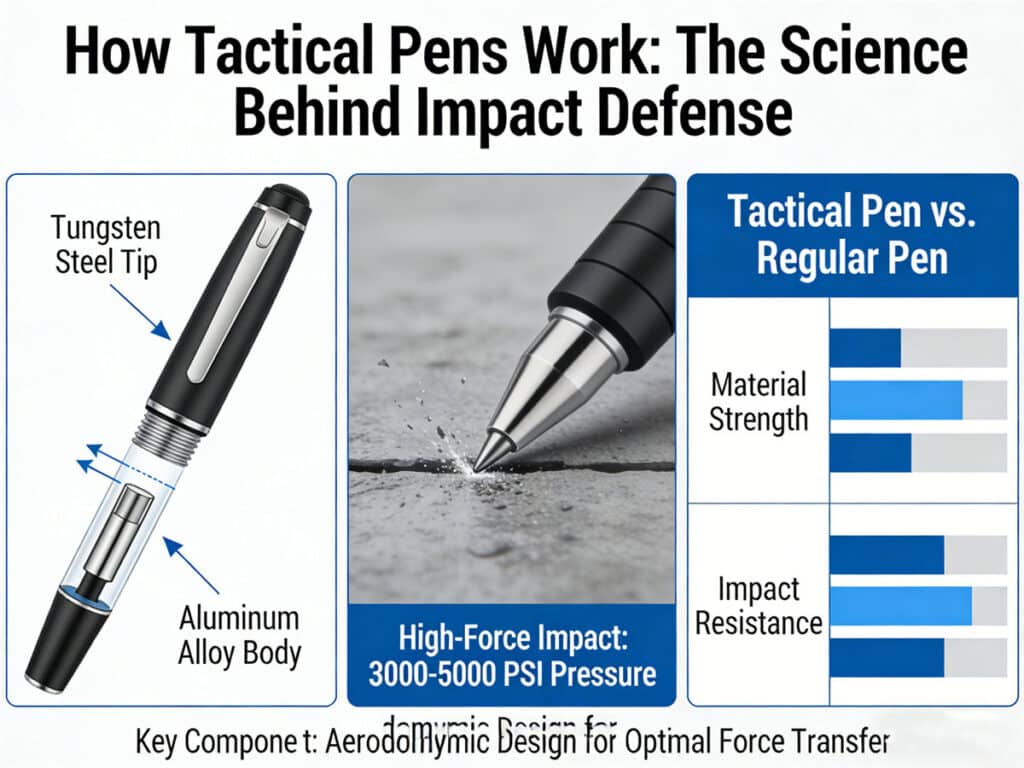
How Tactical Pens Work: The Science Behind Impact Defense
1. The Evolution of the Tactical Pen: From Writing Tool to Defensive Instrument
At first glance, a tactical pen appears indistinguishable from a premium writing instrument, yet beneath its understated exterior lies a carefully engineered structure designed to withstand forces far beyond ordinary daily use. The concept emerged from the broader movement toward discreet personal safety tools—objects that blend seamlessly into professional and social environments while offering an additional layer of preparedness.
Unlike overt defensive devices, tactical pens rely on subtlety. They are intentionally shaped and weighted to function as reliable writing instruments, while also incorporating structural reinforcement that allows them to endure significant stress. This dual-purpose design reflects a practical philosophy: everyday objects can be optimized for durability and emergency utility without sacrificing appearance or comfort.
Over time, manufacturers refined the materials, grip patterns, and internal mechanisms to ensure that the pen remains balanced and comfortable during normal writing, yet strong enough to resist bending or breaking under impact. Understanding how tactical pens work requires examining the physics, materials science, and ergonomic engineering that support their effectiveness.
2. Material Science and Structural Integrity
The effectiveness of a tactical pen in impact defense is rooted primarily in material selection and construction quality.
High-Strength Alloys and Metals
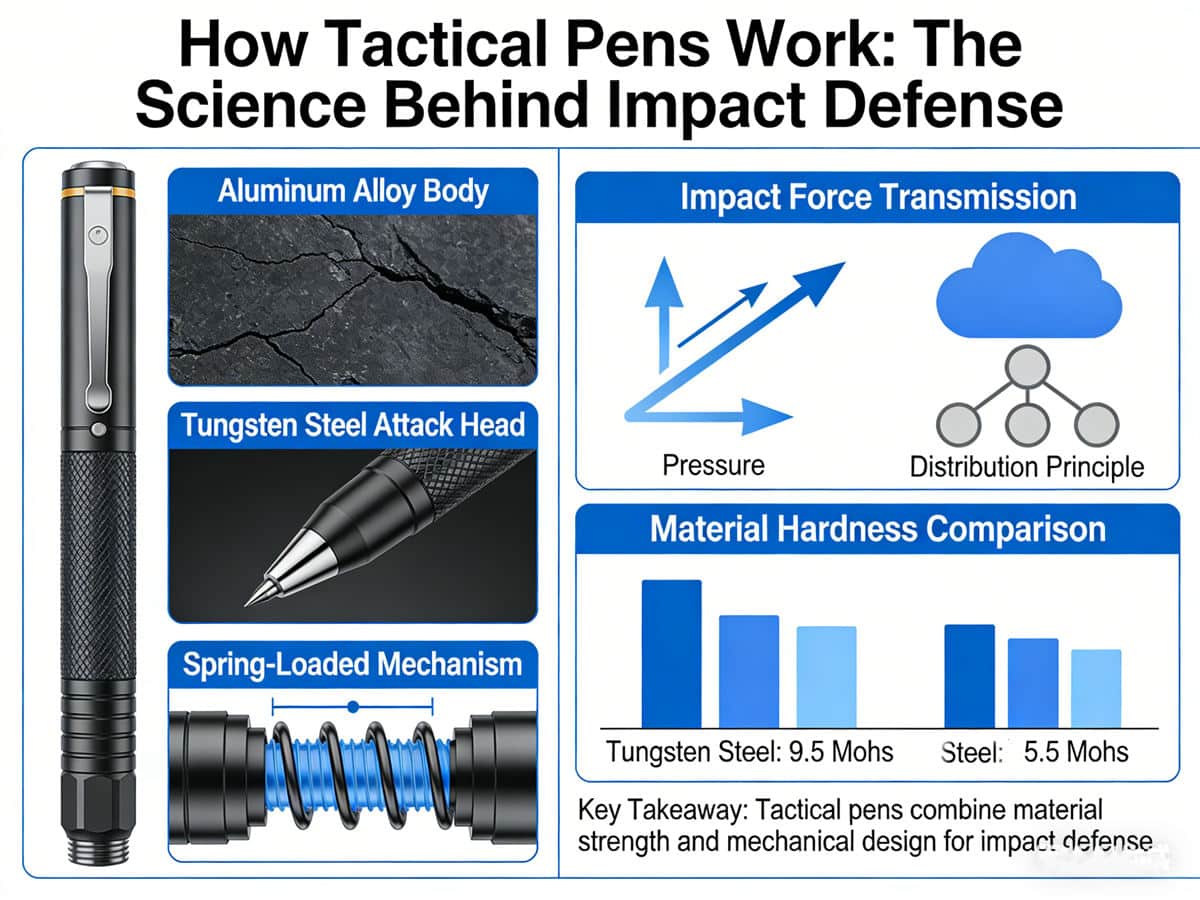
Most tactical pens are manufactured from aircraft-grade aluminum, stainless steel, or titanium alloys. These materials offer an optimal combination of strength, corrosion resistance, and manageable weight. Aircraft-grade aluminum, for example, provides excellent rigidity while remaining light enough for comfortable everyday carry. Stainless steel adds mass and durability, which can increase striking force due to higher density. Titanium offers exceptional strength-to-weight ratios and resistance to environmental wear.
From a physics standpoint, a rigid material minimizes energy loss during impact. When force is applied, a softer material absorbs and dissipates energy through deformation, while a hardened alloy transfers more energy directly to the point of contact. This principle explains why reinforced materials are essential for defensive reliability.
Reinforced Internal Design
Beyond external material choice, internal threading and structural reinforcement play a critical role. Tactical pens are often precision-machined from a single piece of metal or tightly assembled using reinforced joints. This reduces weak points that might otherwise fail under stress.
Knurled grip patterns are not merely aesthetic; they enhance friction between the hand and the pen, ensuring stability during sudden movement. The overall cylindrical geometry distributes force evenly along the shaft, preventing bending or structural compromise during high-pressure scenarios.
3. The Physics of Impact Defense
To understand how a tactical pen functions as an impact defense tool, one must examine basic principles of physics, particularly force concentration and pressure.
Force Concentration and Surface Area
Pressure is defined as force divided by surface area. When the same amount of force is applied over a smaller surface area, pressure increases significantly. Tactical pens typically feature a reinforced, narrow tip—often referred to as a striking point—which concentrates force onto a limited contact area.
Because the tip is compact and rigid, even moderate force can create substantial localized pressure. This is not about excessive strength, but about mechanical efficiency. The design amplifies the effect of controlled movement through focused contact.
Leverage and Control
The pen’s length provides leverage, allowing the user to maintain distance while applying force. Unlike larger tools, which may be unwieldy in confined spaces, a tactical pen is compact and easy to maneuver. Its ergonomic balance ensures that the center of mass aligns comfortably within the hand, reducing strain and improving control.
In practical terms, effectiveness relies not solely on physical strength, but on proper grip, positioning, and technique. Many self-defense instructors emphasize that tools are only as effective as the training behind them, underscoring the importance of situational awareness and controlled response.
4. Ergonomics, Design, and Real-World Functionality
The science behind a tactical pen extends beyond impact mechanics; ergonomics and usability are equally critical.
Grip Engineering
Knurled or textured surfaces improve tactile feedback, especially under stress or in wet conditions. Human hands naturally tighten under adrenaline, and a textured grip helps maintain control during rapid movements. The diameter of the pen is carefully calibrated—thicker than a standard pen, yet slim enough for comfortable writing and pocket carry.
Glass-Breaking Capability
Many tactical pens include a hardened tip, often made from tungsten carbide, capable of shattering tempered glass in emergency situations. This feature leverages material hardness and point geometry to concentrate impact energy effectively. In automotive emergencies, for example, tempered glass fractures when subjected to sharp, focused force at specific stress points.
Everyday Utility
A critical element of tactical pen design is preserving full writing functionality. Replaceable ink cartridges, smooth flow mechanisms, and durable clips ensure that the pen performs its primary function reliably. This practical integration distinguishes tactical pens from purely defensive tools, reinforcing their place within everyday carry systems.
5. Modern Perspectives on Discreet Defense Tools
In today’s environment, many individuals seek tools that combine preparedness with discretion. The tactical pen exemplifies this balance by offering structural resilience without overtly signaling defensive intent. Unlike larger or more conspicuous items, it blends seamlessly into professional settings, making it an appealing choice for those who prioritize subtlety.
At the same time, discussions about personal defense often intersect with broader debates about legality and responsibility. While tactical pens are generally legal in many jurisdictions due to their primary function as writing instruments, users should always verify local regulations before relying on any defensive tool.
In contrast, items such as a brass knuckle are frequently subject to stricter legal controls, with possession restricted or prohibited in numerous regions. Online platforms like brassknucklesmater.com may provide product listings and historical information, yet legal compliance and responsible ownership remain essential considerations for consumers exploring any form of personal defense equipment.
Understanding how tactical pens work involves more than examining metal and mechanics; it requires recognizing the thoughtful engineering, physics principles, and ergonomic refinements that transform a simple writing instrument into a durable and discreet preparedness tool.