
Mar
Knowledge of Weapons, Weapons Why
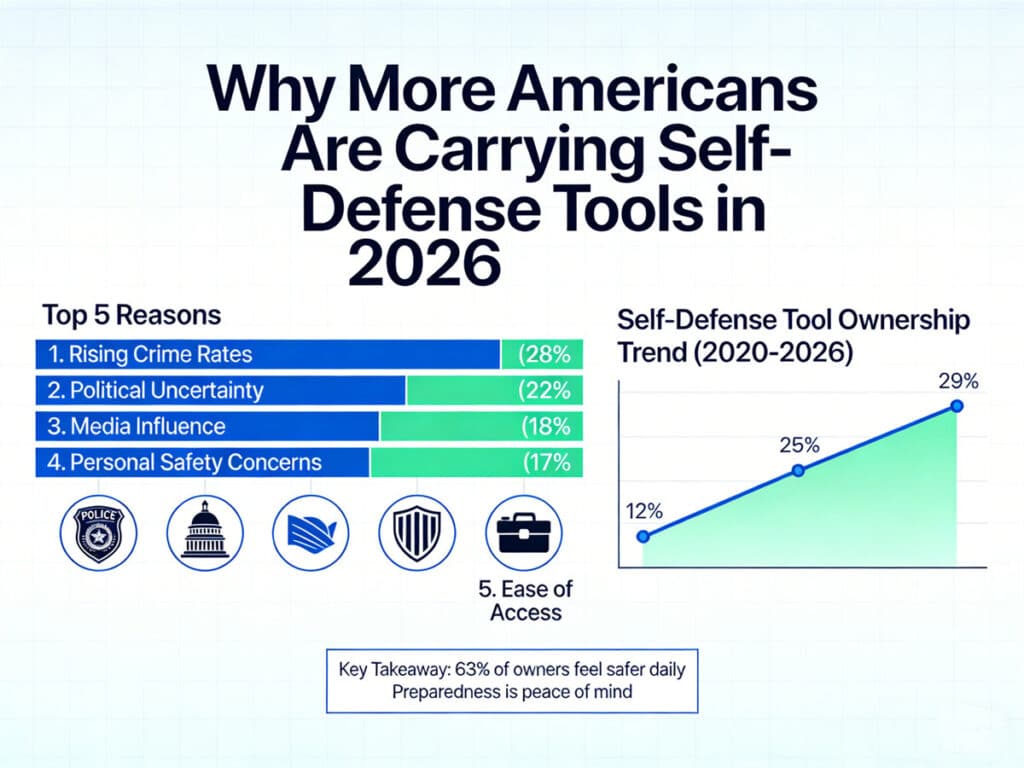
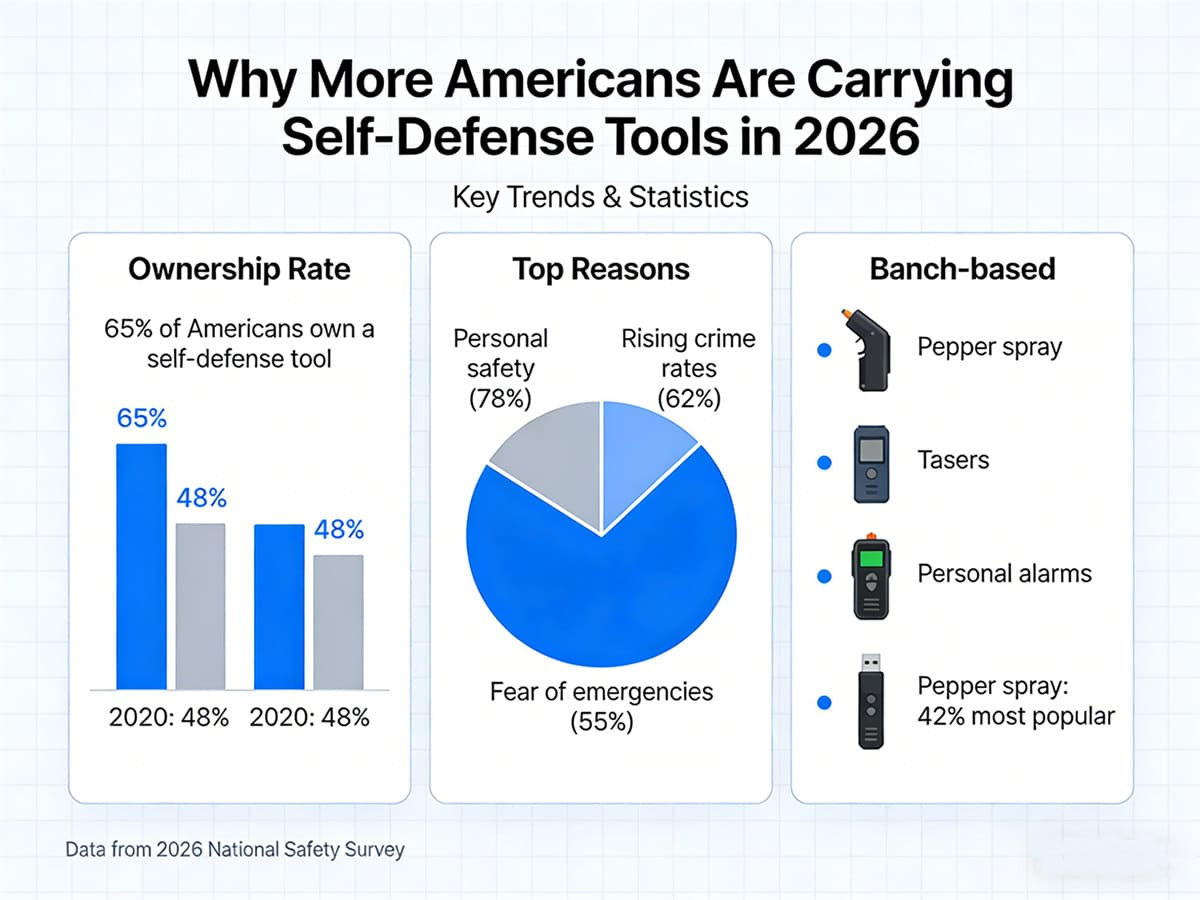
Why More Americans Are Carrying Self-Defense Tools in 2026
1. Changing Public Attitudes Toward Personal Safety
In 2026, conversations about personal safety in the United States have become more visible, more nuanced, and more personal than ever before. A growing number of Americans are choosing to carry self-defense tools, not necessarily out of fear, but as a proactive step toward preparedness in an increasingly unpredictable world. This shift reflects broader changes in public awareness, media coverage, and everyday lifestyle patterns that have reshaped how individuals think about personal responsibility and risk management.
Rather than relying solely on external systems for protection, many people now view personal safety as a shared responsibility between institutions and individuals. High-profile incidents, viral social media content, and constant news exposure have amplified awareness of potential threats, even in communities that once felt insulated from crime. While overall crime statistics vary by region, perception often plays a significant role in shaping behavior, and perception in recent years has leaned toward caution and preparedness.
Carrying self-defense tools, whether in urban centers or suburban neighborhoods, has become normalized in many circles. For some, it represents empowerment. For others, it is simply a practical precaution, similar to carrying a first-aid kit or installing a home security system.
2. Urbanization, Mobility, and Lifestyle Shifts
The way Americans live, work, and travel has evolved significantly, contributing to the rise in everyday carry habits.
Increased Commuting and Public Interaction
More Americans are commuting longer distances, using public transportation, working flexible hours, and engaging in gig economy roles that require movement across unfamiliar areas. Ride-sharing drivers, delivery workers, healthcare professionals, and hospitality employees often operate during late-night hours or in rapidly changing environments. This mobility has heightened awareness of personal vulnerability, especially among individuals who regularly navigate unfamiliar neighborhoods.
Solo Living and Independence
Another important factor is the continued growth of single-person households, particularly among women and young professionals in metropolitan areas. Living independently often brings a stronger focus on personal safety planning, including both home security and portable protection options.
In this context, self-defense tools are seen not as aggressive devices, but as personal safeguards that offer reassurance during daily routines.
3. The Influence of Social Media and Digital Communities
Social media has dramatically reshaped how Americans discuss and discover safety-related products.
Viral Safety Trends
Platforms such as TikTok, Instagram, and YouTube have popularized everyday carry kits, safety keychains, and compact protection devices. Influencers and everyday users share product reviews, safety tips, and real-life stories, creating a feedback loop that increases awareness and demand. While not all content is equally responsible, the visibility of these discussions has normalized conversations about preparedness.
Access to Product Information
Digital marketplaces and specialized retailers have made it easier than ever to compare features, read reviews, and understand legal guidelines. Consumers can research materials, durability, and intended use before making purchasing decisions. This access to information has reduced uncertainty and encouraged more thoughtful choices rather than impulsive buying.
In many ways, the digital environment has demystified self-defense tools and reframed them as lifestyle accessories aligned with safety and autonomy.
4. Legal Awareness and Responsible Ownership
An important reason for the growth in self-defense tool ownership is increased attention to legality and responsible use.
Understanding State-Specific Laws
Laws governing personal defense items vary widely by state and municipality. In 2026, Americans are more aware than ever that legality depends on local regulations, and many buyers actively research rules before purchasing. Educational content provided by manufacturers and retailers has contributed to this awareness.
Rather than focusing solely on powerful or aggressive devices, many consumers prioritize compact, legally compliant options that align with local laws. This cautious approach reflects a maturing market in which buyers value responsibility as much as capability.
Training and Preparedness
Another notable trend is the growth of personal safety training programs. Self-defense classes, situational awareness workshops, and community safety groups have become more common. Carrying a tool is increasingly viewed as one component of a broader safety strategy rather than a standalone solution.
This balanced mindset suggests that Americans are not simply reacting to fear, but making considered decisions about personal preparedness.
5. A Broader Cultural Emphasis on Self-Reliance
Perhaps the most significant driver behind the increase in self-defense tool ownership is a broader cultural shift toward self-reliance and individual preparedness.
In recent years, Americans have shown growing interest in emergency kits, outdoor survival gear, and practical everyday carry items. From compact flashlights and medical kits to reinforced pens and safety alarms, consumers are building layered approaches to personal security. This trend reflects a desire for readiness across multiple scenarios, not limited to crime prevention but extending to natural disasters and unexpected emergencies.
Within this expanding market, some individuals explore more controversial items such as a brass knuckle, which remains heavily regulated in many jurisdictions and often restricted depending on state law. Retail platforms like brassknucklesmater.com provide product listings and information, but consumers must exercise due diligence and confirm local legality before considering such purchases. Responsible ownership, legal compliance, and thoughtful decision-making remain central to any discussion about personal defense tools.
The growing presence of self-defense tools in American daily life in 2026 reflects a complex mix of social change, technological access, and evolving attitudes toward preparedness. For many individuals, carrying such tools is less about confrontation and more about confidence, autonomy, and the reassurance that they are equipped to navigate an uncertain world with greater awareness and control.