
Mar
History of Weapons
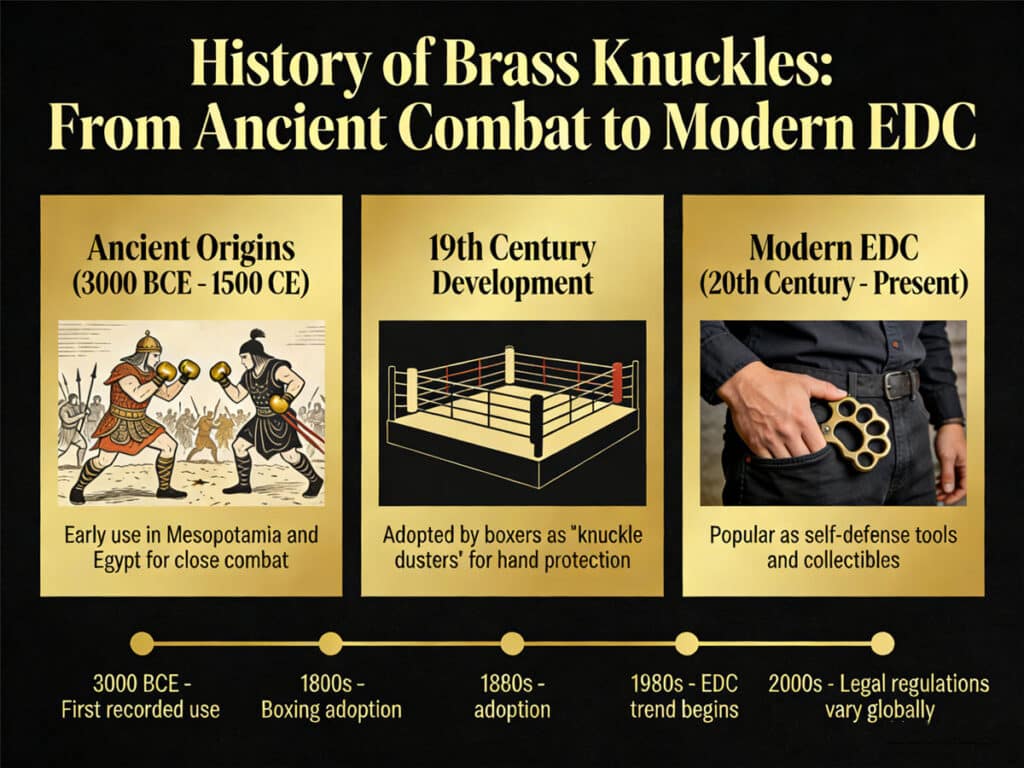
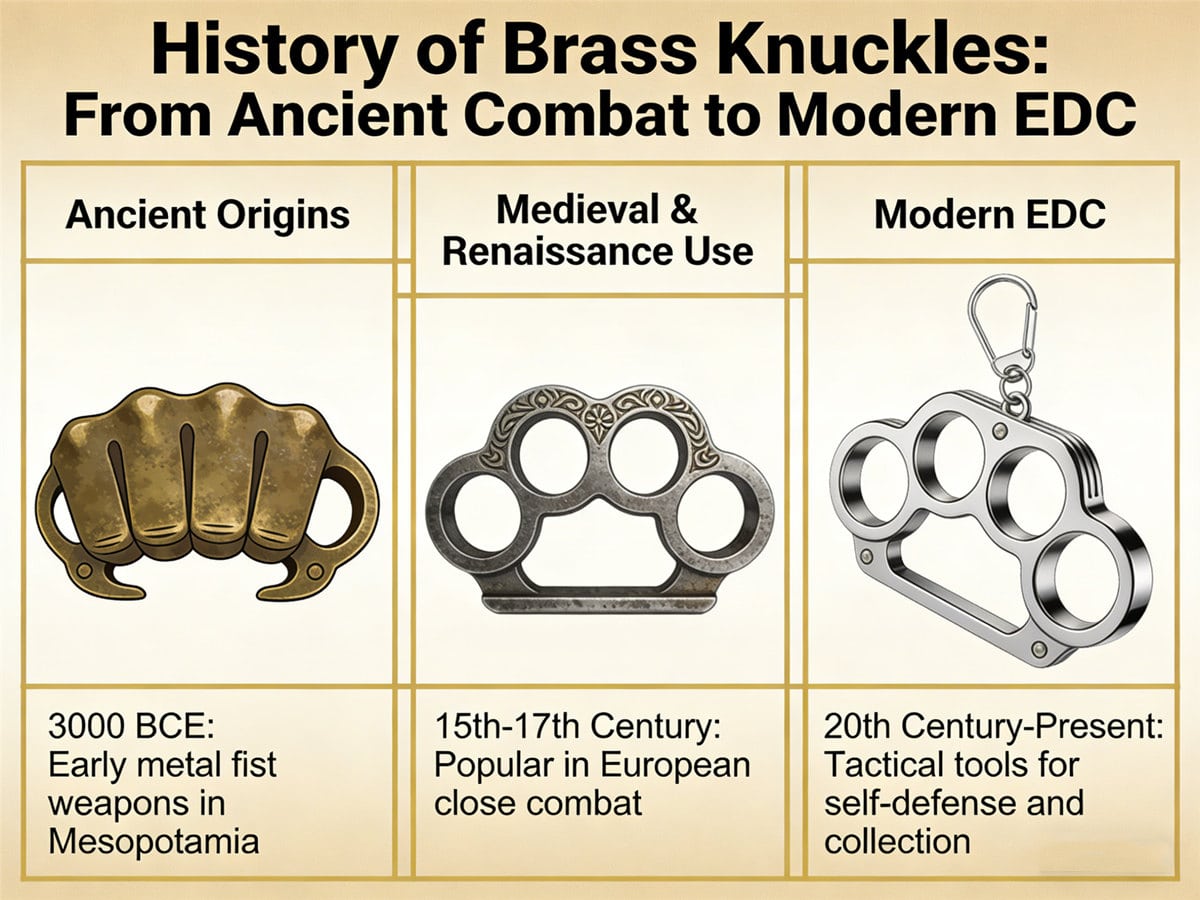
History of Brass Knuckles: From Ancient Combat to Modern EDC
1. Early Origins: Reinforced Fists in Ancient Combat
The concept behind brass knuckles is far older than many people assume, even though the modern metal version is often associated with 19th- and 20th-century street culture. At its core, the idea is simple: reinforcing the human fist to increase striking power and reduce injury to the hand. This concept has appeared in various forms across civilizations and eras, long before the recognizable metal knuckle-duster design emerged.
Ancient Combat Enhancements
In ancient Greece, fighters sometimes used leather straps or hand coverings that hardened the knuckles, known as cestus, during boxing matches. These early fighting tools were not identical to modern brass knuckles, but they reflected the same fundamental principle: augmenting the natural hand for greater impact. In other parts of the world, warriors occasionally wrapped hands with cloth or integrated small hard inserts into gloves to protect bones during close-quarters combat.
While these early adaptations were not always metallic, they laid the groundwork for later developments by demonstrating the practical advantage of reinforced hand weapons. Combat, both organized and informal, has historically driven innovation in personal armament, and the reinforced fist was no exception.
2. The Rise of Metal Knuckle-Dusters in the 19th Century
The recognizable form of brass knuckles began to appear more prominently in the 19th century, particularly in Europe and the United States. This period was marked by rapid industrialization, urban growth, and social upheaval, conditions that often led to increased street violence and personal confrontations.
Industrial Manufacturing and Accessibility
Advances in metalworking and mass production made it easier to create small, durable metal objects at relatively low cost. Knuckle-dusters, typically made of brass due to its durability and corrosion resistance, became more widely available. The metal frame fit over the fingers, distributing the force of a punch across a broader surface area and reducing the risk of injury to the user’s hand.
Civil War and Military Context
During the American Civil War, some soldiers reportedly carried knuckle-dusters as backup weapons for close-quarters combat. In certain cases, knives were combined with brass knuckle-style grips, creating hybrid weapons designed for hand-to-hand encounters. These multi-purpose designs reflected the harsh realities of battlefield fighting, where compact and easily concealed tools offered practical advantages.
The 19th century solidified brass knuckles as a recognizable object in both military and civilian contexts, embedding them into the historical narrative of personal combat tools.
3. Cultural Symbolism in the Early 20th Century
As the 20th century unfolded, brass knuckles began to take on cultural meanings beyond their functional purpose. Urbanization, organized crime, and media portrayals contributed to their evolving image.
Association with Street Culture
In many industrial cities, knuckle-dusters became associated with gangs and street-level altercations. Their compact size and concealability made them appealing in environments where larger weapons were impractical. Over time, this association influenced public perception, linking brass knuckles to criminal activity in the eyes of lawmakers and the general public.
Representation in Film and Literature
Hollywood films, pulp fiction, and crime novels further reinforced this image. Brass knuckles were often depicted as tools of antiheroes, vigilantes, or criminals, shaping popular imagination. This portrayal contributed to the mystique surrounding the object, even as legal restrictions began to tighten in many jurisdictions.
Cultural symbolism sometimes overshadowed historical nuance, reducing a complex object with varied origins to a simplified narrative centered on violence.
4. Legal Evolution and Public Policy
As brass knuckles became more visible in public discourse, lawmakers responded with regulations aimed at controlling their possession and use.
State-Level Restrictions
In the United States, laws regarding brass knuckles vary significantly by state. Some jurisdictions classify them as prohibited weapons, while others allow ownership under specific conditions. This patchwork of regulation reflects broader debates about personal defense, public safety, and individual rights.
International Regulations
Outside the United States, many countries maintain strict prohibitions on brass knuckles, often grouping them with other impact weapons. The legal status of these items can change over time, making it essential for individuals to stay informed about current laws in their region.
The evolution of legislation surrounding brass knuckles illustrates how societal attitudes toward weapons influence regulatory frameworks, particularly when cultural symbolism intersects with public safety concerns.
5. Modern EDC Culture and Contemporary Perspectives
In recent years, the concept of Everyday Carry (EDC) has gained popularity, emphasizing preparedness and practical tools for daily life. Within this context, discussions about brass knuckles have re-emerged, often framed around personal defense and self-reliance rather than criminal association.
EDC Philosophy and Preparedness
EDC culture encourages individuals to carry items that may prove useful in unexpected situations, from flashlights and multi-tools to compact writing instruments and emergency devices. While brass knuckles remain controversial and heavily regulated in many areas, some enthusiasts view them as part of a broader conversation about personal security and historical weapon design.
However, modern EDC discussions increasingly emphasize legality, responsibility, and discretion. Unlike earlier eras where knuckle-dusters were sometimes carried without much consideration of regulation, contemporary consumers are more likely to research local laws before making purchases.
Retail platforms such as brassknucklesmater.com provide product listings and historical context, but responsible buyers must verify compliance with local regulations before acquiring or carrying any type of brass knuckle. Legal awareness, ethical consideration, and informed decision-making are central to modern perspectives on personal defense tools.
The history of brass knuckles, from ancient reinforced fists to their place in modern EDC culture, reflects broader themes of innovation, symbolism, and regulation. What began as a practical adaptation for close combat has evolved into an object shaped as much by law and culture as by its original functional purpose.