
Nov
Weapons How
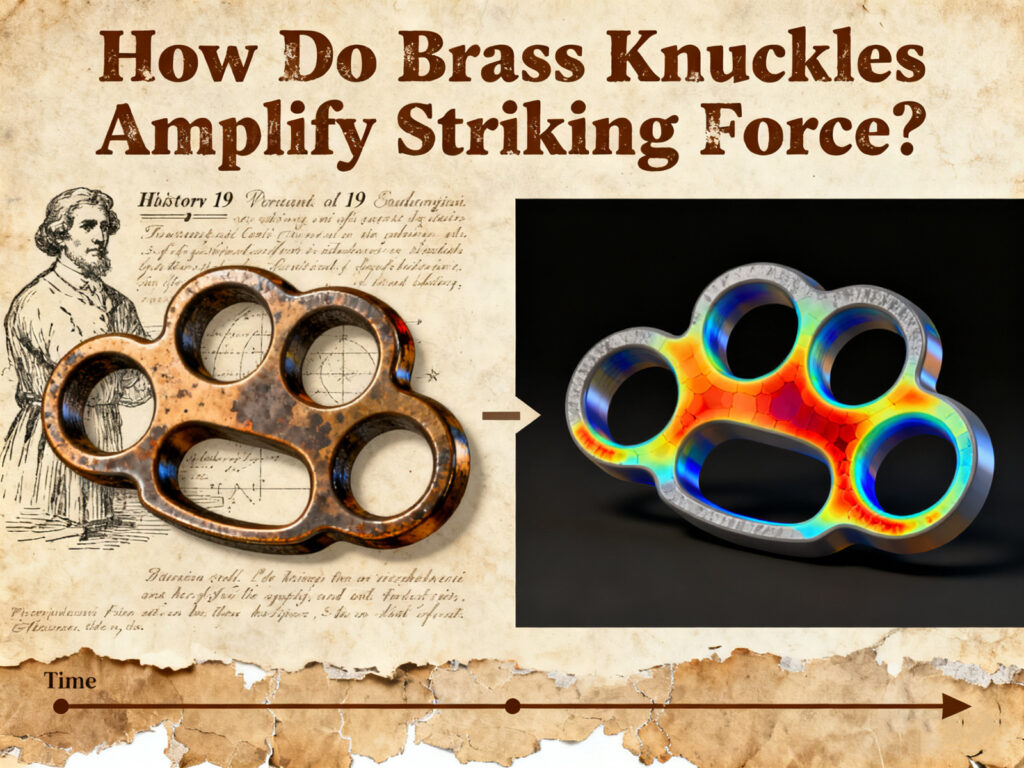
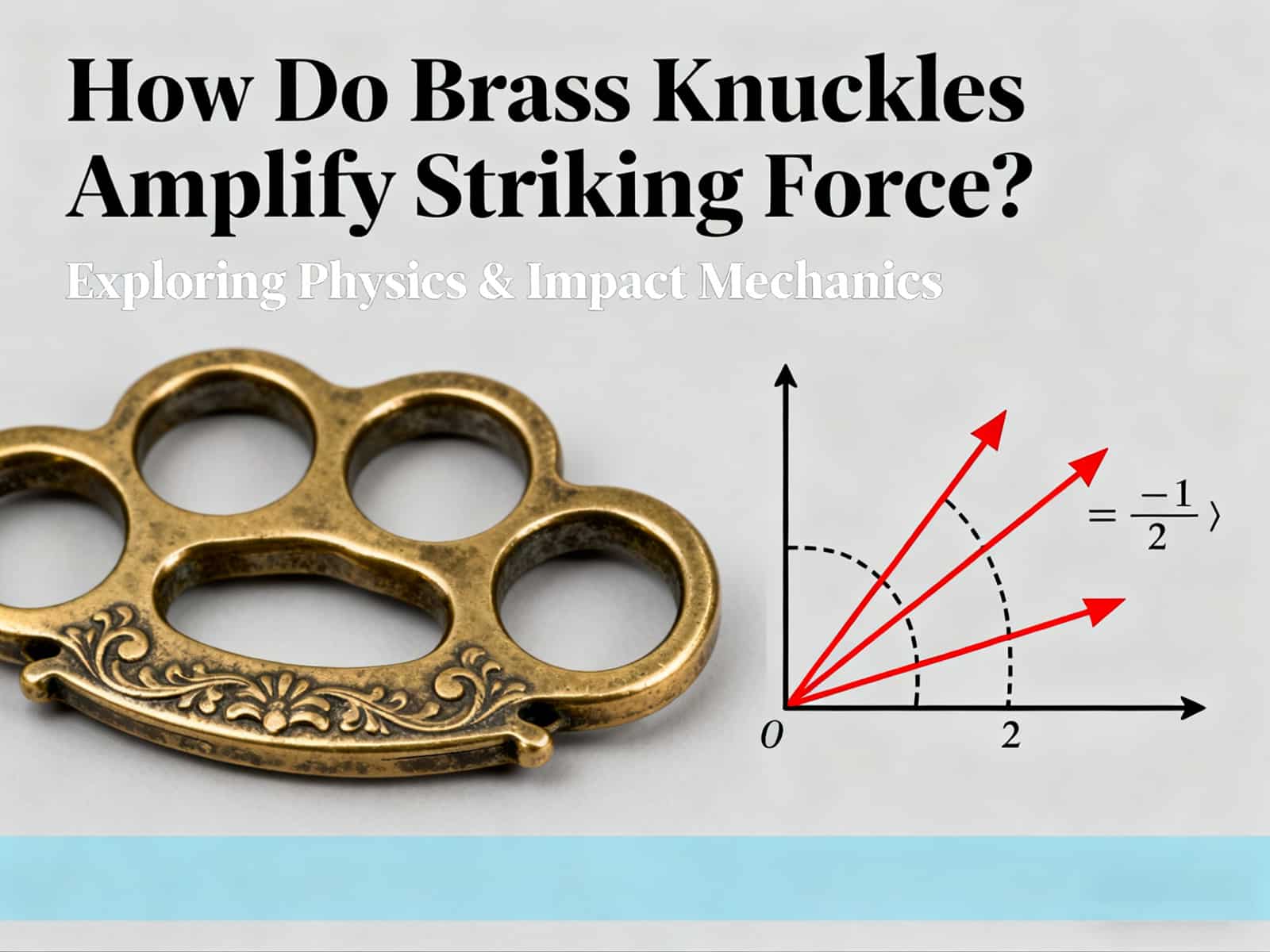
How Do Brass Knuckles Amplify Striking Force?
Brass knuckles occupy a complicated place in public imagination, often depicted in film, literature, and historical accounts as tools that significantly magnify the impact of a punch, yet their actual mechanics, history, and physics are far more nuanced than most casual observers realize. Although modern regulations in many regions restrict or prohibit their possession, people continue to study them from academic, forensic, and engineering perspectives to understand how material, design, and biomechanics intersect in a compact handheld object capable of altering the distribution of force.
Rather than focusing on their misuse, a responsible exploration of how brass knuckles amplify striking force allows for a deeper understanding of impact physics, ergonomics, and historical craftsmanship. This kind of analysis is valuable for fields such as forensic science, martial-arts history, mechanical engineering, and even cultural studies that examine how societies reinterpret tools across generations.
1. Understanding the Basic Physics of Impact
At the center of any discussion about striking force lies a simple but powerful equation: Force = Mass × Acceleration, a principle familiar to anyone who has studied high-school physics, yet one that becomes unexpectedly rich when applied to the movement of a human arm, the tension of muscle groups, and the moment of contact between a fist and a resisting surface.
Energy Transfer and Structural Rigidity
Brass knuckles, typically made from dense metal alloys, possess a rigidity that allows them to function as an extension of the user’s hand without compressing or deforming. When the hand accelerates toward a target, the device preserves the velocity and structure of the striking surface more effectively than soft tissue, which would normally absorb or dissipate some of the energy before impact.
Moreover, because the material does not flex, the impulse — the change in momentum applied over a short period — remains concentrated, creating a sharper, more unified transfer of kinetic energy. This principle, when analyzed academically, explains why rigid tools often leave more defined impressions in forensic examinations compared to bare-handed strikes.
Distributed vs. Concentrated Contact Areas
A natural fist has curved, uneven surfaces that distribute force irregularly. Brass knuckles, by contrast, create a flatter, more uniform striking plane. While not inherently increasing the total force produced by the arm, this redistribution alters the pressure — defined as force divided by surface area — and therefore changes the sensation and mechanical effect of contact.
2. The Ergonomic Design That Supports Stability
The mechanics of a punch involve rapid acceleration, alignment of bones, and precise momentary tension of the wrist and forearm. Misalignment can result in injuries such as sprains or fractures, which is why combat sports emphasize punching technique so strongly.
Brass knuckles, however, introduce a stabilizing framework that changes the interaction between hand and impact forces.
How Grip and Alignment Affect Impact
The device wraps around the fingers and is supported by the palm, allowing the force of impact to travel along a straighter path through the metacarpal bones. This design reduces shearing at the wrist and prevents the knuckles from collapsing inward during contact. From an ergonomic standpoint, the structure promotes alignment rather than strength; it is the reduction of inefficient motion, rather than the creation of new energy, that most contributes to the amplified sensation of force.
Material Density and User Perception
Brass or other metal alloys add mass to the striking surface, and while this mass is relatively small, its placement at the farthest point from the rotational axis of the arm (the shoulder) means it contributes meaningfully to momentum. Even a modest increase in mass at the point of impact can make a strike feel more substantial, not simply because the actual momentum has grown, but because the brain perceives greater stability and reduced vibration upon contact.
3. Historical and Cultural Interpretations of Force Enhancement
The idea of augmenting the human hand with rigid tools is not new; it appears across multiple civilizations, each seeking ways to understand or formalize the relationship between force and form. Brass knuckles, or devices with similar functions, have been found in military archives, maritime records, and even ceremonial artifacts.
The Role of Material Culture
Different cultures have viewed such tools not only as weapons but also as symbols of craftsmanship, status, or personal identity. The evolution from carved wood or bone implements to brass or steel versions mirrors broader technological advancements and the desire to make handheld tools more efficient, durable, and ergonomic.
Forensic and Academic Interest
Modern forensic analysts study the impressions left by rigid implements to understand patterns of injury, reconstruct events, or differentiate between intentional and accidental impacts. In this context, brass knuckles become objects of analytical value, contributing data to disciplines that examine human behavior, biomechanics, and physical evidence.
4. Why Structural Reinforcement Matters More Than Strength
A common cultural misconception is that brass knuckles somehow generate force “on behalf of” the user, as though they were miniature engines or amplifiers. In reality, they do not create energy; they redirect and preserve it.
Reducing Energy Loss Through Compression
A bare fist compresses at the moment of impact — skin, muscle, and cartilage all deform, absorbing part of the kinetic energy. Brass knuckles minimize this deformation, allowing a greater percentage of the arm’s natural momentum to reach the target. The amplification effect, therefore, comes not from producing extra force, but from losing less of it.
The Mechanical Advantage of a Reinforced Structure
Tools across history — hammers, chisels, and even athletic gear — gain effectiveness from reinforcement. Brass knuckles operate on the same principle: when the structure is strengthened, the user can deliver the same physical motion with greater confidence and reduced personal risk. This feature explains why engineers often analyze similar tools when designing impact-resistant equipment or testing materials under stress.
5. Modern Perspectives: Regulation, Safety, and Controlled Study
In contemporary society, brass knuckles are widely regulated because their rigid structure and concentrated contact points create a higher potential for harm compared to an empty hand. For this reason, the discussion of how they amplify striking force must always remain hypothetical, academic, or historical rather than instructional.
Legal Considerations
Many jurisdictions classify brass knuckles as restricted items, meaning their carrying, sale, or possession is regulated. These laws reflect public-safety concerns and highlight how tools capable of altering the dynamics of force must be studied responsibly and contextualized within ethical frameworks.
Engineering and Educational Value
Despite restrictions, researchers continue to study impact mechanisms, force distribution, and material stress analysis using controlled tools or models. These studies benefit fields such as mechanical engineering, product safety, materials science, and forensic reconstruction. Brass knuckles, when treated as objects of inquiry rather than implements of harm, provide useful case studies on how small changes in design can yield significant differences in physical outcomes.
Social Interpretation and Human Behavior
Finally, the topic opens broader discussions about why people seek tools that modify physical ability, how societies regulate them, and how cultural narratives evolve around objects that combine craftsmanship with potential risk. Understanding these dynamics deepens the conversation far beyond mechanics, offering insight into human psychology, social norms, and the ways communities balance individual expression with collective safety.