
Nov
Knowledge of Weapons
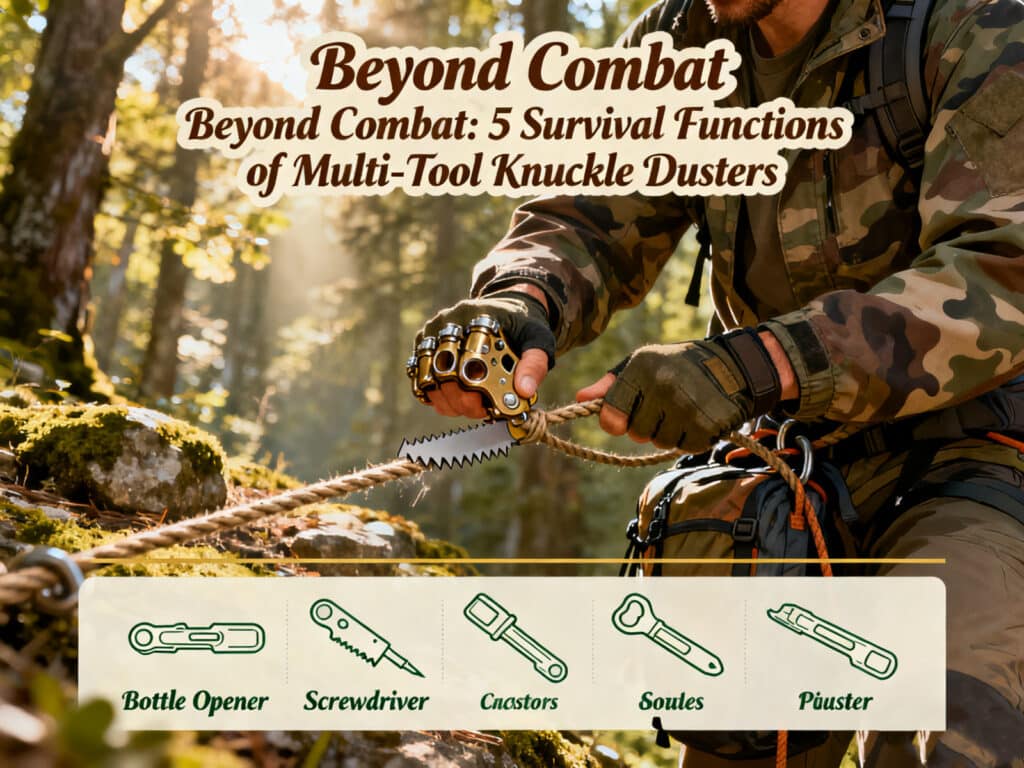
Beyond Combat: 5 Survival Functions of Modern Multi-Tool EDC Gear
In moments when the unexpected becomes reality — a winter storm that strands a commuter, a vehicle that fails on a remote road, or a backcountry day that turns into an overnight — the value of a compact, well-designed multi-tool moves far beyond convenience into the realm of survival. These devices, which combine pliers, cutting edges, bit drivers, and a variety of ancillary implements into a pocketable form, are not weapons: their purpose in responsible hands is utility and resilience. When chosen and used with awareness of safety and local law, a thoughtfully configured multi-tool becomes an extension of preparation, enabling five distinct survival functions that are useful in civilian emergencies and everyday preparedness alike.
This article examines those five functions in depth — cutting and cordage management, shelter and gear repair, fire and heat management, water and food preparation, and signaling and first aid — while also addressing selection criteria, responsible carriage, and maintenance practices so that the reader can choose a legal, ethical, and genuinely useful tool for the unpredictable moments that matter most.
1. Cutting and Cordage Management: The Core of Practical Survival
At the heart of most multi-tools lies a robust cutting implement: a plain or partially serrated blade whose design balances edge retention with ease of maintenance. In survival contexts, cutting capability is central because nearly every task from constructing shelter and preparing tinder to splitting cordage and fashioning improvised lashings depends on a reliable blade.
Versatility in blade design
Modern multi-tool blades vary in steel grade and edge geometry, and the best compromises combine corrosion resistance with tough edge-holding—qualities that matter when you cannot change tools for days. Serrations can help cut fibrous materials like rope or seat belt webbing, while a plain edge is superior for controlled, precise slicing when preparing food or trimming shelter materials.
Cordage and knot work
Beyond cutting, multi-tools commonly include features for managing cordage: scissors for frayed synthetic lines, small awls for punching holes in leather or fabric, and sometimes integrated line-cutters that clamp and shear without opening a blade fully. In survival practice, efficient cordage management allows you to rig a temporary shelter, secure loads, and fashion simple traps or fishing rigs—functional tasks that preserve energy and extend comfort in adverse conditions.
For legal and safety reasons, choose tools whose blades lock securely to avoid accidental closure during strenuous use, and pair the multi-tool with lightweight cordage (paracord) stored separately; the tool’s role is to maintain and manipulate cordage, not to substitute for robust hardware in critical load-bearing applications.
2. Shelter and Gear Repair: Small Tools, Big Outcomes
When storm or equipment failure threatens your ability to stay warm and dry, the capacity to repair and improvise matters more than brute force. Multi-tools contribute to shelter and gear repair through a collection of modest but high-value implements: screwdrivers and bit drivers for hardware fastenings, awls and punches for fabric and leather, files for smoothing worn edges, and small pliers and wire cutters to bend or sever metal tie-downs.
Tactical repair functions
The pliers and crimper functions enable field repairs on tent frames, vehicle cargo straps, and small mechanical assemblies where a quick clamp or a new cotter pin restores function until proper maintenance is available. Screwdriver bits allow tightening of loose fasteners on clothing buckles, stove assemblies, or eyewear, preventing failures that cascade into larger problems.
Creating temporary shelter
Coupled with a lightweight tarp or emergency bivvy, the ability to lash and tension small structures with the help of a multi-tool turns disparate materials — a fallen branch, a coat, a plastic sheet — into a weather-resistant shelter. Practical repairs and shelter improvisation extend survival time, reduce exposure, and buy crucial hours for rescue or safer egress.
3. Fire and Heat Management: Supporting Warmth Without Risk
Fire remains the primal survival technology: it provides heat, enables cooking, purifies water, and signals for rescue. A responsible multi-tool supports firecraft indirectly and safely, by helping you prepare tinder, fashion kindling, and perform controlled maintenance of fire tools rather than by promoting risky or illegal ignition practices.
Preparing fuel and tools
The blade and file can prepare feather sticks, shave bark, or create small notches in wood for friction-based methods, while pliers and wire cutters help construct shims and clamps for carrying or stabilizing fuel sources. A small scraper or striker interface—if the tool includes it—can assist with controlled use of legal ignition devices (matches in waterproof containers, lighter flints, or ferrocerium rods), but it is critical to follow local fire regulations and avoid open burning in prohibited areas, particularly in drought conditions.
Heat management and cooking aids
Some multi-tools include can openers, bottle openers, or small serrated blades suitable for food preparation in the field, enabling safe, hygienic handling of field rations without resorting to improvised, unsafe methods. The multi-tool’s presence reduces the need to handle hot surfaces barehanded by facilitating tongs or improvised handles, thereby lowering burn risk and preserving dexterity for other survival tasks.
Emphasize prevention over improvisation: the best survival practice combines careful planning (fuel storage, responsible fire discipline) with tools that minimize exposure and support safe, controlled use of heat.
4. Water and Food Preparation: Hygiene, Filtering, and Simple Cuisine
Sustaining hydration and calorie intake are immediate survival priorities, and multi-tools can play a supporting role in food and water handling that improves safety and nutrition without requiring specialized equipment.
Safe food handling
A reliable blade and small scissors allow the trimming and portioning of emergency rations, the opening of sealed packages without contamination, and basic food preparation to reduce spoilage risk. A can opener or serrated edge can open metal tins cleanly—pivotally important when kitchen-grade utensils are unavailable. Additionally, a file or small pick helps clean debris from edible plant parts or from waterproof containers.
Water handling and sanitation
Although a multi-tool cannot replace dedicated water-purification gear, it assists in associated tasks—constructing rudimentary filters, cutting and shaping makeshift containers, and unfastening debris entangled in water lines or pump components. For prolonged survival, pair a multi-tool with a compact, proven water purifier or chemical purifier tablets; the tool’s role is to support, not substitute, proper water treatment.
As always, hygiene matters: the multi-tool should be cleaned and kept separate from open food once used on non-food surfaces, and users should avoid using a single tool for both mechanical repair and food preparation without disinfecting steps when feasible.
5. Signaling, First Aid, and Non-Combative Defense
In modern survival, the ability to attract attention and to reduce harm through first aid is paramount, and multi-tools offer practical support for both functions without encouraging aggression or violence.
Signaling and visibility
Small mirrors, reflective bits, or polished flat surfaces of a tool can serve as visual signaling devices to attract rescuers, while integrated whistles are common in many legal multi-tools and serve as safe, non-aggressive auditory signals. In low-visibility conditions, a whistle’s amplification capacity often proves more effective than shouts, conserving energy while maintaining the ability to draw attention.
First aid support
Cutters, small screwdrivers, and awls help remove splinters, trim bandage material, fashion splints, or unfasten stuck clothing to access wounds, all of which are essential intermediary steps before professional medical care. Wire cutters and pliers can be used to remove embedded clothing hardware that interferes with dressings, and a small file smooths sharp edges that might abrade skin under improvised bandaging.
In non-combative defense scenarios—such as deterring animals—tools like whistles, bright signaling, and controlled, non-injurious noise devices are safer and legally preferable to weaponized approaches; multi-tools can complement such non-harmful deterrents by enabling quick repairs or signal setup.
6. Choosing the Right Multi-Tool: Criteria for Practical Carry
Selecting a multi-tool for survival use is a tradeoff between capability and portability. Features to prioritize include a locking blade, comfortable grip, robust pliers, modular bit systems, corrosion-resistant steel, and serviceable components that a local mechanic or field armorer can maintain. Avoid models that emphasize ornamental features over practical ones, and ensure the tool is legal to carry in your jurisdiction—laws differ and responsible ownership requires compliance.
Size, weight, and carrying strategy
Balance bulk against utility: a full-size multi-tool delivers more mechanical functions but risks being left behind by users who prefer lighter pockets; conversely, a minimalist tool is portable but limited. Consider carrying redundancy: a small dedicated card-scale knife for food tasks plus a compact multi-tool for repair and signaling often gives a more resilient configuration than a single oversized device.
7. Maintenance, Training, and Ethical Use
A tool is only as good as the person who uses and maintains it. Regular cleaning, sharpening, lubrication of pivot points, and inspection of locking mechanisms extend life and ensure reliability in emergencies. Training matters: practicing safe cutting, knotwork, and basic field repairs in benign conditions builds competence without risk.
Ethics and legality are central: never use multi-tools as weapons, never modify them into weapons, and never deploy them in a manner that risks harm to others. The ethos of preparedness is stewardship—caring for oneself, aiding others, and minimizing harm in every decision.
8. Integrating Multi-Tools into a Broader Survival Kit
A multi-tool should complement, not replace, a considered survival kit. Pair it with navigation, shelter, water purification, first aid, and communication gear; ensure redundancy for critical systems like water and signaling. In many cases, the smartest investment is in training rather than gadgets—the ability to improvise with simple knowledge often outperforms the most elaborate tool set when conditions deteriorate.
For everyday preparedness, carrying a responsibly chosen multi-tool as part of your EDC (Everyday Carry) encourages a habit of readiness that is unobtrusive, legal, and beneficial to personal resilience. Keep the device clean, documented for legal compliance where required, and integrated into practice routines so that when an unexpected situation arises, your response is calm, capable, and constructive.
Emphasizing utility over aggression, the modern multi-tool exemplifies how small, lawful objects can multiply human capability in times of stress and need. When selected with attention to safety, legality, and maintenance, and when used with empathy and restraint, a multi-tool becomes not an instrument of conflict but a practical companion for surviving and supporting others through the ordinary emergencies of life. If you’d like, I can adapt this post into a version tailored for a specific audience—urban commuters, rural outdoorspeople, or municipal responders—or produce a checklist and gear list that matches the functions described here.