
Aug
Knowledge of Weapons
Four-Finger Brass Knuckle Guide: Full-Fist Power, Total Control
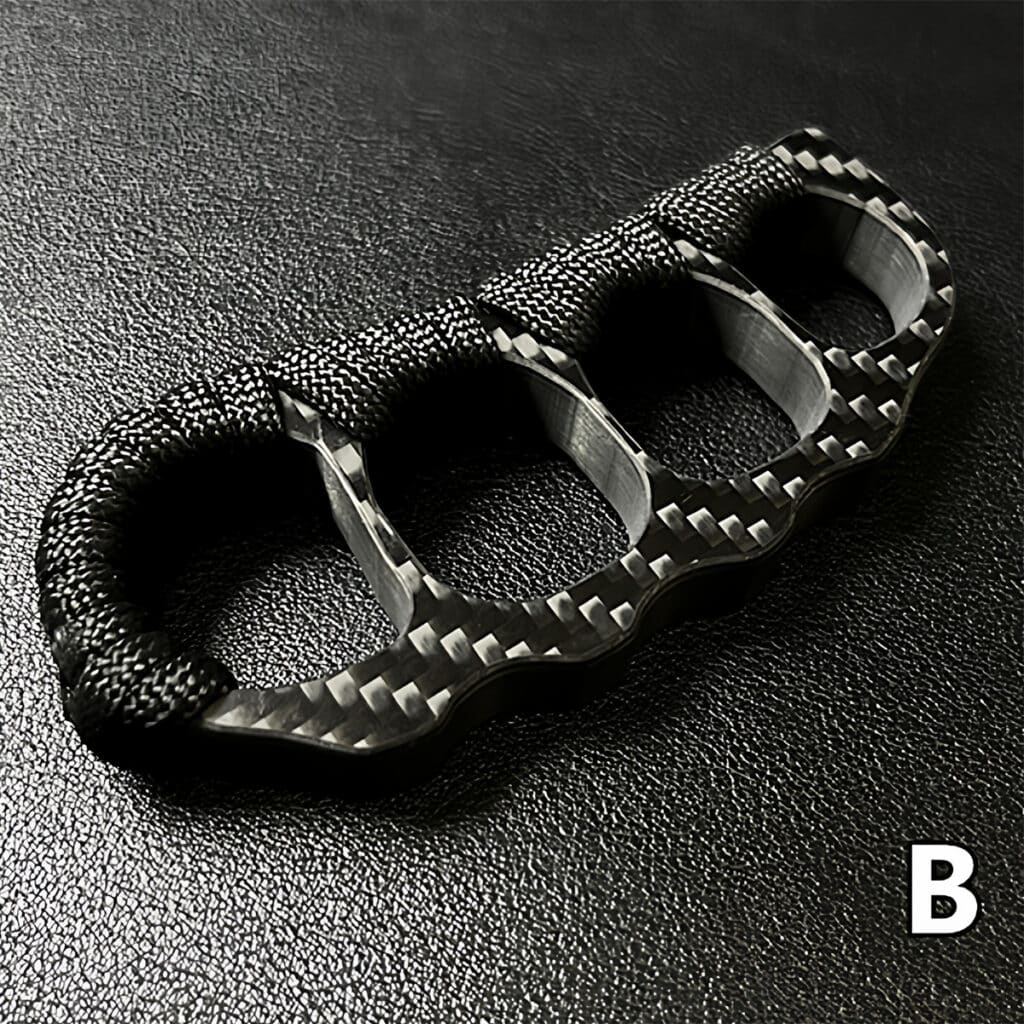
There’s a reason the four-finger brass knuckle is the image that comes to mind when most people think of a knuckle duster. It’s the original. The full-frame design that wraps around every finger, locks into your palm, and turns an ordinary punch into something with real consequence. While smaller formats have carved out their own loyal followings, the four-finger model remains the gold standard for anyone who prioritizes raw striking force and a rock-solid grip above all else.
At Brass Knuckles Master, we’ve spent years refining every detail of the full-fist format — from the weight distribution to the finger hole spacing to the palm cushion that keeps your hand from paying the price on impact. This guide breaks down why the four-finger brass knuckle still commands the attention it does, and how to choose the right one for your hand and your situation.
1. Why Four Fingers Matters
The difference between a two-finger and a four-finger brass knuckle isn’t just about size. It’s about how force moves through your hand when you make contact. A two-finger frame concentrates impact on two knuckles. A four-finger frame spreads that same energy across all four — index, middle, ring, and pinky — creating a broader, more stable striking surface that absorbs and redirects force more evenly.
The Physics of a Full Fist
When you throw a punch with a bare fist, your knuckles absorb a significant amount of the impact themselves. That’s why bare-knuckle strikes hurt the striker almost as much as the target. A knuckle duster with a four-finger frame changes the equation entirely. The rigid metal bar across the front acts as a shield for your knuckles, while the frame distributes recoil across your entire hand instead of concentrating it on one or two contact points.
The result is simple: you hit harder, and your hand doesn’t pay for it. That’s the core advantage of the full-fist format, and it’s why serious self-defense practitioners keep coming back to it.
Grip Stability You Can Trust
A four-finger frame wraps around your hand from the striking bar to the palm plate. That full enclosure means the brass knuckle becomes an extension of your fist rather than something loosely attached to it. You don’t need to clench harder to keep it in place. The frame does the work. Your fingers sit naturally in the holes, the palm plate rests against your hand, and the whole assembly moves as one unit.
This matters in high-adrenaline situations. When your hands are sweaty, when your grip is shaky, when fine motor control goes out the window — a well-fitted four-finger frame stays exactly where it needs to be.
2. Anatomy of a Four-Finger Brass Knuckle
Not every full-frame design is built the same. The details — finger holes, striking bar thickness, palm plate shape — are what separate a four-finger brass knuckle that feels like a natural extension of your hand from one that feels like a clumsy piece of hardware.
Finger Holes: Round vs. Oval
The shape and spacing of the finger holes determine how comfortable the frame feels during extended carry and actual use. Round holes are the traditional choice, offering a classic fit that works for most hand sizes. Oval holes, on the other hand, give your fingers a bit more vertical room, which reduces pressure on the sides of your fingers during a strike.
At BKM, we pay close attention to the spacing between each hole. Uneven spacing is one of the most common complaints with cheap imports — the ring finger hole sits too close to the pinky, or the index hole is too far from the middle. When the spacing is right, you barely notice the frame is there. When it’s wrong, every finger feels like it’s fighting for position.
The Striking Bar
The front-facing bar is where all the impact energy concentrates. A thicker bar means more mass behind each hit, but it also adds weight. A thinner bar keeps the frame light but may flex under heavy force. The sweet spot — and the one we engineer for at Brass Knuckles Master — is a bar that’s thick enough to feel absolutely rigid on impact without making the overall frame front-heavy.
Some designs feature a flat striking surface. Others add a slight curve or textured ridge. The difference is subtle but real: a flat bar distributes force evenly, while a textured surface concentrates it into a smaller contact area for deeper impact. Your preference depends on whether you want broad coverage or focused power.
The Palm Plate
This is the piece most people overlook, but it’s arguably the most important part of the entire frame. The palm plate is what sits against the inside of your hand when you make a fist, and it’s what absorbs the recoil energy that would otherwise travel straight into your metacarpals.
A thick, well-shaped palm plate turns a knuckle duster from a painful novelty into a tool you can actually use without injuring yourself. At BKM, our palm plates are contoured to match the natural curve of a closed fist, with enough thickness to cushion the impact without making the frame feel bulky in your pocket.
3. Who Should Choose the Four-Finger Format
The full-fist format isn’t for everyone, and we’ll be straightforward about that. It’s bigger, heavier, and more visible than a one-finger or two-finger alternative. But for the right person, none of those trade-offs matter — because the advantages are exactly what they’re looking for.
Power-First Users
If your primary concern is maximum striking force, the four-finger brass knuckle is the clear choice. No other format puts as much metal behind as large a portion of your fist. The weight adds momentum to every swing, the full-frame design eliminates weak points, and the broad striking surface ensures that even an off-center hit still lands with authority.
This is the format for people who don’t want to compromise. They want the most capable tool available, and they’re willing to carry something slightly larger to get it.
Larger Hands
People with bigger hands often find that two-finger and ring-style brass knuckles feel cramped. The finger holes are too close together, the frame doesn’t sit right, and the whole thing shifts during use. A four-finger brass knuckle is designed to accommodate a full fist, which means it naturally fits larger hands without modification. The finger spacing is more generous, the palm plate covers more surface area, and the overall frame feels proportional to the hand holding it.
Home Defense and Vehicle Carry
For anyone who plans to keep a brass knuckle in a specific location — a nightstand drawer, a car console, a garage workbench — the size and weight of a four-finger frame are irrelevant concerns. You’re not carrying it in your pocket all day. You’re keeping it somewhere accessible for the moments when you need it most. In that context, the extra heft and full-fist coverage of the four-finger format are pure advantages with no downsides.
4. Material Choices and What They Mean
The material your knuckle duster is made from affects everything — how it feels in your hand, how it performs on impact, how it ages over time, and how much maintenance it requires. Here’s what you need to know.
Solid Brass
Brass is the classic choice. It’s dense, it hits hard, and it develops a natural patina over time that gives it character. A brass four-finger frame will be the heaviest option in any lineup, which translates directly into more momentum behind each strike. The downside is that brass requires occasional polishing if you want to keep its original shine, and it’s susceptible to fingerprints and minor surface scratches. For many owners, though, that lived-in look is part of the appeal.
Stainless Steel
If you want strength without the maintenance, stainless steel is the way to go. It resists corrosion, cleans up with a quick wipe, and delivers excellent impact performance. A stainless steel four-finger brass knuckle sits in the middle of the weight range — heavier than aluminum, lighter than solid brass — and offers the best balance of durability and low upkeep for most users.
Aluminum and Titanium
Aluminum is the lightest option, ideal for anyone who wants a full-frame design without the full-frame weight. Titanium sits on the opposite end of the spectrum — nearly as strong as steel at a fraction of the weight, with a premium feel that justifies its higher price point. Both are excellent choices for specific use cases: aluminum for extended carry situations where every ounce matters, titanium for buyers who want the best performance possible regardless of cost.
5. Fitting and Carry Tips
A four-finger brass knuckle that doesn’t fit right is worse than no knuckle at all. Fit determines comfort, control, and ultimately whether the tool does what it’s supposed to do when you need it.
Getting the Right Fit
Your fingers should slide into the holes with minimal resistance — not tight enough to restrict blood flow, not loose enough to shift during a strike. The palm plate should sit flush against the center of your palm without digging into the skin. When you make a fist around the frame, it should feel like your hand is resting in a cradle, not fighting against a piece of hardware.
At Brass Knuckles Master, we design our Four-Finger Brass Knuckle collection with standardized hole spacing that fits the vast majority of adult hands comfortably. If you’re between sizes or have unusually large or small hands, we recommend checking the product specifications carefully before ordering.
Where to Keep It
For home defense, a nightstand drawer or a dedicated spot on a shelf within arm’s reach works well. For vehicle carry, center consoles and door pockets provide quick access. The key principle is simple: wherever you keep it, you should be able to grab it and get it on your hand within seconds. Practice the motion a few times so it becomes automatic. In a high-stress moment, you don’t want to be fumbling with a tool you’ve never handled before.
Maintenance
A quick wipe-down after handling keeps most materials in good shape. Brass owners may want to invest in a soft polishing cloth to manage the patina. Stainless steel and titanium require almost no maintenance at all. Regardless of material, store your knuckle duster somewhere dry — prolonged exposure to moisture can affect even the most resistant metals over time.
6. The Four-Finger Design in Context
The full-fist brass knuckle didn’t earn its reputation by accident. It’s been the default format for over a century because it solves the core problem better than anything else: how do you protect your hand while maximizing the force of a strike? The answer, time and time again, has been four fingers, a rigid striking bar, and a solid palm plate.
At BKM, we also offer two-finger brass knuckle options and other formats for people who need something lighter or more compact. But when someone asks us which brass knuckle delivers the most impact with the most control, the answer is always the same. Our full Brass Knuckle collection covers every style, but the four-finger frame remains the centerpiece — the design that started it all and the one that still sets the standard.
If you’ve been wondering whether a full-fist knuckle duster is the right move, our guide on whether brass knuckles are actually effective dives deeper into the real-world performance side of things. But if you already know what you want — if you want the most capable, most complete four-finger brass knuckle you can get your hands on — explore the collection at Brass Knuckles Master. The right frame is waiting.