
Aug
Knowledge of Weapons, Weapons How
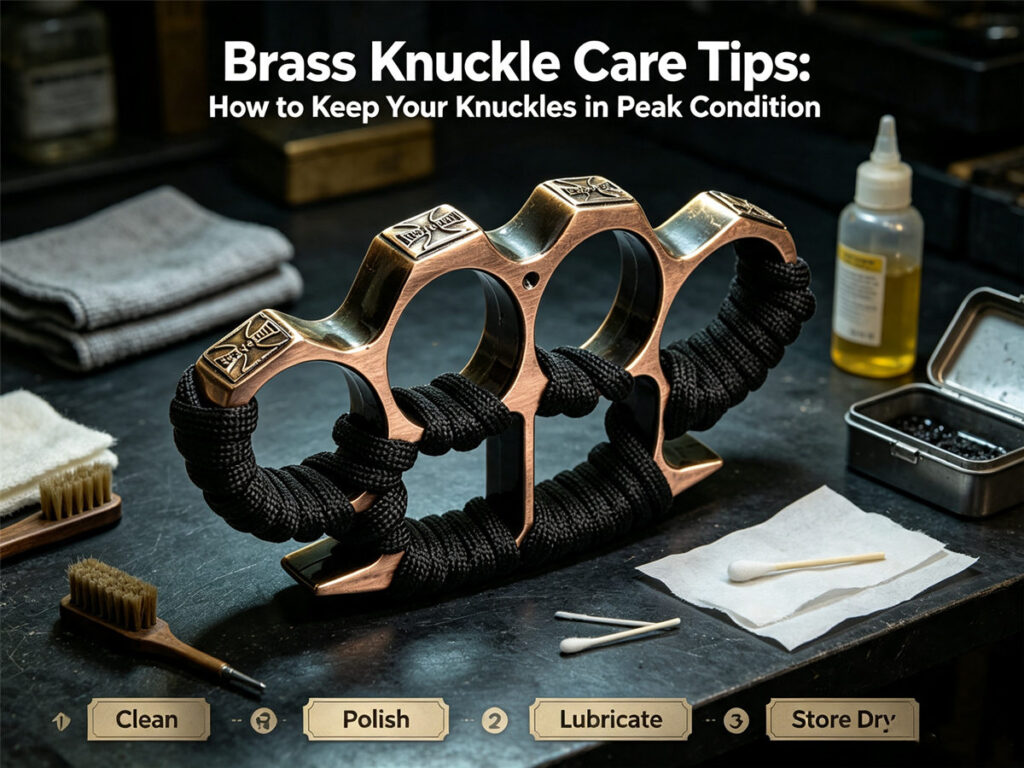
Brass Knuckle Care Tips: How to Keep Your Knuckles in Peak Condition
1. Why Brass Knuckle Care Actually Matters
A brass knuckle that sits in your drawer untouched for months does not stay the same. Tarnish creeps in. Oils from your skin eat away at the surface. Grit collects in the finger holes. And one day you reach for your favorite piece, only to find it looks like it belongs in a museum exhibit — and not in a good way.
At Brass Knuckles Master, we build gear meant to last. But even the best-made brass knuckle needs some attention now and then. The difference between a piece that lasts five years and one that starts degrading after six months often comes down to simple, consistent care. Nothing fancy. Nothing expensive. Just a few habits that take minutes and pay off for years.
2. How to Clean Your Brass Knuckle After Every Use
The single most important thing you can do after handling your brass knuckle is wipe it down. Skin oils, sweat, and environmental moisture are the main culprits behind tarnish and corrosion.
What You Need
- A soft, lint-free cloth (microfiber works best)
- Warm water with a few drops of mild dish soap
- A second dry cloth for buffing
The Routine
Start by rinsing your knuckle under warm water to loosen any surface debris. Use a soapy cloth to gently clean the entire surface, paying extra attention to the finger holes where grime tends to accumulate. Rinse thoroughly — leftover soap residue can cause discoloration over time. Pat dry immediately with a clean cloth, then buff lightly to remove any lingering moisture.
If you use your knuckle duster regularly, this quick routine after each handling session prevents the buildup that makes deeper cleaning necessary. Think of it like brushing your teeth — the daily habit saves you from bigger problems down the road.
3. Dealing with Tarnish and Surface Oxidation
Brass naturally develops a patina over time. Some people love that aged look. Others prefer the original shine. Either way, you should know how to manage it.
For Light Tarnish
Mix equal parts white vinegar and water. Dip a soft cloth into the solution and rub the tarnished areas in small, circular motions. Rinse with clean water and dry immediately. This method works for mild discoloration and takes just a few minutes.
For Stubborn Oxidation
Create a paste using baking soda and lemon juice — about two tablespoons of baking soda mixed with enough lemon juice to form a thick paste. Apply it to the affected areas with a soft cloth, let it sit for three to five minutes, then rub gently and rinse. The mild acidity of the lemon combined with the gentle abrasion of the baking soda lifts oxidation without scratching the surface.
For Deep Patina
If your brass knuckle has developed a heavy, uneven patina that you want to remove, a dedicated brass polish like Brasso or Wright’s Brass Polish does the job. Apply a small amount to a cloth, rub in circular motions, and buff to a shine. Always test on a small, inconspicuous area first.
4. Protecting the Finish After Cleaning
Cleaning gets your brass knuckle looking right. Keeping it looking right requires a protective step.
After cleaning and drying, apply a thin coat of mineral oil or a specialized metal protectant to the entire surface. This creates a barrier between the bare brass and the air, slowing oxidation significantly. Use just enough to give the surface a slight sheen — too much oil attracts dust and makes the piece slippery in your hand.
For pieces with a lacquered finish, skip the oil. Instead, use a quality car wax or Renaissance wax applied sparingly with a soft cloth. This protects the lacquer layer and adds a subtle shine without the greasy feel.
Reapplying Protection
How often you reapply depends on how frequently you handle your piece. A display piece might only need treatment every few months. An EDC brass knuckle that lives in your pocket benefits from a quick wipe-and-oil every one to two weeks.
5. Storing Your Brass Knuckle Properly
Storage matters more than most people think. Tossing your knuckle into a drawer with other metal objects is a recipe for scratches, dings, and accelerated tarnish.
Best Storage Practices
- Store each piece individually in a soft cloth pouch or lined case
- Keep it in a cool, dry place away from direct sunlight
- Avoid storing in leather pouches long-term — leather can trap moisture and accelerate corrosion
- Use silica gel packets in your storage area to control humidity
Humidity Is the Enemy
If you live in a humid climate, pay extra attention to moisture control. A small dehumidifier in your storage area or even a sealed container with desiccant packets can prevent the rapid tarnishing that high humidity causes. At BKM, we always ship pieces in protective packaging for this very reason — the journey from warehouse to your door is when exposure happens.
6. Handling Finger Holes and Hard-to-Reach Areas
The finger holes on a brass knuckle collect more grime than any other part. Skin contact means oils, sweat, and dead skin cells accumulate in these narrow spaces.
Getting Into the Gaps
A soft-bristle toothbrush works perfectly for cleaning inside finger holes. Dip it in your soapy water solution and scrub gently, rotating the brush to reach all surfaces. Cotton swabs are useful for getting into especially tight corners.
For threaded or removable components, disassemble what you can before cleaning. This lets you access every surface and prevents moisture from getting trapped in joints where it can cause hidden corrosion.
7. When to Do a Full Deep Clean
Daily wiping and monthly surface cleaning keep most pieces in good shape. But every three to six months — or whenever you notice significant tarnish, sticky residue, or discoloration — it is worth doing a full deep clean.
The Deep Clean Process
- Rinse under warm water to remove loose debris
- Apply your chosen cleaning solution (vinegar mix, baking soda paste, or commercial polish)
- Work the solution into every surface, including finger holes and any crevices
- Rinse thoroughly under running water
- Dry completely — use a hair dryer on low heat if needed to remove moisture from hard-to-reach areas
- Apply a protective coating of oil or wax
- Buff to your desired finish
At Brass Knuckles Master, we design our brass knuckle collection with maintenance in mind. Clean lines, accessible surfaces, and quality materials that respond well to care. A well-maintained knuckle does not just look better — it feels better in your hand and performs the way it was meant to.
The truth is, taking care of your gear is not a chore. It is a ritual. A few minutes with a cloth and some oil, and your brass knuckle stays ready — looking sharp, feeling right, and built to last as long as you need it to. Whether you carry daily or keep a collection on display, consistent brass knuckle maintenance is what separates gear you own from gear you trust.
If you are looking to expand your collection or want pieces that are as easy to care for as they are to carry, explore the BKM brass knuckle collection and find the right fit for your everyday carry.