Aug
Knowledge of Weapons
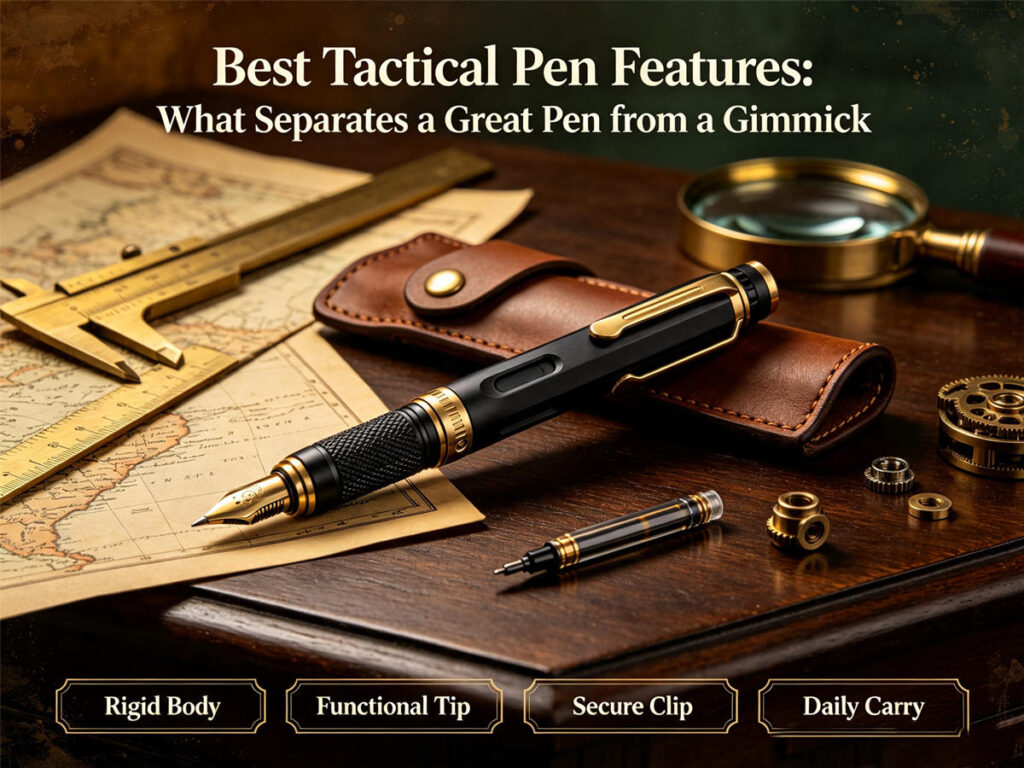
Best Tactical Pen Features: What Separates a Great Pen from a Gimmick
1. Features That Earn a Spot in Your Pocket
Walk into any tactical gear shop or browse online marketplaces, and you will find tactical pens with feature lists that read like Swiss Army knife catalogs. Built-in flashlights. Compasses. Whistles. Fire starters. It sounds impressive until you realize most of those features are either too small to work well or too specialized to use more than once a year.
At Brass Knuckles Master, we take a different view. The best tactical pen features are the ones you use every day, the ones that could save your life in an emergency, and the ones that make the pen feel like it belongs in your hand — not in a novelty gift box. Everything else is noise.
2. The Body: Material and Construction
The foundation of any tactical pen is its body. This is what determines how the pen feels, how long it lasts, and how well it performs under pressure.
Single-Piece Machining
The best tactical pens are machined from a single billet of metal — aluminum, steel, or titanium. This eliminates weak points at joints and seams. A single-piece body resists bending, cracking, and splitting in ways that assembled pens cannot match.
Wall Thickness
Thicker walls mean more material between your hand and any impact. Look for pens with wall thicknesses of at least 2mm. This adds weight, yes, but it also adds structural integrity that thin-walled tubes simply do not have.
Finish Quality
Anodized aluminum, bead-blasted titanium, or brushed steel — the finish should be even, consistent, and resistant to flaking or chipping. A good finish also improves grip, especially when your hands are sweaty or wet.
3. Grip Texture: Where Performance Begins
A tactical pen that slides out of your hand during a strike is worse than useless — it is dangerous to you. Grip texture is the feature that bridges the gap between a pen you can write with and a pen you can defend yourself with.
Diamond Knurling
The classic tactical grip pattern. Diamond knurling provides multidirectional traction that works in any hand position. It is aggressive enough for high-stress situations but can be abrasive during long writing sessions.
Longitudinal Grooves
Parallel grooves running the length of the grip section offer a more comfortable hold. They provide less traction than knurling but are much easier on your hand during extended use. This style works well for people who write frequently and want a pen that transitions smoothly between desk work and field use.
Hybrid Patterns
Some of the best tactical pen features combine knurling on the strike end with smoother grooves on the writing end. This gives you maximum grip where you need it during defensive use and comfortable control where you need it while writing. It is a smart design compromise that shows the maker thought about how the pen is actually used.
4. The Glass Breaker Tip
If there is one feature that justifies the “tactical” label, it is the glass breaker. A hardened tip capable of shattering tempered glass can turn a car accident or emergency situation from fatal to survivable.
Tungsten Carbide
The hardest common material used in tactical pen tips. Tungsten carbide maintains its point over time and concentrates force into an incredibly small area. A focused strike with a tungsten tip can crack a car side window in a single hit.
Conical vs. Pointed Tips
Conical tips spread force over a slightly larger area, making them easier to use with less precise aim. Pointed tips concentrate force more intensely but require accurate placement. For emergency use — where stress and adrenaline reduce your precision — a slightly conical tip is more practical.
Tip Integration
The best designs integrate the glass breaker into the pen body itself, rather than attaching it as a separate piece. Integrated tips are stronger, do not loosen over time, and sit flush with the pen’s profile so they do not snag on pockets or catch on fabric.
5. The Ink System: Daily Performance Matters
You will write with your tactical pen hundreds of times for every one time you might use it defensively. The ink system is the feature you interact with most, and it deserves careful attention.
Refill Compatibility
Pens that accept standard Parker-style G2 refills give you the widest range of ink options. You can choose between ballpoint, gel, hybrid, and pressurized refills from dozens of manufacturers. This flexibility means you can customize the writing experience to your preference without being locked into a single brand.
Pressurized Refills
If you work outdoors, in cold environments, or need to write on wet surfaces, a pressurized ink cartridge is worth the upgrade. Fisher Space Pen refills are the most common option — they write upside down, in extreme temperatures, and on almost any surface.
Retraction Mechanism
Click, twist, and cap are the three main retraction styles. Click mechanisms are fastest but have the most moving parts. Twist mechanisms are clean and reliable. Caps provide the most secure tip protection but require you to manage the cap while writing. The best choice depends on your usage pattern — if you sign documents all day, go click. If you write intermittently, a twist or cap design is more practical.
6. Weight and Balance: The Subtle Difference
Two pens with identical specs can feel completely different in your hand. The difference is weight distribution — where the center of gravity sits.
Forward-Balanced Pens
The weight is concentrated toward the tip. These pens feel planted during strikes and provide a solid, grounded feel while writing. They are the preferred configuration for defensive use.
Center-Balanced Pens
The weight is evenly distributed along the body. These pens feel neutral and natural for writing but do not provide the same “point authority” during defensive maneuvers.
Finding Your Preference
If you plan to use the pen primarily for writing with occasional defensive carry, center-balanced is more comfortable. If defensive capability is a priority, forward-balance gives you better control. The best tactical pen features include a balance point that matches your intended use.
7. The Features That Actually Matter
After years of building and testing tactical pens at BKM, we have settled on a core set of features that define our tactical pen: a durable aluminum body with a tungsten carbide glass breaker, a precision-machined grip pattern, and a smooth-writing ink system that accepts standard refills.
No flashlights. No compasses. No whistles. Just the features that make a tactical pen worth carrying every single day — because the best tactical pen features are the ones that work when you need them, feel right in your hand, and never make you think twice about whether to grab it on your way out the door.
If you are looking for a pen built around features that matter rather than features that market, explore the BKM tactical pen and feel the difference that thoughtful design makes.