Jan
Knowledge of Weapons, Weapons Why
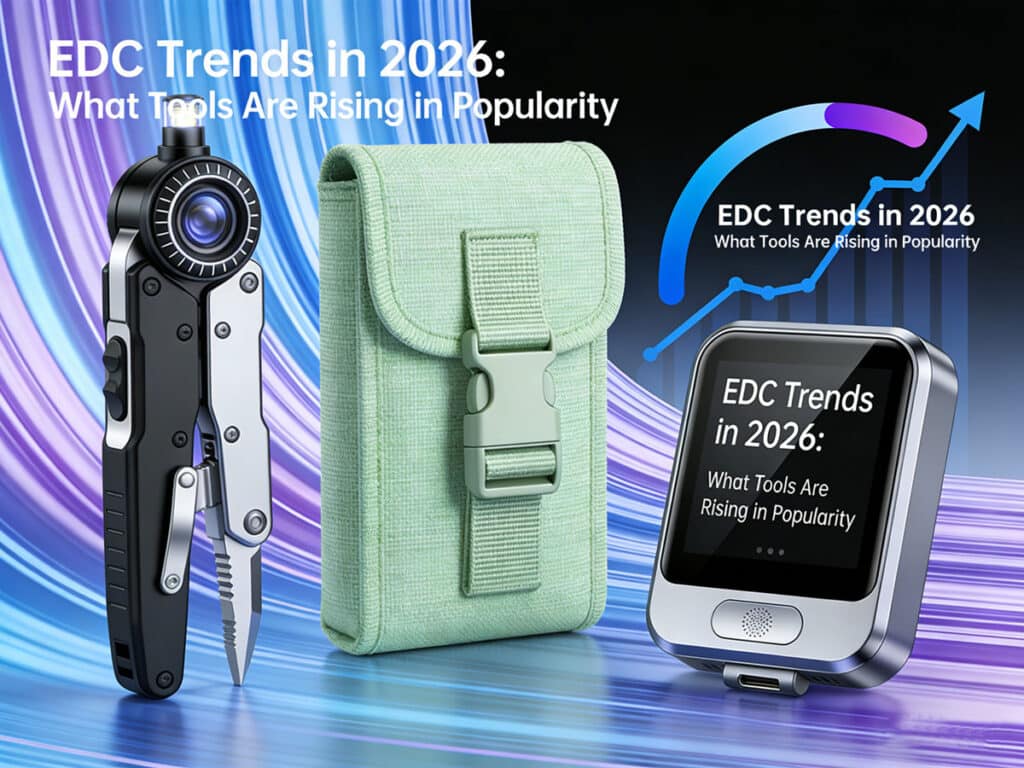
EDC Trends in 2026: What Tools Are Rising in Popularity
1. The Evolving Meaning of Everyday Carry
By 2026, everyday carry (EDC) has moved well beyond its earlier identity as a niche hobby centered on minimalist tools and pocket aesthetics, evolving instead into a broader cultural reflection of preparedness, lifestyle alignment, and personal responsibility shaped by shifting work habits, urban environments, and global uncertainty. Professionals across multiple fields now view EDC not as a static checklist of items, but as a flexible system that adapts to daily routines, legal considerations, and individual comfort levels, which explains why trends in EDC tools tend to emerge gradually rather than overnight. As people spend more time balancing mobility with readiness, the tools gaining popularity are those that integrate seamlessly into daily life while offering dependable function without drawing unnecessary attention or requiring excessive maintenance.
2. Discreet Utility Tools Gaining Mainstream Acceptance
One of the strongest trends shaping EDC in 2026 is the continued rise of discreet, multi-functional tools that blend into professional and casual environments alike.
Low-Profile Design as a Priority
EDC users increasingly favor tools that avoid aggressive or overt styling, opting instead for neutral finishes, compact profiles, and understated designs that can be carried comfortably in offices, public spaces, or while traveling. This shift reflects a desire for preparedness without signaling it outwardly.
Everyday Function First
Tools that serve a clear, daily purpose are rising in popularity because they justify their presence through constant use rather than hypothetical scenarios. This emphasis on practical value aligns with the broader trend of intentional ownership and reduced clutter.
3. The Continued Rise of Tactical Pens
Among the most consistently growing EDC categories, tactical pens have secured a place as long-term staples rather than passing trends, largely due to their dual-purpose nature and ease of integration into everyday routines.
Writing Tools With Reinforced Construction
In 2026, users increasingly expect tactical pens to function first as reliable writing instruments, with smooth ink flow and comfortable grips, while also offering reinforced construction that withstands drops, pressure, and long-term pocket carry.
Professional Acceptance and Legal Awareness
Their appearance as ordinary pens makes them widely accepted in professional settings, while their simple form reduces legal ambiguity in many regions. This balance of discretion and durability continues to drive their popularity across diverse user groups.
4. Material-Focused EDC and the Return to Craftsmanship
Another defining trend in 2026 is a renewed focus on materials, with users paying closer attention to how tools age, wear, and develop character over time.
Preference for Long-Lasting Metals
Materials such as brass, steel, and titanium remain central to EDC discussions, not because they are new, but because they represent durability and longevity in a market increasingly saturated with disposable alternatives. Users appreciate tools that develop patina or retain structural integrity rather than showing premature wear.
Craft Over Quantity
Instead of carrying many tools, more EDC enthusiasts are choosing fewer, higher-quality items, reflecting a shift toward craftsmanship and long-term value rather than constant upgrades.
5. Defensive and Preparedness-Oriented Tools in 2026
Preparedness remains a core theme in EDC, but the way people approach it continues to mature, emphasizing responsibility and context over bravado.
Thoughtful Selection and Awareness
Rather than adopting tools impulsively, users are increasingly researching legality, ergonomics, and real-world applicability before adding items to their carry. This approach encourages informed decisions and reduces reliance on exaggerated claims.
Simple, Solid Designs
Tools with no moving parts or complex mechanisms are gaining renewed interest because of their reliability and ease of maintenance. Items such as brass knuckles, when discussed within EDC culture, are often evaluated through the lens of material quality, form factor, and responsible ownership rather than sensationalized narratives.
6. Integration of EDC With Lifestyle and Identity
In 2026, EDC choices increasingly reflect personal values, professions, and daily environments rather than generic checklists promoted online.
Customization and Personal Fit
Users are prioritizing tools that fit their hands, routines, and clothing, recognizing that comfort and accessibility directly influence whether an item is carried consistently. Custom finishes, size options, and modular accessories support this trend.
EDC as a Reflection of Intent
Rather than signaling toughness or preparedness alone, modern EDC often communicates intentional living, where each carried item has a clear reason for being there, reinforcing discipline and self-awareness.
7. A Forward Look at Sustainable and Responsible EDC
As EDC culture continues to mature, the tools rising in popularity in 2026 are those that balance durability, discretion, and ethical consideration, reflecting a deeper understanding of what preparedness truly means. Items like tactical pens illustrate how multifunctional design can align with everyday needs, while discussions around brass knuckles increasingly focus on material integrity and lawful ownership rather than novelty. This shift toward responsibility, craftsmanship, and long-term usability suggests that EDC trends are moving away from excess and toward thoughtful curation. For those interested in exploring professionally designed tools and learning more about evolving standards within the EDC space, the BKM office website at https://brassknucklesmaster.com/ offers insight into how quality materials and deliberate design continue to shape the future of everyday carry.