
Jan
Knowledge of Weapons, Weapons What, Weapons Why
Serrated vs Straight Edge Rescue Knives: What You Should Know
1. The Role of Rescue Knives in Emergency Preparedness
Rescue knives occupy a unique space within the broader world of safety tools, because they are designed not for utility in everyday cutting tasks alone, but for reliability and speed in situations where seconds matter and conditions are rarely ideal. Whether carried by first responders, outdoor professionals, or civilians who prioritize preparedness, a rescue knife is often expected to perform under stress, in low visibility, or while cutting through resistant materials such as seatbelts, rope, webbing, or heavy fabric. Within this context, the choice between a serrated edge and a straight edge becomes more than a matter of personal preference, as each blade style offers distinct advantages that influence performance, control, and long-term usability. Understanding these differences helps users select a knife that aligns with realistic emergency scenarios rather than assumptions formed through casual use.
2. Straight Edge Rescue Knives: Precision and Control
Straight edge rescue knives represent the most traditional blade configuration, valued for their clean cutting profile and predictable behavior.
Clean Cuts and Material Control
A straight edge excels at delivering smooth, precise cuts, especially when working with materials that benefit from controlled slicing rather than tearing. In rescue situations involving clothing removal or controlled cutting near skin, this predictability can be an advantage, as the blade responds directly to pressure and angle without unexpected resistance.
Ease of Maintenance and Sharpening
One of the most practical benefits of a straight edge is its simplicity when it comes to maintenance. Sharpening a straight blade requires fewer specialized tools and less technical skill, making it easier to maintain consistent sharpness over time. For users who carry their rescue knife as part of a broader everyday carry system, this ease of upkeep contributes to long-term reliability.
3. Serrated Edge Rescue Knives: Aggressive Cutting Power
Serrated blades are often associated with rescue applications due to their ability to bite into tough, fibrous materials quickly.
Performance on Tough and Wet Materials
The defining characteristic of a serrated edge is its ability to cut efficiently through materials that resist smooth slicing, such as nylon webbing, rope, or seatbelts, especially when those materials are wet, muddy, or under tension. The serrations grip and tear through fibers, reducing the need for precise blade alignment.
Reduced Slippage Under Stress
In high-stress environments, fine motor control can diminish, making aggressive cutting edges more forgiving. Serrated blades are less likely to slip across a surface, which can be beneficial when working in confined spaces or awkward positions where control is limited.
4. Practical Comparisons in Real-World Rescue Scenarios
Choosing between serrated and straight edge rescue knives often depends on how the tool will be used in realistic situations rather than ideal conditions.
Vehicle Emergencies and Seatbelt Cutting
In vehicle rescue scenarios, serrated blades often demonstrate faster cutting performance on seatbelts and heavy straps, particularly when access is limited. Straight edges, however, provide cleaner cuts and more precise control if the rescuer has adequate space and visibility.
Medical and Close-Contact Situations
When working close to the body, such as cutting clothing to expose an injury, straight edges may offer a greater sense of control and reduced risk of snagging. Serrated edges can still be effective but require greater awareness to avoid unintended tearing.
5. Long-Term Use, Wear, and Versatility
Beyond immediate performance, long-term considerations play a critical role in determining which blade style best suits a user’s needs.
Durability and Edge Longevity
Serrated edges tend to maintain functional cutting ability longer between sharpening sessions because the recessed portions of the serrations are protected from wear. Straight edges may dull more evenly but are easier to restore to peak sharpness.
Integration With Broader EDC Systems
Rescue knives are often carried alongside other preparedness tools, and users frequently consider how different items complement one another. Just as ergonomic design matters in tools like tactical pens, blade geometry influences how naturally a rescue knife fits into daily carry habits. The same thoughtful selection applies when evaluating other EDC items, including non-bladed tools such as brass knuckles, where design, legality, and responsible ownership all factor into long-term use.
6. Making an Informed Choice Based on Preparedness Philosophy
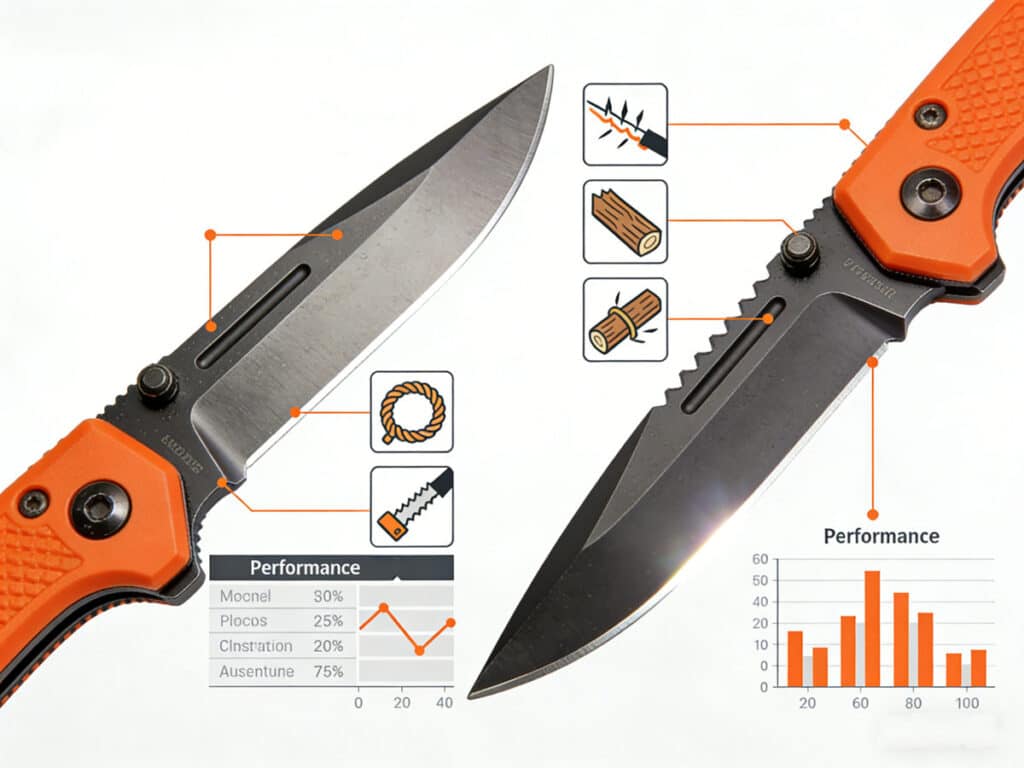
Understanding the differences between serrated and straight edge rescue knives ultimately comes down to aligning tool choice with realistic expectations, personal skill level, and the environments in which the knife is most likely to be used. Some users favor fully serrated blades for their aggressive cutting power, while others prefer straight edges for their precision and ease of maintenance, and many modern rescue knives incorporate a partially serrated design to balance both qualities. What matters most is not the label attached to the blade, but how confidently and responsibly the user can deploy it when necessary. As with all EDC tools, including tactical pens and structurally simple items like brass knuckles, informed selection and proper maintenance define long-term value more than novelty or appearance. For those interested in exploring professionally crafted EDC tools and learning more about responsible ownership and design considerations, the BKM office website at https://brassknucklesmaster.com/ offers additional insight into quality standards and thoughtful product development within the broader everyday carry landscape.