
Jan
Knowledge of Weapons, Weapons Why
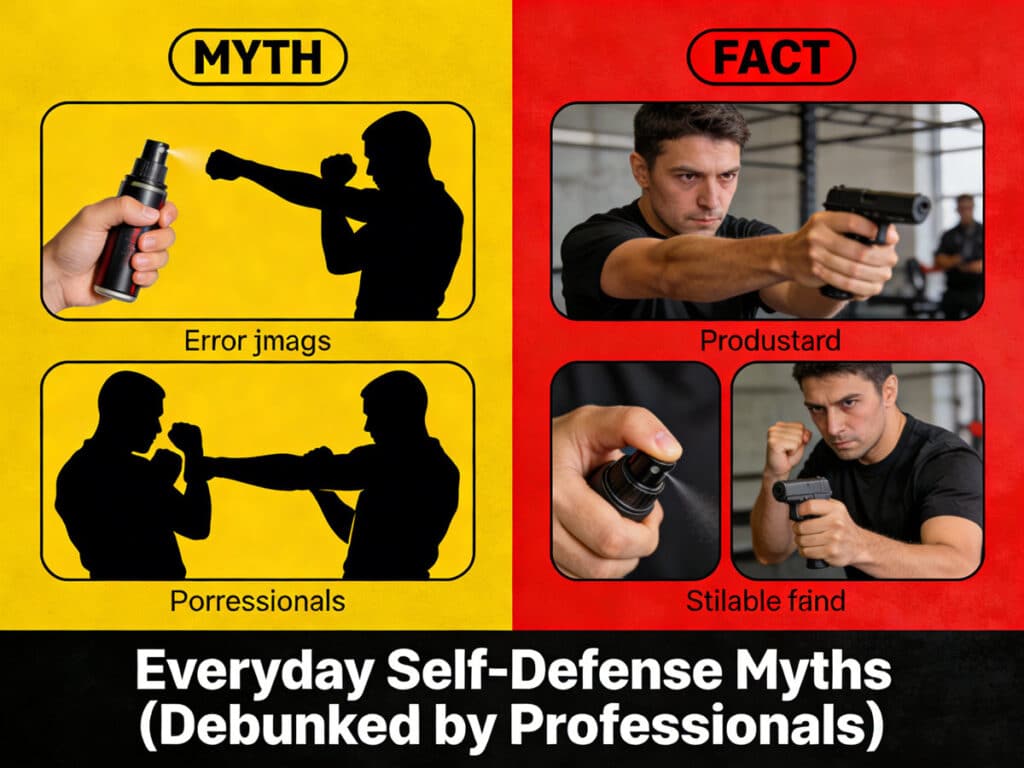
Everyday Self-Defense Myths (Debunked by Professionals)
1. Why Myths Persist in Everyday Self-Defense Culture
Everyday self-defense is surrounded by confident claims, dramatic anecdotes, and simplified advice that often spreads faster than carefully verified knowledge, largely because fear-driven topics tend to reward certainty over nuance. Many myths persist because they are easy to remember, emotionally reassuring, or reinforced by movies and online clips that prioritize entertainment rather than realism. Professionals in personal safety, law enforcement, and situational awareness consistently emphasize that effective self-defense is less about dramatic tools or techniques and more about preparation, judgment, and adaptability. Understanding why myths exist is the first step toward replacing them with practical, experience-based insight that reflects how real-world encounters actually unfold.
2. Myth One: Tools Alone Guarantee Safety
One of the most common misconceptions is the belief that simply carrying a self-defense tool automatically provides protection, regardless of training, awareness, or context.
The Illusion of Automatic Protection
Professionals consistently explain that no object, regardless of its design, functions as a guarantee of safety. Tools can fail, be inaccessible, or create a false sense of confidence that encourages risky behavior, which may increase vulnerability rather than reduce it.
Skill, Awareness, and Decision-Making
True self-defense effectiveness depends on situational awareness, threat recognition, and calm decision-making under pressure. Tools are secondary layers that support these core skills rather than replacing them, a distinction often overlooked in casual discussions.
3. Myth Two: Bigger or Heavier Means More Effective
Another persistent belief is that larger or heavier self-defense items are inherently more effective, a notion shaped by visual impact rather than practical evaluation.
Control Matters More Than Size
Professionals emphasize that control and familiarity far outweigh raw mass. An item that is awkward, heavy, or difficult to manage may slow reaction time or reduce precision, especially in high-stress situations where fine motor skills degrade.
Discreet Carry and Accessibility
Smaller, well-designed tools that integrate naturally into daily life are often more practical, because they are more likely to be carried consistently rather than left behind due to inconvenience or discomfort.
4. Myth Three: Training Is Only for Extreme Situations
Many people assume that self-defense training is only necessary for those expecting violent encounters, overlooking its broader benefits.
Training as Risk Reduction
Professionals view training as a method of risk reduction rather than combat preparation. Learning to recognize warning signs, manage personal space, and de-escalate situations often prevents confrontation altogether.
Mental Preparedness Over Physical Force
Training builds mental resilience and decision-making skills, which are essential regardless of whether physical action is ever required. This perspective shifts self-defense from reaction to prevention.
5. Myth Four: Legal Issues Are Secondary Concerns
A surprisingly common myth is that legal considerations only matter after an incident, not before.
Law Shapes What Is Practical
Professionals stress that legality directly affects what tools can be carried, how they are stored, and when they can be used. Ignoring these realities can turn a well-intentioned act into a serious legal problem.
Responsible Ownership
Understanding local regulations and carrying tools responsibly demonstrates maturity and foresight, qualities that professionals consider essential components of self-defense planning.
6. Myth Five: Confidence Comes From Aggression
Some myths portray self-defense confidence as aggressive posture or confrontational behavior, a portrayal that professionals strongly challenge.
Calm Confidence Versus Provocation
Experienced practitioners describe effective confidence as calm, observant, and non-confrontational. Aggression can escalate situations unnecessarily, while composed awareness often discourages threats before they develop.
Body Language and Presence
Simple factors such as posture, eye contact, and controlled movement communicate awareness and readiness without inviting confrontation, reinforcing safety through subtle cues rather than overt displays.
7. Myth Six: All Self-Defense Tools Work the Same
Another misconception is that different self-defense tools offer interchangeable benefits, leading users to focus on appearance rather than function.
Design Influences Practicality
Each tool category has distinct design priorities, and professionals encourage users to understand these differences rather than assuming universal effectiveness. Items like tactical pens are often valued for their discreet form and everyday utility, while other tools prioritize different aspects of readiness.
Context Determines Value
The effectiveness of any tool depends heavily on environment, user familiarity, and lawful carry considerations. What works in one setting may be impractical or inappropriate in another, underscoring the need for informed selection.
8. Reframing Self-Defense Through Professional Insight
Debunking everyday self-defense myths reveals a consistent professional message: safety is built through awareness, education, and responsible choices rather than reliance on exaggerated claims or dramatic imagery. Tools, whether commonly discussed items like brass knuckles or discreet options such as tactical pens, are best understood as supplementary elements within a broader personal safety framework that prioritizes judgment and preparedness. By replacing myths with realistic expectations, individuals can approach self-defense with clarity and confidence grounded in experience rather than assumption. For those interested in exploring professionally designed EDC tools and learning more about responsible ownership perspectives, the BKM office website at https://brassknucklesmaster.com/ offers additional insight into quality-focused design and informed everyday carry philosophy.