
Nov
Knowledge of Weapons
Can a Tactical Pen Pass TSA Security? Air Travel Rules Explained
Air travel has become an increasingly regulated environment where even small personal items are subject to detailed scrutiny, and few objects create as much confusion among travelers as the tactical pen, a writing instrument designed to function primarily as a pen yet built with rugged materials and reinforced features that blur the line between tool and defensive equipment. Many travelers wonder whether such an item is permitted in carry-on luggage, whether TSA officers treat it as a weapon, or whether its dual-purpose design places it into a regulatory gray zone that might lead to confiscation at the security checkpoint. While the curiosity is understandable, especially among people who value durable everyday-carry tools, the legal and procedural landscape surrounding tactical pens is clearer than many realize once the principles behind TSA screening, threat assessment, and passenger safety standards are examined in depth.
This article explores how tactical pens are evaluated by airport security, why their design influences TSA decisions, and how travelers can avoid confusion by understanding the rules rather than relying on hearsay or inconsistent online anecdotes.
1. What Exactly Is a Tactical Pen and Why Does TSA Care?
A tactical pen is typically designed as an enhanced version of a standard pen, often built from high-strength materials such as aluminum alloy, steel, or titanium, and may include ridged, pointed, or reinforced surfaces that make the pen more durable or suitable for emergency applications like breaking glass or withstanding impact.
The Features That Raise Questions
The very characteristics that make a tactical pen appealing to certain users—such as its weight, reinforced construction, or pointed crown—can also trigger enhanced scrutiny from Transportation Security Administration officers, because TSA screening rules emphasize the potential for an item to function as a blunt or sharp instrument capable of causing substantial harm. Under TSA’s published public guidelines on prohibited items, objects classified as weapons or “self-defense items” are generally not allowed in carry-on bags, especially if they are rigid, pointed, or deliberately reinforced, even if they technically operate as a pen.
Why TSA Screening Focuses on Intent and Construction
TSA officers are not evaluating whether an item is officially marketed as a tactical pen; instead, they are evaluating whether it resembles a prohibited device, whether its construction presents a security risk, and whether it matches the characteristics of objects on the restricted list. Even if a tactical pen is marketed primarily as a writing tool, if it is constructed in a way that resembles a kubotan, glass-breaker, or rigid impact device, the officer may interpret it as a self-defense instrument and deny it from carry-on luggage. The distinction is important: labeling does not override design.
2. TSA Rules: What the Agency Allows and What It Restricts
While TSA guidelines cover thousands of item categories, tactical pens fall into a smaller subset of personal tools that require interpretation, because they are not always listed by name but instead evaluated under general “self-defense items” policies.
How TSA Categorizes Tactical Pens
TSA publicly states that certain self-defense tools—including batons, kubotans, martial-arts weapons, and reinforced impact devices—are prohibited in carry-on luggage due to their potential to harm passengers or crew. Tactical pens, because they often resemble reinforced impact tools, are usually treated under this category. This means that even though a traveler may argue that “it’s just a pen,” the construction and potential functionality take precedence over marketing claims.
A key concept here is dual use: if an item has a benign function (writing) but also clearly incorporates features associated with force-resistant construction, TSA may err on the side of caution.
Officer Discretion and Real-World Variability
An important part of TSA screening is officer discretion, which allows frontline personnel to make judgment calls about borderline items. Because tactical pens vary dramatically in design—from mildly reinforced to unmistakably weapon-like—the final decision often depends on the officer who examines the item. This means a tactical pen might pass screening in one airport yet be confiscated in another, not because the rules differ but because the pen’s construction triggers different threat assessments.
Travelers should understand this variability not as inconsistency but as the result of TSA’s operational responsibility to prioritize safety when faced with objects that lack a single classification category.
3. Why Many Tactical Pens Are Not Allowed in Carry-Ons
Although tactical pens are not explicitly banned by name, the majority of models meet the characteristics of items that TSA restricts, and understanding why helps clarify both the rules and the reasoning behind them.
The Security Rationale Behind Restrictions
TSA’s mission is to prevent dangerous items from entering secure areas of the airport, and artifacts with reinforced points, rigid bodies, or structural features associated with impact tools fall into a risk category that necessitates caution. A pen with thickened metal walls, pointed crowns, or tactical branding communicates characteristics associated with items that could be misused in a confined environment such as an aircraft cabin, which is why officers might decide not to allow it past screening.
Perception Matters: What Looks Dangerous May Be Treated as Dangerous
Even if a tactical pen is never intended as a weapon by its owner, TSA evaluates items based on potential threat rather than personal intent. In practical terms, this means that if a pen appears designed to withstand force or be used in emergency or impact scenarios, TSA may interpret it similarly to a kubotan-style device and restrict it from carry-on bags.
Checked Luggage vs. Carry-On Restrictions
The rules for checked baggage are generally more permissive, because items placed in checked luggage cannot be accessed during flight. Therefore, tactical pens are typically allowed in checked bags even when not permitted in carry-on luggage. This distinction exists not because the object suddenly becomes harmless but because access to the item is restricted during transit.
4. Realistic Expectations: What Travelers Should Know Before Flying
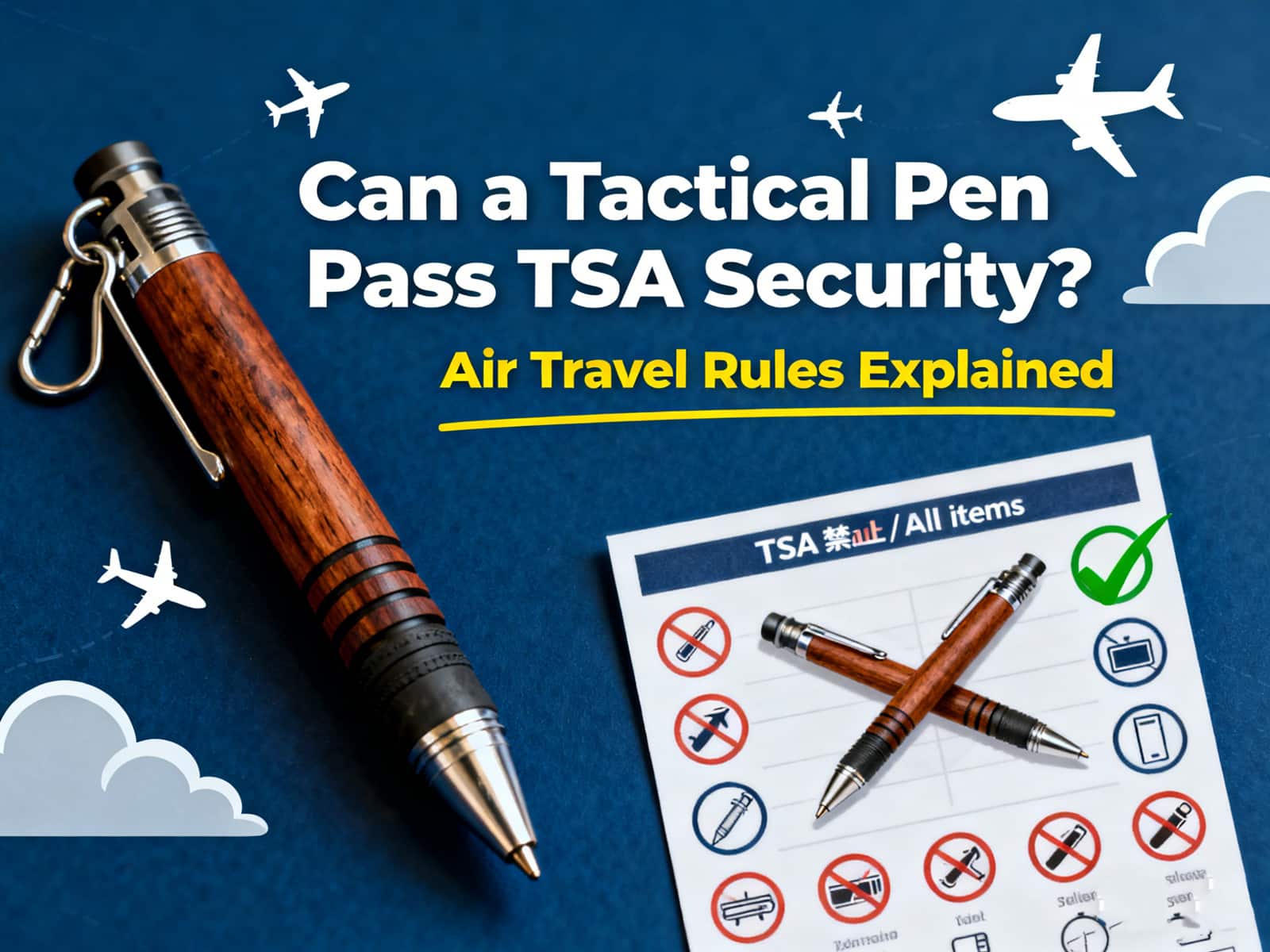
Travelers often ask whether a tactical pen can “pass TSA,” but framing the question this way can lead to frustration, because the real issue is not whether a pen can pass but whether it is likely to pass, and what variables influence that outcome.
Why No Traveler Should Assume a Tactical Pen Will Be Allowed
Even if a friend, colleague, or online reviewer reports they successfully boarded a flight with a tactical pen, there is no guarantee the same item will pass inspection tomorrow, because TSA decisions depend on an officer’s evaluation of risk, the pen’s features, and evolving security protocols. In practice, many travelers discover that their tactical pen is confiscated even though they previously traveled with it without issue.
Relying on past experience is therefore unreliable, because TSA policy prioritizes safety over consistency of personal outcomes.
The Influence of Design Minimalism
Some tactical pens are designed to resemble regular pens more closely, with subtle reinforcement and no aggressive aesthetic elements, and these may attract less scrutiny. However, even such models are not guaranteed clearance, because TSA evaluates construction rather than branding or stylistic subtlety.
This is why travelers who value predictability often choose to pack any reinforced writing tools in checked luggage rather than risk losing them during screening.
Avoiding Misunderstandings with TSA Officers
Travelers benefit from approaching the screening process with patience and clarity. If a TSA officer questions an item, becoming argumentative tends to escalate the issue rather than resolve it. Officers are obligated to enforce safety rules, and clear communication coupled with an understanding of their protective role typically leads to smoother interactions.
5. Responsible Travel Practices for People Who Use Durable Writing Tools
Because many individuals choose tactical pens primarily for their durability, reliability, or professional utility rather than for self-defense, it is important to understand how to travel responsibly without unnecessary disruption.
Practical Options for Travelers
- Use a standard pen during travel: Many travelers switch to ordinary writing instruments for flights, packing their reinforced pen in checked baggage instead.
- Choose minimalist designs: For those who insist on bringing a sturdier pen, models that avoid aggressive shapes, pointed ends, or tactical branding reduce the likelihood of scrutiny, though they are not guaranteed clearance.
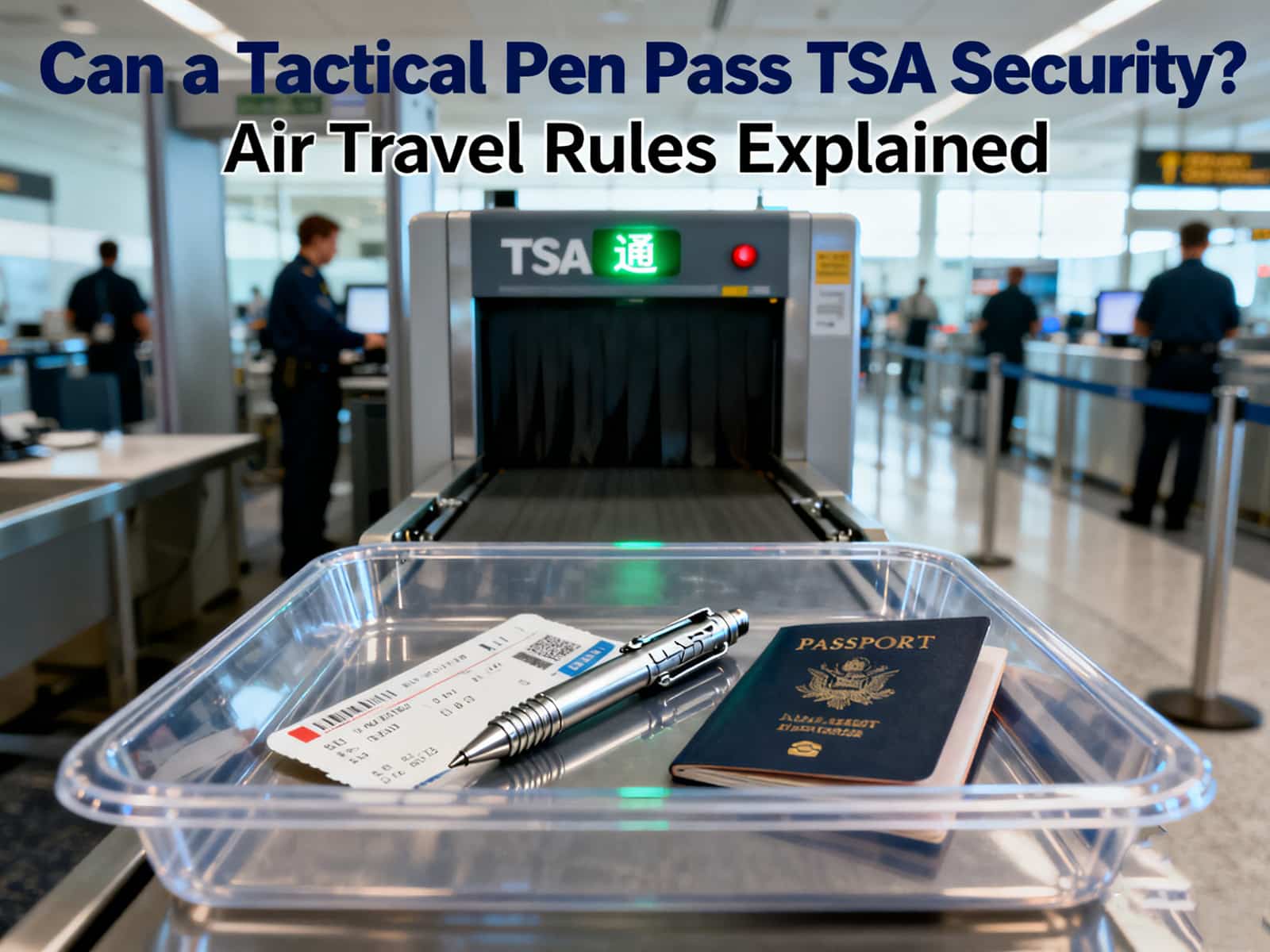
- Prepare for screening: Keeping items organized and easily visible reduces confusion and speeds up the inspection process.
Ethical and Safety Considerations
Airports are sensitive environments where the priority is collective safety, and even if an item appears harmless to one traveler, its design may raise reasonable questions for someone tasked with protecting hundreds of passengers per hour. Recognizing the importance of that responsibility helps shape travel decisions that respect both individual preferences and the shared nature of air travel.
Why Predictability Matters
Ultimately, travelers who value certainty tend to opt for checked-baggage transport of any object that might appear reinforced, tactical, or dual-purpose, because doing so removes ambiguity and avoids losing an item unexpectedly at the security checkpoint. Predictability matters when navigating regulated environments, and understanding TSA’s perspective allows travelers to make informed and calm decisions without encountering unnecessary surprises.