
Nov
History of Weapons
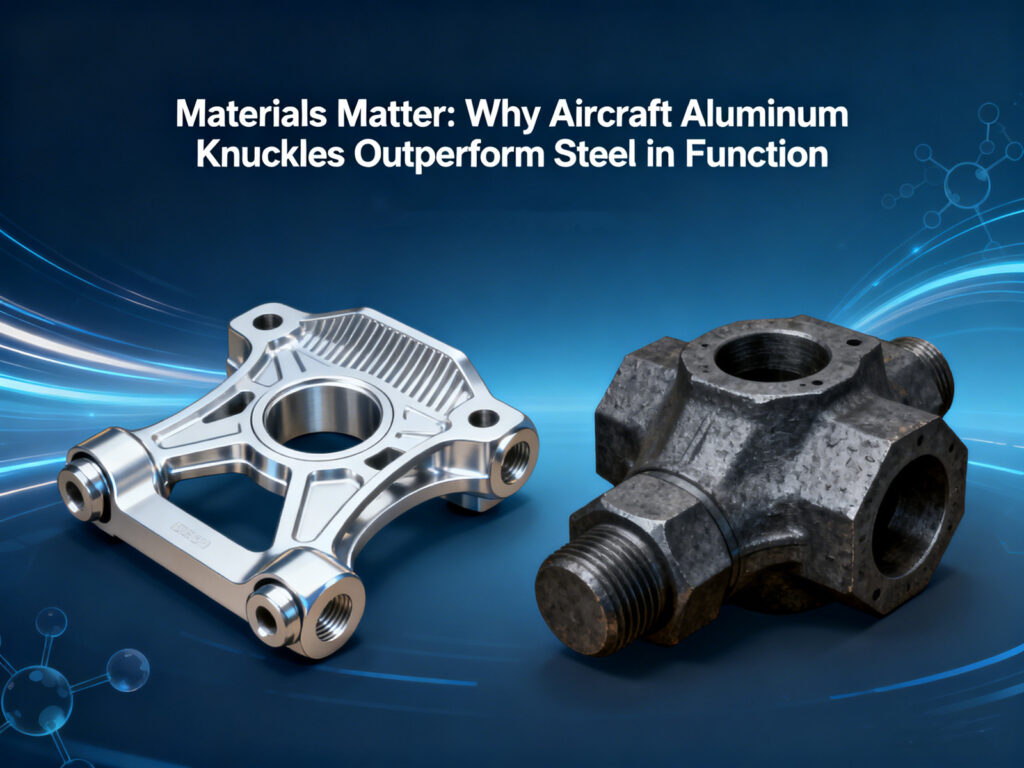
Materials Matter: Why Aircraft Aluminum Knuckles Outperform Steel in Function
Modern manufacturing has reshaped almost every category of handheld equipment, and among these increasingly refined objects, the shift from steel to aircraft aluminum in impact-resistant tools has become one of the most noticeable developments, largely because the change in materials science reflects a deeper understanding of ergonomics, durability, and user-centered engineering. While steel has long been associated with strength and structural reliability, aluminum alloys used in aerospace applications have demonstrated that performance is not solely a function of density or brute durability but also of thermal characteristics, deformation behavior, weight distribution, and long-term handling comfort. These factors collectively influence how a rigid handheld tool performs under repeated stress, sudden impact, or extended carry, leading many designers to prefer aircraft-grade aluminum for its remarkable combination of strength and efficiency.
This article explores why aerospace aluminum alloys—particularly the widely used 6061-T6 and 7075 grades—offer functional advantages over steel in compact impact tools, and why those advantages extend far beyond mere weight reduction.
1. Understanding the Material Landscape: Aluminum vs. Steel in Modern Applications
Any analysis of performance begins with understanding the inherent properties of the materials, because the success or failure of a handheld tool is directly related to how the material behaves under physical stress, environmental exposure, and repetitive handling.
The Role of Density in Ergonomic Performance
Steel, with its significantly higher density, has long been valued for its rigidity and resistance to deformation, yet this same density creates challenges for any object meant to be carried discreetly or used in quick, controlled motions. A heavier object requires more effort to stabilize and maneuver, which creates user fatigue, slows response time, and increases the risk of accidental over-swing or wrist strain.
Aircraft aluminum, by contrast, offers the advantage of being dramatically lighter—commonly one-third the weight of steel—yet capable of maintaining structural integrity even under demanding use. The lower density allows designers to craft objects that feel agile in the hand, enabling smoother transitions between grip positions and reducing the likelihood of finger or wrist fatigue during extended periods of holding or handling, especially when quick coordination is required.
Mechanical Properties Beyond Strength Alone
Although steel is undeniably strong, aerospace aluminum alloys exhibit their own form of strength that is often more relevant in objects meant to be held rather than anchored or bolted. Aluminum’s superior strength-to-weight ratio means it can endure high stress loads relative to its mass, balancing impact absorption with controlled deformation. For handheld tools, this characteristic means that the material can flex slightly under sudden force rather than transferring the entirety of the shock into the user’s joints, a subtle but meaningful benefit.
2. Why Weight Matters in Compact Gear: The Hidden Advantages of Aluminum
Weight is more than a matter of convenience; it fundamentally shapes user experience, safety, and effectiveness.
Reduced Fatigue During Extended Carry
Anyone who carries gear daily understands that every gram contributes to overall comfort, and while steel might seem negligible in small items, its density becomes noticeable when worn throughout the day. Aluminum’s significant reduction in weight helps minimize strain on pockets, bags, or load-bearing belts, allowing users to integrate the item into their daily routine without constantly being aware of it.
Long-term comfort tends to correlate directly with consistent usage, which is one reason aluminum has become a preferred material in everyday-carry industries: users are more willing to bring an item with them when it doesn’t feel like additional weight.
Enhanced Control Under Rapid Movement
Control is an essential characteristic of any compact tool, because precision depends on how easily the user can adjust their grip, reposition the object, or maintain balance during sudden motions. Heavier steel can create momentum that continues after the user intends to stop, whereas lightweight aluminum alloys respond almost instantly to micro-adjustments in finger pressure or wrist movement.
This rapid responsiveness increases accuracy, reduces the risk of over-rotation, and supports finer motor control, which ultimately translates into safer and more predictable handling.
3. Durability Reimagined: Aluminum’s Composite Strengths
One of the most persistent misconceptions about aluminum is that it must be weaker than steel simply because it is lighter, yet aircraft-grade alloys challenge this assumption, offering a constellation of benefits that go far beyond raw strength.
Heat Dissipation and Corrosion Resistance
Steel retains heat much more readily than aluminum, which can become a disadvantage in environments where the object is exposed to sunlight, rapid temperature changes, or prolonged physical contact. Aluminum, with its high thermal conductivity, dissipates heat quickly, ensuring that it remains comfortable to handle while also reducing stress caused by thermal expansion.
In addition, aerospace aluminum alloys naturally resist corrosion, forming a protective oxide layer that shields the material from environmental moisture. Steel, unless stainless or coated, may rust, deform, or degrade over time, especially in humid or maritime environments.
Structural Deformation and Impact Management
When subjected to sudden force, steel tends to transmit energy directly into the user’s hand because its density and rigidity limit its ability to flex or absorb shock. Aluminum, especially in advanced alloys, has a more favorable deformation profile, meaning it can withstand impact while flexing slightly to disperse force rather than transferring it entirely.
This subtle difference can dramatically improve user comfort, particularly in repeated-use scenarios where the cumulative impact of vibrations or shocks can lead to strain, soreness, or repetitive-stress injuries.
4. Design Flexibility: Why Aluminum Transforms What Engineers Can Build
Aircraft aluminum offers engineers and designers an extraordinary palette of possibilities, allowing them to create objects that are both structurally strong and aesthetically refined.
Precision Machining and Smooth Ergonomics
The machinability of aerospace aluminum is one of the reasons it has become so dominant in compact gear. It can be milled with exceptional precision, allowing designers to sculpt smooth edges, complex curves, and finely detailed contours that enhance grip stability.
Steel, while machinable, tends to wear tools faster and requires more aggressive cutting techniques, making intricate ergonomic shaping more challenging. As a result, aluminum tools often feature more refined silhouettes that feel more natural in the hand.
Surface Treatments and Protective Coatings
Aircraft aluminum is particularly receptive to anodizing, a process that increases corrosion resistance, improves surface hardness, and opens the door to diverse aesthetic finishes. Anodized surfaces are less prone to scratching than untreated steel and maintain a clean appearance even after prolonged handling.
Engineers can integrate texture, ridges, or micro-grooves directly into the design to enhance grip without relying on bulky patterns that disrupt ergonomics.
5. Performance in Real-World Use: Why Aluminum Outshines Steel in Practical Settings
When evaluating materials in real-world scenarios, the conversation extends beyond laboratory metrics to include comfort, ease of use, and long-term dependability.
Everyday Carry and Mobility
Many users value compact tools that integrate seamlessly into their day-to-day lives, and aluminum’s lightness, corrosion resistance, and ergonomic advantages make it ideal for unpredictable environments, whether the user is commuting, working outdoors, or navigating urban environments. A lightweight item creates less drag inside pockets, produces less stress when clipped to clothing, and rarely feels intrusive.
Maintenance and Longevity
Because aluminum resists oxidation and heat better than most basic steel alloys, it typically requires less maintenance. It does not need oiling to prevent rust, rarely discolors, and maintains dimensional stability over years of regular handling. Steel might last longer under extreme mechanical stress, but in ordinary usage, aluminum’s low maintenance requirements give it a significant advantage.
Balancing Strength and Comfort
Ultimately, the superiority of aircraft aluminum lies not in being stronger than steel in absolute terms but in offering functional strength—the kind of performance that enhances mobility, usability, stability, and comfort. Strength is not one-dimensional; it must be evaluated in relation to how an object is held, used, carried, and maintained, and in these respects aluminum consistently outperforms steel for most everyday purposes.