
Jun
Knowledge of Weapons, Weapons Why
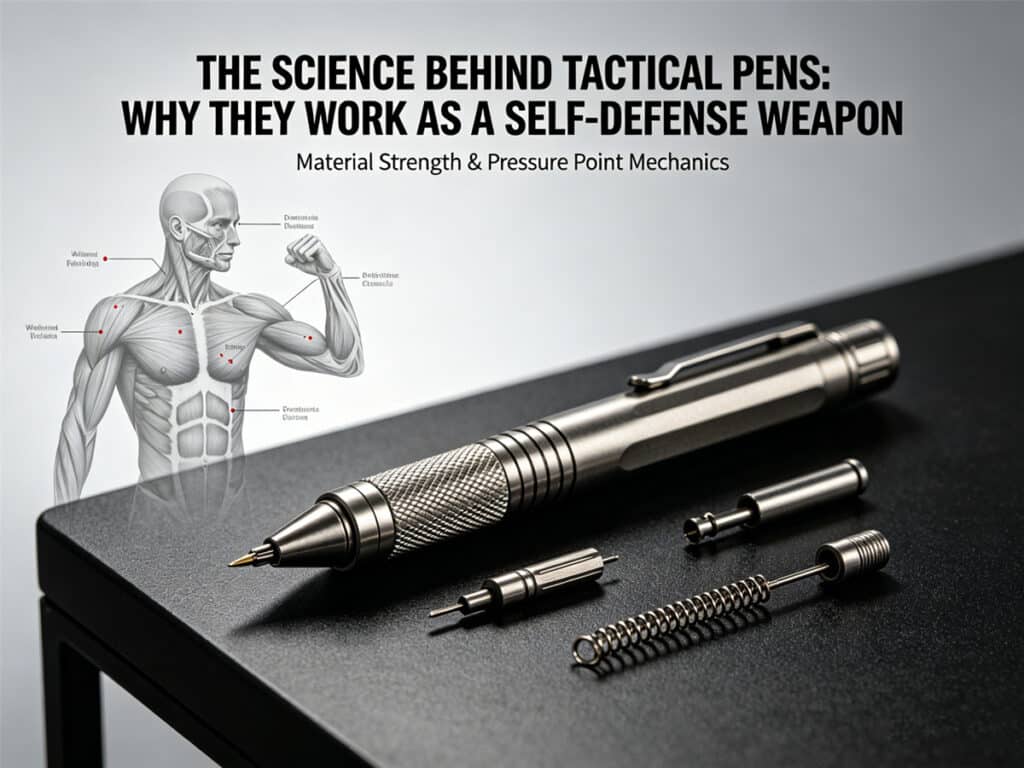
The Science Behind Tactical Pens: Why They Work as a Self-Defense Weapon
Understanding the Tactical Pen as a Modern Defensive Tool
The tactical pen is often introduced as a simple writing instrument, yet its design reflects a deeper level of engineering that allows it to function as a compact, reliable tool in situations where strength, control, and quick response matter. While it retains the familiar appearance of a pen, its structure, materials, and balance are intentionally developed to provide durability and functional versatility, which is why it has gained attention among travelers, professionals, and everyday users alike.
What makes the tactical pen particularly interesting is how it blends ordinary utility with thoughtful design principles rooted in physics and ergonomics, creating an object that is both discreet and capable. Rather than relying on complexity, it uses straightforward mechanical advantages such as leverage, force concentration, and structural integrity to perform effectively when needed, all while remaining easy to carry and use in daily life.
Understanding why it works requires looking beyond its surface and examining the science behind its construction, which reveals how small design choices can significantly influence performance and reliability in real-world conditions.
Material Science and Structural Strength
High-Strength Materials and Durability
At the core of the tactical pen is its material composition, which typically includes aircraft-grade aluminum, stainless steel, or other reinforced alloys chosen for their ability to withstand stress without bending or breaking. These materials offer a balance between strength and weight, allowing the pen to remain portable while still providing the rigidity required for demanding use.
Material science plays a critical role here, as the internal structure of these metals determines how they respond to force, impact, and repeated handling. By selecting materials with high tensile strength and resistance to deformation, manufacturers ensure that the pen maintains its shape and functionality over time, even under challenging conditions.
Impact Resistance and Longevity
Beyond basic strength, the ability of a tactical pen to absorb and distribute impact is essential to its effectiveness, as this prevents structural failure during use. The combination of solid construction and carefully engineered thickness allows the pen to handle localized pressure without cracking or weakening.
This durability also contributes to longevity, as a well-made tactical pen can endure years of regular use without significant wear, making it a dependable tool for those who value reliability in their everyday carry items.
Physics of Force Concentration and Leverage
Pressure and Surface Area
One of the key scientific principles behind the effectiveness of a tactical pen is the concept of pressure, which is defined as force applied over a specific area. By concentrating force into a small, reinforced tip, the pen is able to deliver a higher level of pressure with relatively minimal effort, making it more efficient than larger, less focused tools.
This principle explains why compact tools can be highly effective despite their size, as the reduction in surface area increases the intensity of the applied force. It is a simple yet powerful concept that underpins the design of many precision instruments.
Leverage and Grip Mechanics
Leverage is another important factor, as the shape and length of the tactical pen allow the user to apply force in a controlled and efficient manner. The cylindrical form fits naturally in the hand, enabling a firm grip that enhances stability and reduces the likelihood of slipping during use.
By combining leverage with a secure grip, the pen allows for more precise application of force, which can be particularly useful in situations where control and accuracy are essential. This balance between strength and precision is a defining characteristic of its design.
Ergonomics and Human Factors in Design
Grip Comfort and Control
The ergonomic design of a tactical pen ensures that it can be held comfortably for extended periods, whether it is being used for writing or other practical purposes. Features such as textured surfaces, balanced weight distribution, and carefully shaped grips contribute to a secure and natural hold.
These elements are not merely aesthetic, as they directly influence how effectively the pen can be used, particularly in situations where quick reactions and steady handling are required. A well-designed grip reduces fatigue and enhances overall control, making the tool more reliable in a variety of contexts.
Balance and Handling Efficiency
Balance is another critical aspect of ergonomics, as it determines how the pen feels in the hand and how easily it can be maneuvered. A properly balanced tactical pen allows for smooth, controlled movements, which can improve both writing performance and general handling.
This attention to balance reflects a broader understanding of human factors, where the interaction between the user and the tool is carefully considered to maximize efficiency and comfort. By aligning design with natural hand movements, the pen becomes an intuitive extension of the user’s actions.
Practical Applications and Responsible Use
The effectiveness of a tactical pen lies not only in its design but also in how it is used, as it is ultimately a tool that combines everyday functionality with added preparedness. Its primary role remains that of a writing instrument, yet its durable construction and thoughtful engineering provide additional utility in situations where resilience and adaptability are valuable.
It is important to approach the use of such tools with a focus on responsibility and awareness, as laws and regulations can vary depending on location, and understanding these rules is essential for ensuring compliance. The emphasis should always be on practical, lawful use, where the pen serves as a reliable companion rather than a source of risk.
In the broader landscape of everyday carry items, the tactical pen represents a balanced approach to design, offering versatility without unnecessary complexity, and aligning with a growing interest in tools that are both functional and discreet. Alongside compact solutions like a keychain tool, it provides a practical alternative to more heavily restricted items, such as brass knuckles, while still delivering durability and utility. For those interested in exploring design principles, materials, and product variations, platforms like brassknucklesmaster.com offer additional insights into how modern tools are engineered to meet the needs of today’s users.