
Nov
Weapons What
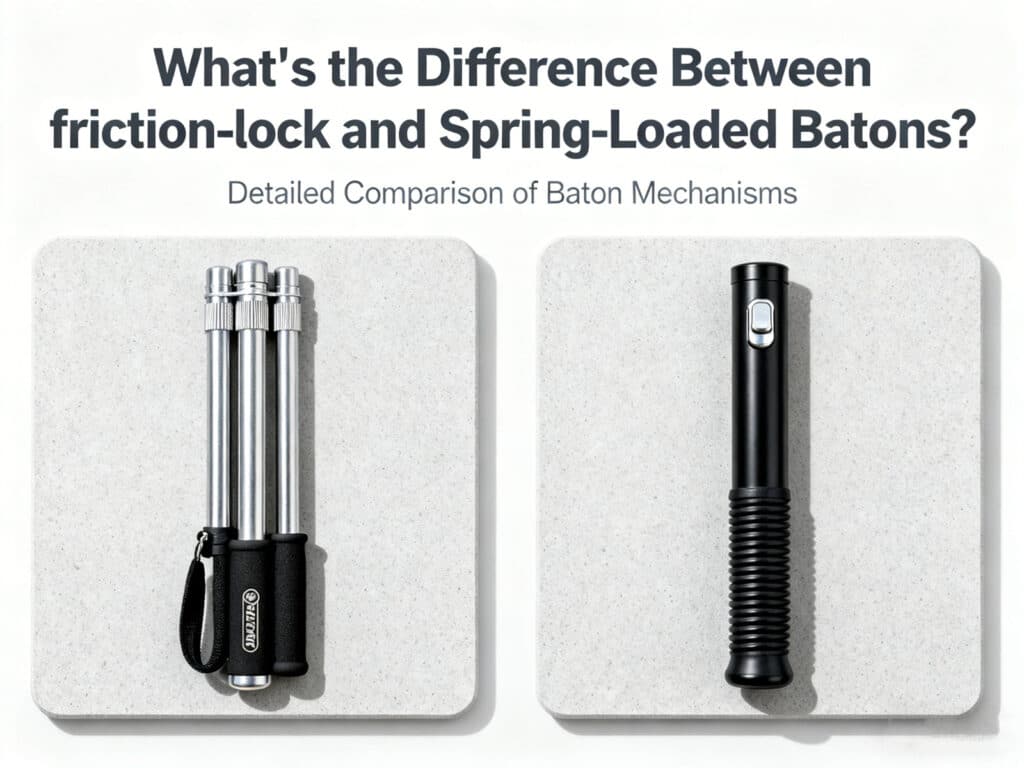
What’s the Difference Between friction-lock and Spring-Loaded Batons?
In discussions about modern impact tools, especially those analyzed in law-enforcement policy studies, security-equipment evaluations, or engineering reviews of extendable metal devices, few comparisons appear more often than the one between friction-lock batons and spring-loaded batons, because both devices represent distinct design philosophies that prioritize different combinations of durability, mechanical complexity, reliability, and deployment style. While debates in casual circles often oversimplify the differences by focusing narrowly on speed or convenience, a more grounded analysis reveals a richer story involving material behavior, mechanical geometry, energy transfer, user control, and long-term maintenance considerations, all of which shape how these two baton types perform in professional and regulated contexts.
This article explores the differences between the two designs with objectivity and depth, avoiding sensationalism while offering a clear and structured explanation of how each baton type works, what sets them apart, and why certain users or agencies historically favored one over the other.
1. The Mechanical Foundation Behind Expandable Baton Designs
Expandable batons, regardless of type, rely on the same basic idea: a compact cylindrical body containing telescoping sections that extend outward into a rigid, elongated device. What distinguishes friction-lock from spring-loaded designs is the way they transition from compact to extended form and how the locking mechanism behaves once the device is deployed.
Understanding Structural Priorities
Both baton types prioritize rigidity, controlled extension, and predictable alignment, but they achieve these outcomes using different mechanical systems. A friction-lock baton depends on mechanical friction generated between tapered metal tubes, whereas a spring-loaded baton incorporates an internal spring that pushes the telescoping sections outward once released. While these principles sound simple, they produce meaningful differences in durability, consistency, and environmental resilience.
Energy Transfer and Material Interaction
The internal movement of metal sections, their weight distribution, and the way each design handles vibration play significant roles in reliability. Friction-lock batons rely on momentum combined with tight contact between tubes; spring-loaded batons rely on stored mechanical energy and precise unlocking tolerances. These design differences affect not only deployment speed but also how the baton behaves after repeated cycles, exposure to moisture, or impacts against hard surfaces.
2. What Defines a Friction-Lock Baton?
Friction-lock batons, often recognized by their multi-section telescopic design and manual snap-extension, are widely analyzed for their robust construction and resilience under demanding conditions.
How Friction-Lock Systems Hold Their Structure
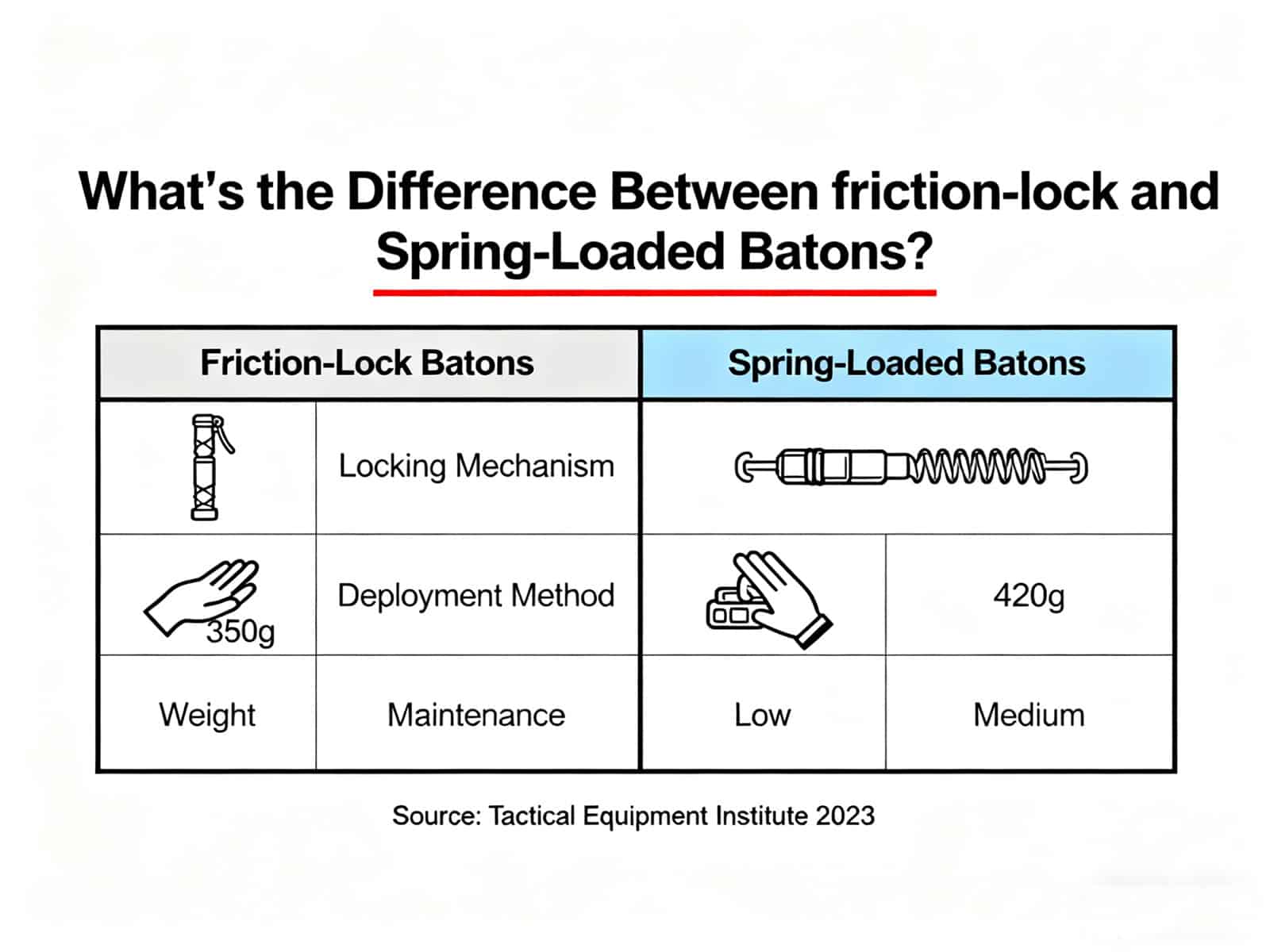
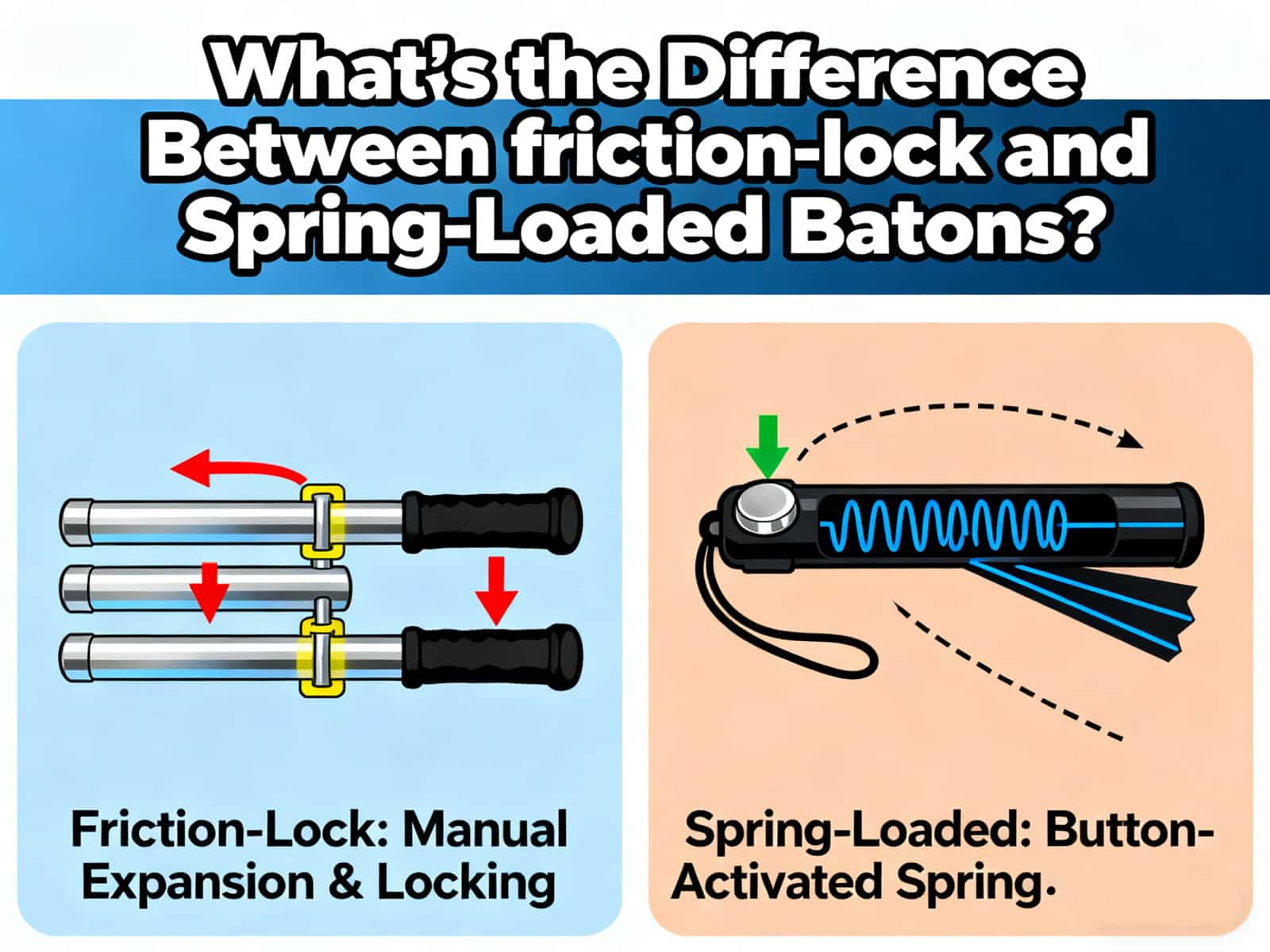
Friction-lock batons operate on the principle that the inner metal sections, which often have slightly flared tips, slide outward and lock into place through friction when the baton gains enough momentum during extension. This mechanical relationship between tapered edges and tube walls creates a secure hold that resists collapse under pressure. The simplicity of the mechanism, which uses no springs or internal latches, gives the friction-lock baton a reputation for reliability in environments involving heavy impact, unpredictable weather, or rough handling.
Environmental and Physical Resilience
Because the core function of a friction-lock baton depends on clean metal contact rather than internal moving parts, the design resists environmental issues such as grit, freezing temperatures, moisture accumulation, or corrosion more effectively than more complex mechanisms. Users in demanding settings often appreciate that fewer internal components mean fewer potential points of failure.
The Tradeoff: Deployment and Retraction
While quick when used by a trained hand, friction-lock batons do require momentum for deployment and controlled pressure to collapse, meaning they rely on user technique rather than a mechanical assist. This design offers predictability but not automation, and for some users that stability is an advantage, while others find it less convenient.
3. What Defines a Spring-Loaded Baton?
Spring-loaded batons distinguish themselves through a different deployment philosophy entirely: rather than relying on momentum and friction, they use stored mechanical energy held in a compressed spring.
How Spring-Based Extension Works
A spring-loaded baton contains an internal spring system that releases its stored energy when triggered, pushing the telescoping sections outward into a fully extended position. This mechanism offers extremely fast and consistent deployment, independent of the user’s strength or technique, which historically made spring-loaded systems appealing for individuals who prioritize rapid ready-state capability.
Mechanical Complexity and Maintenance
Because a spring-loaded baton depends on an internal mechanism, it requires more precision engineering to ensure that the release trigger, internal spring, and section alignment all function reliably over time. Dirt, moisture, or corrosion can interfere more quickly with a spring-loaded mechanism than with a friction-based system. Proper upkeep, storage, and periodic mechanical checks therefore play an essential role in the long-term functionality of these devices.
Retraction and Reliability Considerations
Unlike friction-lock batons, which collapse manually, spring-loaded models may require specific steps to reset the internal mechanism. Whether this is seen as efficient or cumbersome depends on the setting in which the baton is used. Their speed is valuable in some scenarios, but reliance on a complex mechanism means a stronger dependence on manufacturing quality and consistency.
4. Key Differences: Functionality, Reliability, and User Experience
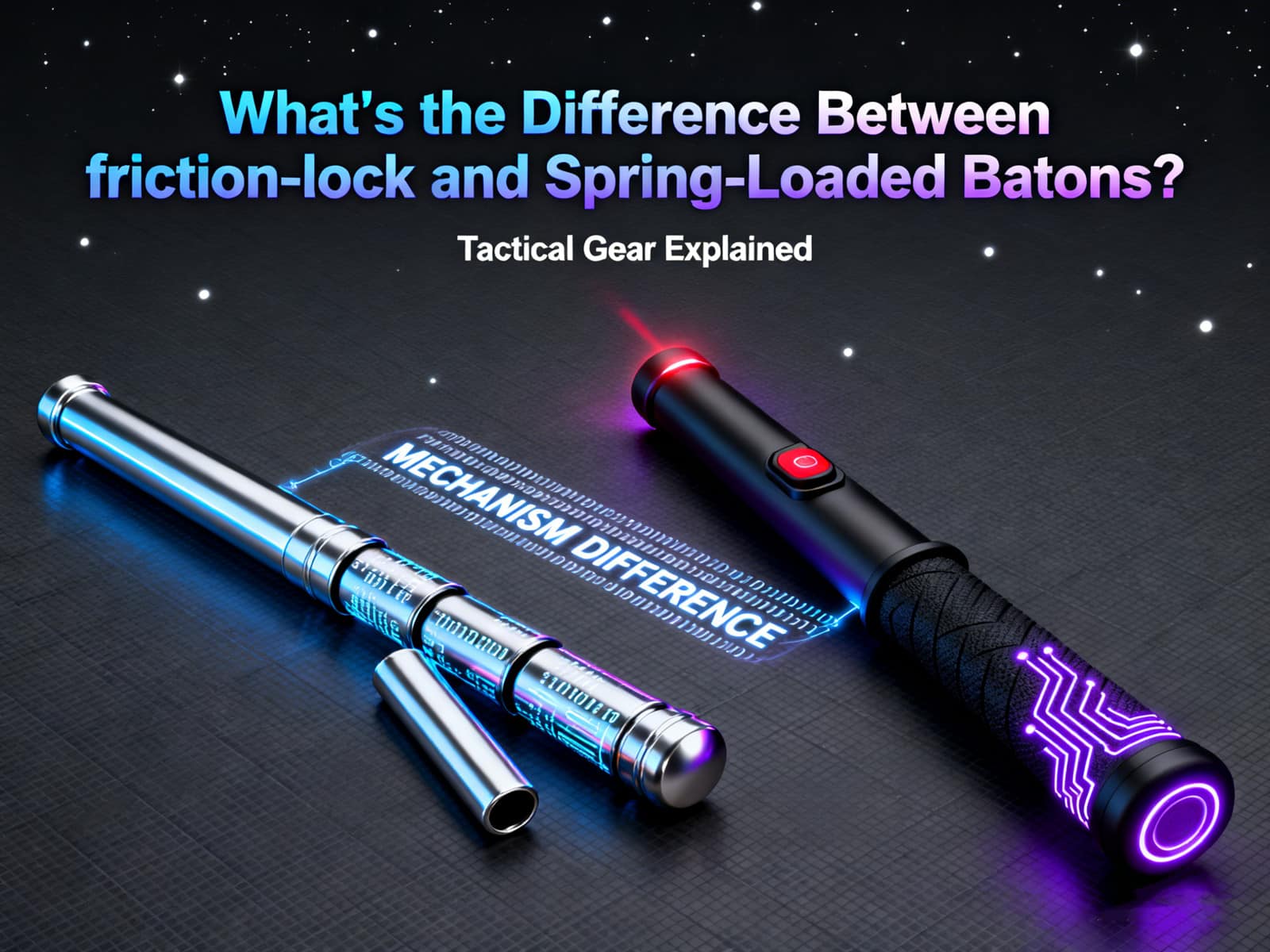
Both baton types provide an extendable structure, but they diverge significantly in real-world usage due to their mechanical foundations. This section breaks down the key differences across multiple functional areas.
Deployment Style
- Friction-lock batons require a manual motion to extend, relying on user technique, momentum, and physical control.
- Spring-loaded batons deploy automatically when triggered, offering immediate extension but at the cost of increased internal mechanical requirements.
The difference shapes user confidence: friction-lock designs favor people who value mechanical reassurance, whereas spring-loaded systems appeal to those who prefer speed and minimal physical effort.
Durability Over Time
Because friction-lock batons utilize a simpler mechanical structure, they tend to withstand repeated impacts, environmental stress, and rough conditions with fewer performance changes. Spring-loaded batons, while reliable when well maintained, depend heavily on internal mechanisms that may degrade or stick if not properly cared for.
Environmental Sensitivity
- Friction-lock: Less affected by dirt, cold, or moisture due to minimal internal parts.
- Spring-loaded: More vulnerable to environmental interference, as springs and release mechanisms can be sensitive to grit or corrosion.
User Control and Precision
A friction-lock baton gives the user complete control over extension force, timing, and angle, which some individuals find reassuring. By contrast, the near-instant deployment of a spring-loaded baton can surprise inexperienced users, making intentional handling and consistent training essential.
5. Choosing Between Friction-Lock and Spring-Loaded: Context Shapes the Better Option
The choice between these two baton designs ultimately depends on environment, user preference, training background, and maintenance expectations. No baton type is universally superior; each represents a different philosophy toward reliability, speed, complexity, and user technique.
Who Prefers Friction-Lock Designs?
People who value ruggedness, simplicity, and long-term durability often choose friction-lock batons in regulated settings, especially where environmental unpredictability or heavy daily use is expected. Their minimal mechanical complexity means fewer failure points, and their tactile, controlled deployment style appeals to users who appreciate a more deliberate extension process.
Who Prefers Spring-Loaded Designs?
Individuals who prioritize immediate, technique-independent deployment tend to select spring-loaded batons in contexts where speed and ease of use outweigh mechanical simplicity. These batons are mechanically impressive—fast, consistent, and modern—but require more maintenance and care, making them better suited to users who can manage that upkeep responsibly.
Analyzing the Broader Implications
When evaluated from the perspective of engineering, ergonomics, or regulated equipment policy, the friction-lock vs. spring-loaded comparison highlights a broader truth: tool design reflects tradeoffs between mechanical complexity and operational stability. Understanding those tradeoffs allows users in professional contexts to make informed decisions based not on trend or assumption but on a clear assessment of what each design does best. This deeper comprehension also helps clarify why organizational policies, procurement decisions, or training programs often mandate one type over the other—because the strengths and limitations of each design become more pronounced in structured or high-responsibility environments.