
Nov
Knowledge of Weapons, Weapons What
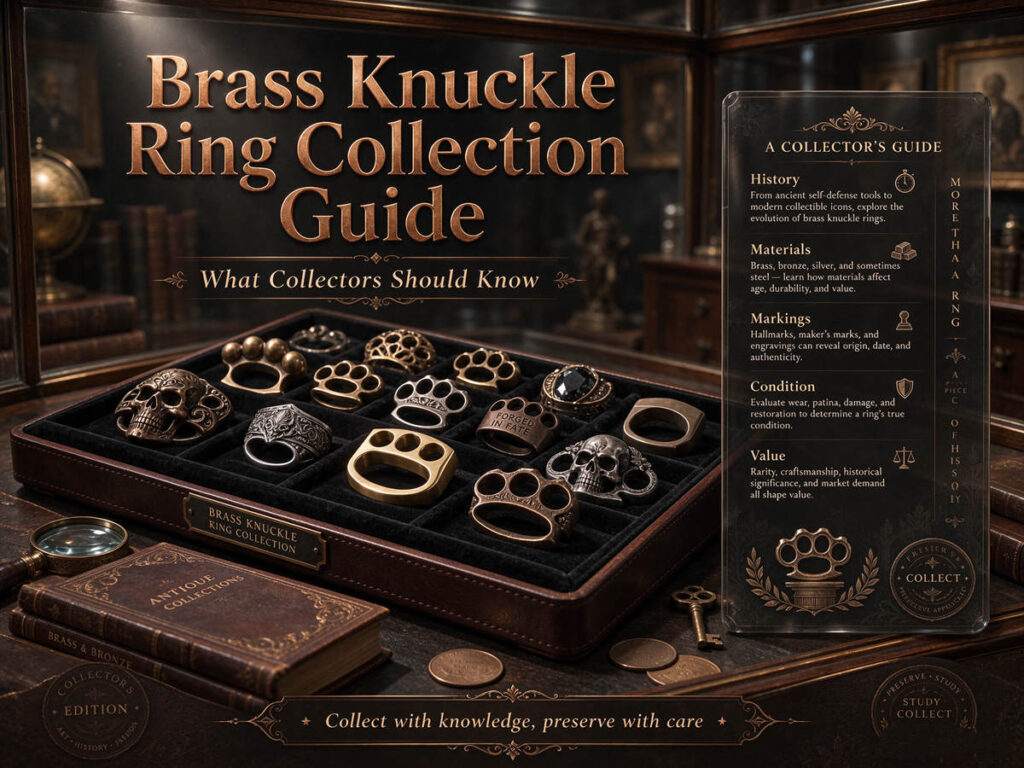
Brass Knuckle Ring Collection Guide: What Collectors Should Know
Collecting unusual metal accessories has always attracted people who appreciate distinctive craftsmanship, historical designs, and objects that reflect different periods of popular culture. Among the more recognizable examples are brass knuckle rings, which combine the visual characteristics of oversized metal jewelry with the unmistakable design language of traditional knuckle dusters. Although these objects are often discussed in connection with self-defense equipment, they also have a place in conversations about historical collectibles, alternative jewelry, metalworking, and contemporary accessory design.
For new collectors, understanding the differences between traditional brass knuckles and ring-style variations is an important first step. A 1 finger Brass Knuckle may feature a relatively simple opening and compact appearance, while a 2 finger Brass Knuckle can have a wider structure and a more distinctive decorative profile. Other examples incorporate skulls, geometric patterns, antique finishes, and unusual metal combinations, creating a diverse range of visual styles.
However, building a worthwhile collection involves more than finding attractive products online. Material authenticity, manufacturing quality, historical documentation, condition, storage, and legal restrictions should all be considered before acquiring any item. This guide explores the most important aspects of collecting brass knuckle rings, helping enthusiasts understand what distinguishes individual designs and how to approach the hobby responsibly.
1. Understanding Brass Knuckle Rings and Their Collectible Appeal
A brass knuckle ring is a distinctive metal accessory that combines characteristics of conventional rings with design elements associated with traditional brass knuckles. Unlike ordinary jewelry, which generally prioritizes decoration and personal expression, these objects may have a substantially different construction and legal classification because of their weapon-associated design.
Their unusual appearance is one reason they attract attention from collectors interested in alternative accessories and historical objects. Some examples are relatively understated, featuring smooth metal surfaces and simple geometric shapes, while others have elaborate decorative elements that make them more recognizable as statement pieces.
How Brass Knuckle Rings Differ from Ordinary Rings
Traditional rings are usually designed around a relatively narrow band that fits comfortably around one finger, with decorative features such as gemstones, engraved patterns, or raised metal surfaces.
Brass knuckle rings can have a considerably different appearance, depending on their design. Some incorporate wider frames, unusual openings, reinforced-looking surfaces, or decorative shapes inspired by historical knuckle weapons.
The distinction is important because an item should not automatically be treated as ordinary jewelry simply because it resembles a ring. Its physical construction and intended function may place it within a regulated weapon category.
Why Collectors Find These Designs Interesting
There are several reasons why brass knuckle rings attract attention among people interested in unusual metal accessories:
- Distinctive appearance: Their unconventional shapes make them visually different from conventional rings and jewelry.
- Material variety: Examples may feature brass, stainless steel, aluminum alloys, or decorative metal finishes.
- Design diversity: Manufacturers experiment with minimalist shapes, skull motifs, geometric patterns, and vintage-inspired styling.
- Historical associations: Traditional knuckle designs have appeared in different historical periods and popular culture.
- Craftsmanship: Surface finishing, casting details, engraving, and material selection provide interesting subjects for comparison.
For someone building a collection, these characteristics offer several ways to organize and appreciate individual pieces without focusing exclusively on their weapon-associated functions.
2. Popular Brass Knuckle Ring Styles Every Collector Should Know
One of the most interesting aspects of this collecting category is the variety of designs available. Although many products share recognizable characteristics, their proportions, materials, decorative elements, and overall appearance can differ considerably.
One Finger Brass Knuckle Rings
The 1 finger Brass Knuckle design is among the more unusual variations because it features a single opening rather than the multiple openings associated with traditional models.
From a collecting perspective, its appeal often comes from its simplified appearance and distinctive proportions. Some examples have relatively smooth surfaces, while others incorporate decorative engraving, unusual exterior contours, or vintage-inspired finishes.
Collectors examining this category should pay attention to the quality of the metalwork, the consistency of the surface finish, and the accuracy of the manufacturer’s material description.
It is also important to recognize that a smaller design does not automatically qualify as ordinary jewelry or become exempt from weapon regulations. Its legal classification depends on the applicable laws and the characteristics of the actual object.
For additional background, see One Finger Brass Knuckle Review, which explores the appearance and characteristics of this alternative design.
Two Finger Brass Knuckle Rings
The 2 finger Brass Knuckle variation has a different visual identity, generally featuring two openings and a more substantial frame than a one-finger example.
For collectors, this format provides another opportunity to compare metalworking styles, decorative finishes, and manufacturing approaches. Some examples have a relatively traditional appearance, while others feature contemporary styling or distinctive surface details.
When comparing two-finger designs, it is worth examining the proportions, material specifications, manufacturing consistency, and overall condition rather than assuming that a larger frame automatically represents better craftsmanship.
The following article provides additional information about this category: Two-Finger Brass Knuckle Explained.
Traditional Four-Finger Designs
Traditional four-finger brass knuckles have the familiar multi-opening frame that has become widely recognizable through historical photographs, popular culture, and collectible metal accessories.
Their appearance is particularly relevant to collectors who appreciate conventional designs and want to understand how different manufacturers have interpreted the traditional silhouette.
Some examples are relatively plain, while others feature decorative engraving, antique-style finishes, or unusual surface treatments. These variations can create an interesting display when combined with smaller alternative designs.
Decorative and Novelty Ring Designs
Decorative examples introduce another dimension to the collection. Skull patterns, gothic details, geometric shapes, animal-inspired designs, and vintage finishes can make individual pieces visually distinctive.
However, decorative styling should not distract from the importance of checking the item’s actual construction and legal classification. A novelty appearance does not necessarily change how an object is regulated.
3. Materials and Craftsmanship: How to Evaluate Collection Quality
Material quality is one of the most important considerations when building a collection of metal accessories. Two products may appear almost identical in photographs but differ significantly in their underlying composition, manufacturing process, surface treatment, and long-term condition.
A knowledgeable collector should therefore look beyond promotional descriptions and pay attention to verifiable product information.
Brass: The Traditional Material
Brass is a copper-and-zinc alloy that has been used in decorative objects, household fittings, musical instruments, and numerous metal accessories for generations.
Its warm golden appearance is one of its most recognizable characteristics. Unlike some plated finishes, genuine brass can develop a natural patina over time, gradually becoming darker or showing subtle variations in color.
For collectors, this aging process can contribute to an object’s visual character, although the condition and authenticity of the underlying material should always be considered.
When evaluating a product advertised as solid brass, check whether the manufacturer provides a clear material specification rather than relying exclusively on its golden color.
Stainless Steel
Stainless steel is another common material in contemporary metal accessories. It is valued for its corrosion resistance, relatively low maintenance requirements, and clean metallic appearance.
Different stainless steel grades have different characteristics, so a listing that simply says stainless steel may not provide enough information for a detailed material comparison.
Collectors who value consistency and straightforward maintenance may find stainless steel examples interesting additions to a broader metal-accessory display.
Aluminum and Other Alloys
Aluminum alloys are generally lighter than brass and many types of steel, and they can be finished in different colors and surface textures.
Other products may use zinc alloys or decorative coatings, which can create distinctive appearances without necessarily indicating the composition of the underlying material.
A gold-colored surface, for example, should not automatically be interpreted as solid brass, just as a dark metallic finish does not necessarily indicate stainless steel.
Examining Manufacturing Details
When assessing craftsmanship, look for:
- Consistent surface finishing without obvious irregularities.
- Clear and accurate descriptions of the underlying material.
- Well-documented dimensions and product weight.
- Consistent decorative engraving and surface patterns.
- Reliable manufacturer information.
- Photographs showing the complete product from multiple angles.
These details make it easier to compare examples objectively and identify products whose descriptions are supported by meaningful information.
4. How to Build and Organize a Brass Knuckle Ring Collection
Starting a collection can be exciting, particularly when different designs, finishes, and materials offer so many possibilities. However, purchasing random products without a clear collecting direction can quickly result in a disorganized display containing several pieces that look almost identical.
A better approach is to establish a collecting theme and gradually expand it as knowledge of the category improves.
Choose a Collecting Theme
There are several ways to organize a brass knuckle ring collection.
By design: Collectors can focus on one-finger, two-finger, traditional four-finger, and decorative ring-style variations, creating a display that highlights differences in overall appearance.
By material: Another approach is to compare brass, stainless steel, aluminum alloy, and other metal constructions, paying attention to their finishes and aging characteristics.
By historical inspiration: Some collectors prefer vintage-inspired designs, traditional silhouettes, and objects that reflect particular periods in popular culture.
By decorative style: Skull motifs, geometric patterns, minimalist surfaces, gothic details, and antique finishes can provide the foundation for a visually consistent collection.
Having a theme makes it easier to evaluate new additions and avoid unnecessary purchases.
Keep a Collection Inventory
A simple inventory can become extremely valuable as the collection grows.
For each item, record the following information:
| Collection Detail | Information to Record |
|---|---|
| Item name | Manufacturer or product name |
| Design category | One-finger, two-finger, four-finger, or decorative |
| Material | Verified metal or alloy |
| Finish | Polished, brushed, antique, coated |
| Purchase date | Date acquired |
| Condition | New, used, restored, or damaged |
| Documentation | Receipts, product descriptions, certificates |
| Legal notes | Relevant ownership and location restrictions |
Keeping these records provides a convenient reference when comparing pieces, checking their origins, or organizing an insurance inventory where appropriate.
Avoid Buying Based on Rarity Claims Alone
Online product descriptions sometimes use expressions such as limited edition, rare collectible, exclusive release, or vintage original to create an impression of scarcity.
Such descriptions should be supported by credible documentation. A newly manufactured item does not become historically valuable simply because a seller describes it as rare.
Before purchasing an expensive example, investigate its manufacturer, production history, material, and available documentation. Independent information is generally more useful than promotional claims made by the seller.
5. Storage, Maintenance, and Long-Term Collection Preservation
Proper storage is essential for maintaining the condition of metal collectibles, especially when a collection contains different materials and decorative finishes.
Although brass, stainless steel, and aluminum are all used in metal accessories, they do not necessarily respond to moisture, handling, and environmental conditions in the same way.
Storing Brass and Other Metals
Brass can gradually develop patina through exposure to air and moisture. Some collectors appreciate this natural aging process, while others prefer a brighter appearance.
Stainless steel generally requires less maintenance, although fingerprints, surface contamination, and scratches can still affect its appearance.
Aluminum and coated alloys may require more careful handling because certain finishes can become damaged through abrasive cleaning or contact with unsuitable chemicals.
A few basic storage practices can help preserve a collection:
- Keep individual items in suitable protective compartments.
- Store collectibles in a dry environment.
- Avoid unnecessary contact between different metal objects.
- Keep original packaging and product documentation when available.
- Prevent unauthorized access, particularly where items may be classified as weapons.
- Keep all potentially dangerous objects securely away from children.
Cleaning Without Damaging the Finish
Cleaning methods should be appropriate for the material and its surface treatment.
A soft, dry microfiber cloth is often sufficient for removing fingerprints and ordinary surface dust. More substantial cleaning should follow the manufacturer’s care instructions, particularly when an item has an antique finish, decorative coating, or intentionally aged surface.
Aggressive polishing compounds and abrasive materials may remove protective coatings or alter decorative details, reducing the originality of an item.
For collectors, preserving the original condition is often more valuable than making every object look brand new.
Documentation and Provenance
Provenance refers to the documented history of an object, including its origin, previous ownership where known, and relevant manufacturing information.
Although modern decorative products may not have significant historical provenance, keeping original purchase records and manufacturer information can still be useful.
For older or unusual pieces, photographs, receipts, historical references, and independent assessments can help establish authenticity and support future collection research.
6. Legal Considerations for Brass Knuckle Ring Collectors
Legal awareness should be part of every responsible collecting plan because brass knuckle rings can fall within the same legal categories as other knuckle weapons.
One of the most common misconceptions is that an object becomes ordinary jewelry simply because it is designed to look like a ring. In reality, legal authorities may examine its construction, intended function, and relevant statutory definitions rather than its marketing description.
State Laws in the United States
Brass knuckle regulations vary considerably across the United States. Some states prohibit possession itself, while others allow certain forms of ownership but restrict public carry, concealed carry, sales, or possession in specific locations.
The same issues can apply to a 1 finger Brass Knuckle or 2 finger Brass Knuckle, depending on the legal definition used by the jurisdiction.
For collectors, this means that buying an item for display does not automatically make its possession lawful. A product described as a novelty ring, decorative accessory, or collectible may still fall under a state weapons statute.
Travel and International Collecting
Collectors who purchase items from online sellers should pay particular attention to transportation and import regulations.
A product that is permitted in one state may be prohibited in another, and international customs regulations can introduce additional restrictions. Shipping availability does not establish that the recipient can legally import, receive, or possess the item.
Before acquiring or transporting any weapon-associated collectible, consult current official legislation and seek qualified legal advice if the classification is uncertain.
Responsible Collection Management
A responsible collection should be maintained with secure storage, accurate records, and a clear understanding of the rules governing each item.
Collectors should also avoid displaying or handling regulated objects in public in ways that could create unnecessary alarm or violate local restrictions.
Legal compliance is not a minor detail to address after building a collection; it is an essential consideration from the beginning.
7. Where to Research Brass Knuckle Rings and Expand Your Collection
Finding reliable information is one of the most valuable skills a collector can develop. Online marketplaces provide a wide variety of products, but their descriptions are not always consistent, and similar-looking objects may differ considerably in material, origin, and construction.
For that reason, it is useful to compare multiple sources before making decisions about an individual piece.
Explore Different Designs
Collectors interested in learning about the broader category can begin with Types of Brass Knuckles: A Complete Breakdown, which introduces different design variations and their distinguishing visual characteristics.
For those particularly interested in jewelry-inspired styles, the Brass Knuckle Ring Buying Guide provides additional information about ring designs, materials, appearance, and general product considerations.
Readers who want to compare alternative frame styles can also explore the Ultimate Guide to Brass Knuckles: One-Finger, Two-Finger and Four-Finger Options in 2026.
These resources can help collectors become familiar with the terminology used in product listings and understand why different designs appeal to different audiences.
What Makes a Collection Worth Maintaining?
A meaningful collection does not necessarily need to contain dozens of expensive objects. In many cases, a carefully selected group of well-documented examples is more interesting than a large assortment of products purchased without a clear purpose.
The most rewarding collections often reflect the owner’s individual interests, whether those interests involve historical design, metal craftsmanship, decorative jewelry, or the development of unusual accessories.
At brassknucklesmaster.com, readers can continue exploring different product styles and related collecting topics while developing a better understanding of the category.
Ultimately, collecting brass knuckle rings should involve curiosity, careful research, and responsible ownership rather than simply accumulating as many products as possible. By paying attention to material authenticity, manufacturing quality, historical context, condition, documentation, and applicable laws, collectors can develop a more organized and meaningful collection that reflects a genuine appreciation for distinctive metal design.