
Sep
Knowledge of Weapons
Two-Finger Brass Knuckle Explained: Compact Grip, Serious Impact
Some people want maximum firepower in their fist. Others want something they can actually carry every day without it printing through their pocket or weighing down their keys. The two-finger brass knuckle sits in that sweet spot—small enough to disappear into your daily routine, solid enough to matter when things go wrong. At Brass Knuckles Master, we’ve spent years refining this exact design because we know the best self-defense tool is the one you actually have on you.
This guide breaks down what makes the two-finger format unique, how it’s built, and why so many people choose it as their go-to EDC piece over bulkier alternatives.
1. What Defines the Two-Finger Design
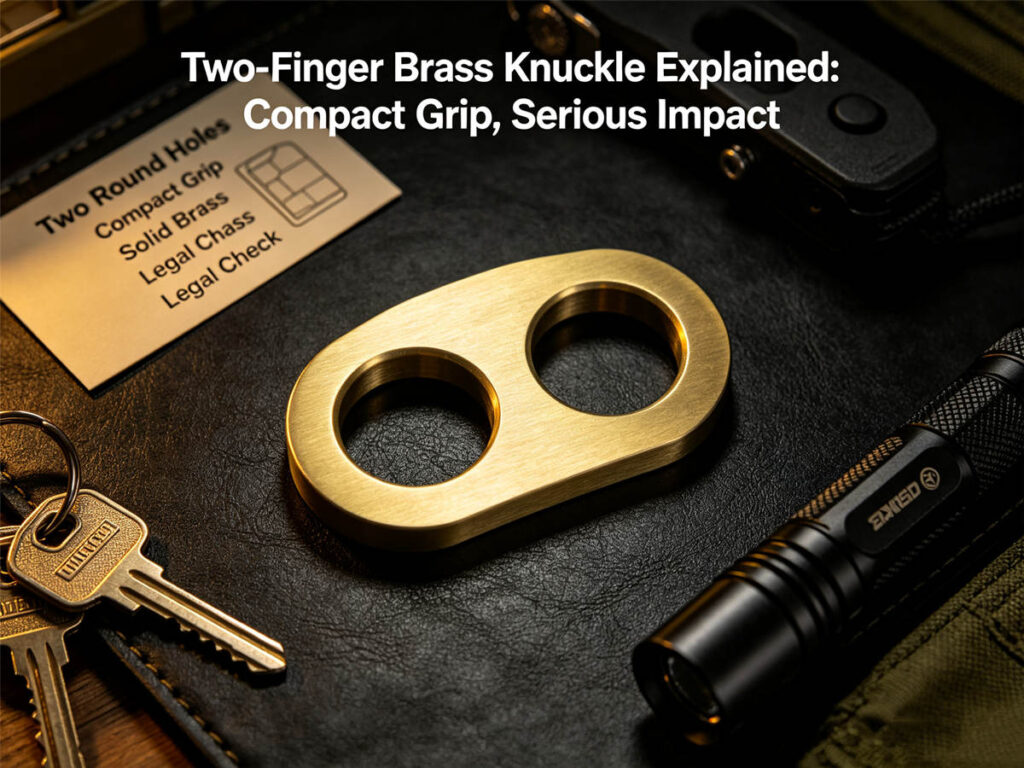
A traditional knuckle duster wraps around all four fingers. That adds coverage, sure—but it also adds size, weight, and complexity. The two-finger model strips things down to the essentials. Two finger holes. One striking surface. A palm pad that locks everything in place. Your ring finger and pinky stay completely free.
That simplicity is the whole point. You get a tool that’s faster to deploy, easier to carry, and still delivers real impact force concentrated behind your two strongest fingers.
Anatomy of a Compact Knuckle Duster
Every two-finger piece we make at BKM follows the same core layout. Two parallel finger holes spaced for comfort, a bridge connecting them, and a forward-facing striking surface that sits flush against your knuckles when you make a fist. Below the holes, a contoured palm pad keeps the whole thing from shifting under pressure.
The geometry matters more than most people realize. If the finger holes are too close together, your hand cramps. Too far apart, and the piece wobbles. We calibrate the spacing to fit the average adult hand, which covers the majority of our customers without custom sizing.
Why Two Fingers Beat Four for Daily Carry
Four-finger knuckles are powerful, no argument there. But power means nothing if the tool stays home because it’s too bulky for your pocket. A two-finger brass knuckle cuts the profile nearly in half. It weighs less. It prints less through fabric. And it leaves three fingers free—enough to hold your phone, grip a set of keys, or open a door without removing the piece first.
That kind of practical versatility is what separates a tool you use from one you admire in a drawer.
2. Portability That Earns Its Place
The whole philosophy behind this design is simple: carry it or don’t bother. A two finger self defense tool sitting on your nightstand does nothing for you in a parking garage at midnight. The two-finger format was built for people who refuse to leave home unprepared but also refuse to haul around something conspicuous.
Pocket-Friendly and Key-Ring Ready
Most two-finger models slip into a coin pocket without creating a visible bulge. At BKM, we drill a dedicated keyring hole into every piece so you can clip it alongside your house keys or car fob. It rides with you naturally—no holster, no pouch, no second thought.
That integration into your existing EDC carry setup is what makes it stick. You grab your keys and the knuckle comes with them. No extra steps.
Concealed Carry Without the Bulk
Larger knuckle variants can snag on pocket seams, dig into your thigh when you sit, or create an obvious outline through thin fabric. The compact brass knuckle profile avoids all of that. It sits flat against whatever surface it’s resting on. Whether you’re wearing jeans, joggers, or dress pants, it stays invisible until you need it.
For commuters, runners, and anyone who values discretion, this is the version that actually works as an everyday carry piece—not just a weekend range toy.
3. Materials and Construction
A brass knuckle is only as reliable as the material it’s cast from. We focus on metals that balance weight, durability, and impact transfer. Too heavy and you won’t carry it. Too light and it won’t do the job. Finding that middle ground is what material selection is all about.
Zinc Alloy vs. Solid Brass
Most of our two-finger models come in two options: zinc alloy or solid brass. Zinc alloy is the lighter choice—ideal for all-day carry where comfort matters most. Solid brass brings more heft, and that extra weight translates directly into striking force. It also develops a natural patina over time, which gives each piece a worn-in character that owners tend to appreciate.
Both materials resist corrosion and hold their shape under repeated stress. The choice comes down to whether you prioritize weight savings or raw impact power.
Finish and Surface Texture
A polished finish looks sharp but can turn slippery the moment your palms get sweaty. Knurled or textured surfaces solve that problem by giving your grip something to bite into. We offer both options because grip preference is personal—some people want smooth and sleek, others want aggressive texture. Either way, the underlying construction stays the same.
4. Grip Comfort and Hand Fit
A knuckle duster that doesn’t fit your hand is one you’ll stop carrying after a week. Finger hole diameter, the spacing between holes, and palm pad thickness all determine whether a piece feels like a natural extension of your fist or an awkward lump of metal you’re constantly adjusting.
Finger Hole Sizing
Holes that are too tight cut off circulation. Holes that are too loose let the piece shift mid-strike—dangerous for you and ineffective against a threat. We size our finger holes to accommodate most adult hands with enough clearance to slide on and off comfortably. If you’re between sizes, go slightly larger. A looser fit can be compensated with grip adjustment; a too-tight fit can’t be fixed in the moment.
Palm Pad Thickness
The palm pad is what separates a comfortable knuckle from a painful one. It distributes impact force across your entire palm instead of concentrating it on two knuckle joints. A thicker pad absorbs more shock, which means less hand fatigue during practice and less risk of bruising during real use. It’s a small component, but it does heavy lifting.
5. Real-World Carry Scenarios
Theory is nice. Practice is what matters. The people who buy a two-finger brass knuckle from BKM aren’t collecting novelty items—they’re carrying a tool designed for specific situations where compact size and instant accessibility change the equation.
Night Runs and Evening Walks
Heading out for a jog after dark means leaving most of your gear at home. You want light, unobtrusive, and ready. A two-finger piece on your keychain or in your running belt gives you confidence without adding ounces to your load. It’s there if you need it and invisible if you don’t.
Parking Lots and Late Shifts
Walking to your car at 2 AM after a closing shift is exactly the kind of scenario where a dual finger brass knuckle earns its keep. It’s already in your jacket pocket. Slide two fingers in, close your fist, and you’re set. No fumbling, no unfolding, no wasted seconds. Speed of deployment matters when you’re alone in a dimly lit garage.
6. How It Stacks Up Against Other Carry Options
The two-finger brass knuckle isn’t trying to replace everything in your collection. It fills a specific role: maximum portability with enough impact to be credible. If you want full-fist coverage and don’t mind the extra size, our four-finger brass knuckle collection delivers that. But for daily carry where discretion wins, the two-finger format is hard to argue against.
One-Handed Operation
Here’s a practical advantage that often gets overlooked. With three free fingers, you can still operate a phone, turn a key, hold a bag, or push an elevator button without removing the knuckle duster. Try that with a full-size duster. The two-finger layout keeps your hand functional while the tool stays locked in position—exactly what you want when real-world situations demand multitasking.
Faster Deployment
Slipping two fingers into two holes is faster than aligning four. That speed difference sounds minor on paper. In a high-stress moment, it’s the difference between being ready and being caught mid-setup. At Brass Knuckles Master, we think about these details so you don’t have to.
7. Legal Considerations Before You Carry
We always remind customers: check your local laws. Brass knuckle legality varies significantly by state, county, and city. Some jurisdictions allow unrestricted open or concealed carry. Others require permits. A few ban them entirely. It’s your responsibility to know the rules where you live and where you travel. Our article on whether brass knuckles are actually effective covers some of this legal landscape alongside the practical side.
At BKM, we include basic legal guidance with every order, but nothing replaces doing your own research. The tool is only useful if you can legally carry it.
The two-finger brass knuckle isn’t about being the flashiest piece in a collection. It’s about being the one that’s actually in your pocket when you need it—day after day, without complaint, without drawing attention, without asking you to reorganize your life around carrying it. Compact enough to forget it’s there. Solid enough to matter when it counts.
If that balance of readiness and restraint sounds right for you, explore the full two-finger brass knuckle lineup at Brass Knuckles Master and find the piece that fits your hand and your habits.