Apr
Knowledge of Weapons, Weapons Why
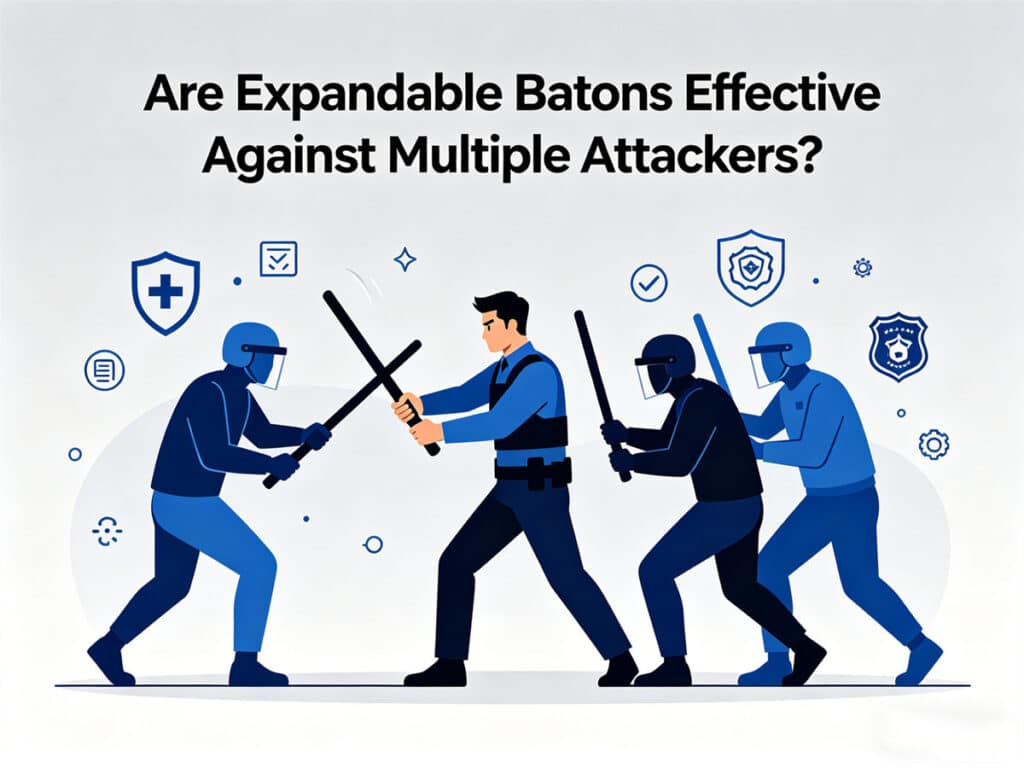
Are Expandable Batons Effective Against Multiple Attackers?
Understanding the Nature of Multi-Attacker Threats
Facing multiple attackers is one of the most complex and dangerous self-defense scenarios any individual can encounter, as it introduces variables such as divided attention, limited mobility, and increased unpredictability, all of which significantly elevate the level of risk compared to one-on-one confrontations. In such situations, even trained professionals recognize that survival depends less on overpowering opponents and more on creating opportunities to disengage and escape, which shifts the focus from offense to controlled, strategic defense.
The idea of using an expandable baton in these circumstances often arises because of its extended reach and perceived authority, yet effectiveness is not simply a matter of having the right tool, but rather understanding how that tool functions within a rapidly evolving and highly pressured environment where timing, positioning, and awareness are critical.
What Is an Expandable Baton and How Does It Work?
An expandable baton, sometimes referred to as a telescopic baton, is a compact, collapsible device designed to extend into a rigid rod when deployed, offering increased reach and leverage compared to shorter self-defense tools, and it is commonly associated with law enforcement due to its portability and versatility.
Key Functional Characteristics
- Telescopic Extension: Allows quick deployment with a flicking motion
- Extended Reach: Provides distance control between the user and threats
- Compact Carry: Easily stored when collapsed
- Impact-Based Defense: Designed for controlled striking and deterrence
These characteristics make the baton appealing for personal defense; however, its real-world effectiveness depends heavily on the user’s ability to deploy and control it efficiently under stress.
Advantages of Expandable Batons in High-Risk Situations
When considering defensive tools for scenarios involving multiple attackers, certain features of the expandable baton can offer strategic advantages, particularly when used with awareness and proper technique.
Extended Reach and Space Management
One of the most significant benefits of an expandable baton is its ability to create and maintain distance, which is essential when facing more than one opponent, as it allows the user to keep threats at bay without immediate physical contact.
Visual Deterrence
The act of deploying a baton can have a psychological impact, as it signals readiness and may discourage further aggression, especially in situations where attackers are testing vulnerability rather than committing fully to an attack.
Directional Control
With proper handling, a baton can be used to redirect movement, block advances, or disrupt coordination among multiple attackers, which can create critical moments for escape.
Limitations When Facing Multiple Attackers
Despite its advantages, the expandable baton is not a guaranteed solution, particularly in complex scenarios involving multiple threats, and understanding its limitations is essential for realistic expectations.
Skill and Training Requirements
Using a baton effectively requires practice and coordination, as improper use can lead to loss of control or ineffective strikes, which may worsen the situation rather than improve it.
Limited Coverage Area
Even with extended reach, a baton can only address one direction at a time, leaving the user vulnerable to attacks from blind spots or simultaneous advances.
Physical and Mental Pressure
In high-stress situations, the ability to deploy and use a baton correctly may be compromised, especially for individuals without prior training or experience in dynamic environments.
Tactical Considerations for Multi-Attacker Defense
Effectiveness in such scenarios is less about the tool itself and more about how it is integrated into a broader defensive strategy, which emphasizes movement, awareness, and decision-making.
Prioritize Mobility Over Engagement
The primary objective should always be to avoid being surrounded, which means constant movement and positioning are more important than attempting to neutralize threats individually.
Use the Baton as a Barrier
Rather than focusing solely on striking, the baton can function as a spatial tool, helping to maintain distance and prevent attackers from closing in simultaneously.
Target Escape Opportunities
Moments of imbalance or hesitation among attackers should be used to disengage, as prolonged confrontation significantly increases risk.
How Law Enforcement Views Baton Effectiveness
Law enforcement professionals are trained to use expandable batons within structured protocols, and their perspective offers valuable insight into the tool’s realistic applications.
Controlled Environments vs. Civilian Context
Officers typically operate with backup, communication systems, and legal authority, which means their use of batons occurs under conditions that differ greatly from civilian encounters.
Emphasis on Training
Police training highlights precision, restraint, and situational judgment, reinforcing the idea that the baton is not a standalone solution but part of a broader system of response.
Limited Use Against Multiple Threats
Even in professional settings, batons are not considered ideal for handling multiple attackers without additional support, underscoring the importance of strategy over reliance on a single tool.
Comparing Expandable Batons to Other Self-Defense Tools
To better understand the baton’s role, it is useful to compare it with other commonly discussed self-defense tools, each of which offers distinct advantages and limitations.
Close-Range Tools
Items such as compact handheld tools may be easier to control but lack the reach needed for distance management, making them less suitable for multi-attacker scenarios.
Non-Contact Options
Tools that allow for distance without physical engagement can provide advantages in certain situations, particularly when escape routes are available.
Multi-Tool Integration
A layered approach that combines awareness, mobility, and appropriate tools often provides the most balanced strategy for personal safety.
Building a Realistic Self-Defense Strategy
Ultimately, the question of whether an expandable baton is effective against multiple attackers cannot be answered in absolute terms, as effectiveness depends on the user’s skill level, situational awareness, and ability to adapt under pressure, all of which play a more significant role than the tool itself.
A practical approach to self-defense involves recognizing that no single item can address every scenario, and that preparation should focus on avoidance, awareness, and adaptability, supported by tools that complement rather than replace these fundamentals. In this context, individuals often explore a range of options to build a balanced personal safety setup, and while discussions may include items such as brass knuckle, tactical pen, and Keychain accessories, each should be evaluated carefully in terms of legality, usability, and appropriateness for the user’s environment, ensuring that any chosen solution aligns with responsible and informed decision-making.