
Apr
Knowledge of Weapons, Weapons Why
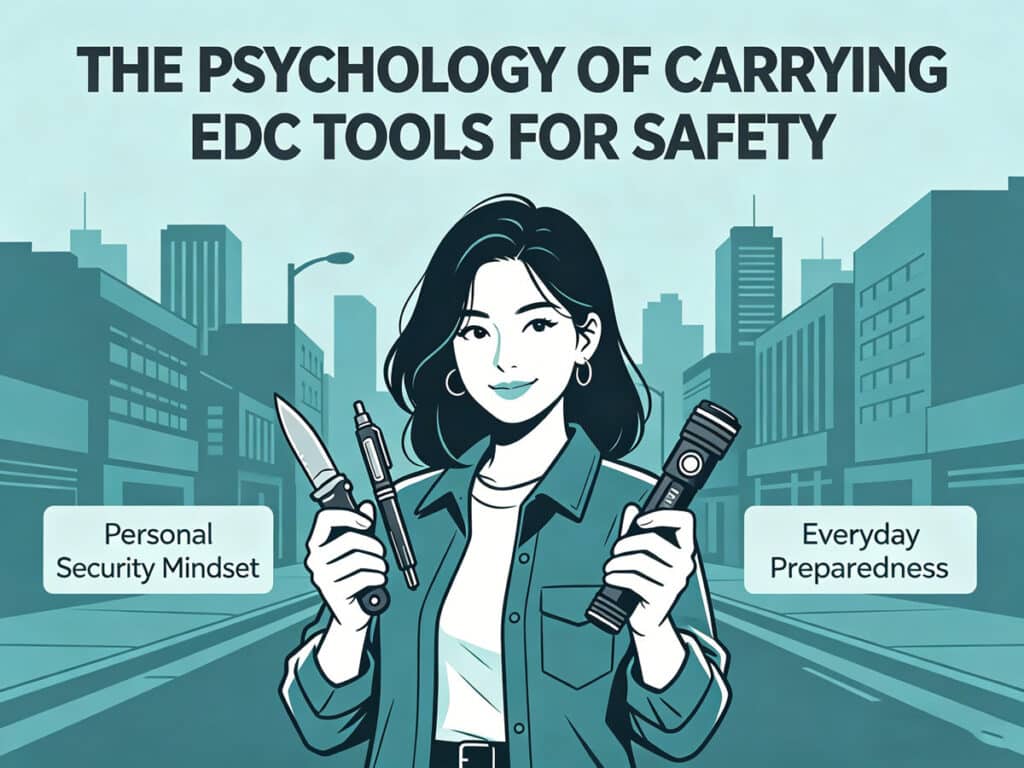
The Psychology of Carrying EDC Tools for Safety
The decision to carry tools for personal safety extends far beyond the practical considerations of what to pack in your pocket each morning. At its core, this choice reflects deep psychological patterns, emotional needs, and cognitive processes that shape how we perceive risk, manage anxiety, and assert control over our daily lives. Understanding the psychology behind everyday carry decisions can help you make more informed choices about your own preparedness mindset while recognizing the legitimate emotional foundations that drive millions of people to carry tools, weapons, and safety equipment as part of their daily routine. Whether you’re a seasoned EDC enthusiast or someone who’s recently begun considering what you might carry for protection, exploring the mental and emotional aspects of this practice reveals fascinating insights into human nature and our universal desire for security.
This comprehensive exploration examines the psychological dimensions of carrying EDC tools for safety, from the evolutionary roots of our threat-detection instincts to the modern social dynamics that influence how we think about personal protection. By understanding these underlying factors, you can develop a healthier, more balanced relationship with your own preparedness practices while recognizing that the impulse to prepare is neither paranoid nor irrational but rather a natural expression of our fundamental need for safety and self-determination.
The Evolutionary Psychology Behind Threat Awareness and Preparation
Human beings have carried tools and weapons for self-protection throughout our entire existence as a species, and this deeply ingrained behavior reflects evolutionary pressures that shaped our ancestors’ survival strategies over millions of years. The human brain evolved in environments where threats were constant and immediate—predators, hostile neighbors, and environmental dangers required constant vigilance and the ability to mount rapid defensive responses. Those individuals who developed habits of carrying protective tools and maintaining awareness of their surroundings were more likely to survive and pass on their genes, creating a selection pressure that favored preparedness-oriented behaviors and threat-sensitive psychological patterns.
This evolutionary heritage manifests in modern humans through what psychologists call the “negativity bias”—a cognitive tendency to pay more attention to potential threats than to potential benefits, which served our ancestors well in dangerous environments but can sometimes create anxiety and hypervigilance in our comparatively safe modern world. When you feel compelled to carry tools for safety, you’re experiencing a manifestation of this ancient programming, a deep-seated instinct that says “be prepared for bad things to happen.” Recognizing this evolutionary foundation helps normalize the impulse to carry while also providing context for understanding when that impulse might be exaggerated or disproportionate to actual risks.
The amygdala, a small almond-shaped structure deep within the brain’s temporal lobe, plays a crucial role in processing fear and detecting threats, and it operates largely independently of our conscious awareness and rational thought processes. This means that even when we consciously know we’re statistically very safe, our brains may still generate anxiety and the desire to prepare as if danger were imminent. Understanding this neurological basis for our safety behaviors can help us respond to these impulses with self-compassion rather than self-criticism, recognizing that our nervous system is simply doing what it evolved to do—keeping us alert and prepared for potential harm.
The Psychological Benefits of Perceived Control and Preparedness
One of the most significant psychological benefits of carrying EDC tools for safety is the enhanced sense of control it provides over uncertain situations and potential threats. Research in psychology consistently demonstrates that perceived control—the belief that we have the ability to influence outcomes in our lives—correlates strongly with mental health, resilience, and overall well-being. When you carry tools that you believe could help you in an emergency, you’re investing in a psychological resource that reduces anxiety about unpredictable circumstances and provides a tangible connection to your own ability to respond effectively if something goes wrong.
This perceived control operates through several psychological mechanisms that contribute to feelings of security and confidence. First, the physical presence of safety tools serves as a constant reminder that you’ve taken action to protect yourself, which reduces the cognitive burden of worrying about potential threats. Second, knowing you have options in an emergency situation—rather than being completely helpless—activates different psychological responses than pure helplessness, even if you never actually need to use those options. Third, the ritual of selecting and carrying your EDC tools each day creates a sense of intentionality and self-care that carries over into other aspects of your life, reinforcing a mindset of proactive engagement rather than passive acceptance.
The concept of “self-efficacy,” developed by psychologist Albert Bandura, describes the belief in one’s own ability to accomplish goals and handle challenges effectively, and carrying EDC tools can significantly enhance this sense of personal efficacy. When you know you have the tools to respond to various situations, you approach the world with greater confidence and less anxiety, which paradoxically may make you less likely to find yourself in threatening situations in the first place. Confident, alert individuals who project awareness and readiness are statistically less attractive targets for opportunistic predators than anxious, distracted people who appear vulnerable and unaware of their surroundings.
Managing Anxiety Through Preparation
For many people, carrying EDC tools serves as a practical anxiety management strategy that provides psychological relief from persistent worries about safety and security. This doesn’t mean that carrying tools is merely a band-aid solution for underlying anxiety disorders—rather, it’s a legitimate coping mechanism that addresses real concerns about genuine risks in a practical, action-oriented way. The key is ensuring that your carrying habits remain proportionate to actual risks and don’t escalate into compulsive behaviors that interfere with daily functioning or indicate deeper psychological issues requiring professional attention.
The ritual aspect of EDC carry also contributes to its psychological benefits, as the daily practice of selecting, checking, and carrying your tools creates a meditative routine that promotes mindfulness and intentionality. Many EDC enthusiasts report that their carrying habits have become a positive anchor in their daily routines, a moment of reflection and preparation that sets a productive tone for the day ahead. This ritualistic dimension adds psychological value beyond the practical utility of the tools themselves, transforming a simple habit into a meaningful practice of self-care and personal responsibility.
Social Dynamics and Identity: How EDC Carry Shapes Self-Perception
The tools we choose to carry become extensions of our identity, communicating values, priorities, and self-concept to both ourselves and others. This identity-forming function of EDC tools operates on multiple levels, from the private psychological significance we assign to our carry items to the public signals we send through visible equipment and accessories. Understanding these identity dynamics helps explain why EDC carry often becomes more than a practical habit—it evolves into a hobby, a community, and a core aspect of personal identity for dedicated enthusiasts.
Carrying tools for safety signals to yourself that you take personal responsibility seriously, that you’re the kind of person who prepares for contingencies rather than hoping for the best. This self-perception as a prepared, responsible individual can generalize to other domains of life, reinforcing habits of foresight and planning that benefit you in work, relationships, and personal development. The psychological literature on self-perception theory suggests that we often define ourselves by our actions and choices, meaning that consistently carrying EDC tools helps construct an identity around preparedness and self-reliance that influences behavior far beyond the realm of personal safety.
Within EDC communities, shared carrying practices create social bonds and mutual support networks that provide additional psychological benefits beyond individual preparedness. Discussing tools, sharing recommendations, and learning from others’ experiences creates a sense of belonging and shared purpose that satisfies fundamental human needs for community and connection. These social dimensions of EDC culture demonstrate that carrying tools for safety is not merely an individual practice but part of a broader cultural phenomenon that reflects universal human needs for security, competence, and belonging.
Navigating Social Perceptions and Stigma
Despite the psychological benefits many carriers experience, carrying tools—especially those designed for defensive use—can sometimes generate negative social perceptions or stigma from others who don’t share the same preparedness mindset. Understanding these social dynamics helps carriers navigate interactions more effectively while maintaining confidence in their own choices. The key is recognizing that others’ reactions often say more about their own psychology and experiences than about the legitimacy or appropriateness of your carrying habits.
People who feel threatened by others’ carrying practices often do so because of their own associations with weapons and violence, cultural messaging that portrays defensive tools as inherently aggressive, or personal experiences that make them uncomfortable around such items. These reactions deserve respect and sensitivity, but they don’t necessarily indicate that your carrying choices are wrong or inappropriate. Cultivating the psychological resilience to maintain your own convictions while remaining considerate of others’ perspectives represents an important aspect of mature EDC practice.
Developing a Balanced and Healthy EDC Mindset
Achieving psychological balance in your EDC practice requires ongoing attention to your motivations, behaviors, and their effects on your overall well-being and functioning. A healthy relationship with carrying tools involves recognizing the legitimate benefits while avoiding common pitfalls like excessive anxiety, compulsive behaviors, or unrealistic threat assessments that can undermine the very security you’re seeking to enhance. This balance isn’t a destination but an ongoing process of reflection and adjustment that evolves as your experience and understanding deepen.
Self-awareness forms the foundation of healthy EDC psychology, requiring honest examination of why you carry what you carry and whether your motivations align with genuine needs or stem from disproportionate fears. Ask yourself whether your carrying habits reduce anxiety and enhance confidence or whether they create new anxieties about losing your tools or being inadequately prepared. Consider whether your threat assessments are based on evidence and statistics or on media sensationalism and availability heuristic biases that make rare events seem more common than they actually are.
Proportionality represents another key principle of healthy EDC psychology, ensuring that your carrying practices match the actual risks you face in your daily life. Someone living in a high-crime urban area may reasonably carry more comprehensive defensive tools than someone in a low-crime suburban or rural environment, and both choices can be psychologically healthy if they reflect accurate risk assessment rather than anxiety-driven over-preparation. The goal is matching your preparedness level to your actual circumstances rather than preparing for worst-case scenarios that are statistically unlikely to occur.
The Role of Training and Competence
Psychological benefits of carrying EDC tools are significantly enhanced when accompanied by proper training in their use, creating a virtuous cycle where competence builds confidence and confidence reduces anxiety. Knowing how to use your tools effectively—not just in theory but through practiced muscle memory and scenario-based training—transforms them from symbolic security blankets into genuine capabilities that justify the confidence you place in them. This competence-based confidence is more resilient and psychologically healthy than mere hope or wishful thinking about what you might do if threatened.
Training also provides realistic expectations about what your tools can and cannot do, preventing disappointment or dangerous overconfidence that could arise from misunderstanding your capabilities. A quality defensive tool in untrained hands may provide minimal benefit or even create additional problems, while the same tool wielded by a competent practitioner becomes a genuine force multiplier for personal safety. Investing in training represents one of the highest-value activities any EDC practitioner can undertake, both for practical safety reasons and for the psychological benefits of genuine competence.
Integrating EDC Philosophy into a Broader Lifestyle of Preparedness
The psychology of carrying EDC tools connects to a broader lifestyle philosophy that extends far beyond what fits in your pockets, encompassing mental preparedness, physical fitness, financial planning, and community involvement as complementary dimensions of comprehensive personal resilience. This broader perspective prevents EDC carry from becoming an isolated obsession while enriching your life with multiple layers of capability and security that reinforce each other synergistically. Understanding this holistic context helps prevent the tunnel vision that can develop when people become overly focused on single aspects of preparedness to the exclusion of others.
Mental preparedness involves cultivating the psychological resilience, situational awareness, and decision-making skills that allow you to respond effectively under stress, complementing the physical tools you carry with cognitive capabilities that no equipment can replace. Physical fitness contributes to both your ability to use tools effectively and your baseline resilience against various threats, from physical attacks to medical emergencies, while also providing mental health benefits that reduce anxiety and improve overall well-being. Financial preparedness through savings, insurance, and emergency funds addresses a different category of risk while demonstrating the same proactive, self-reliant mindset that motivates EDC carry.
Community connections provide crucial support networks that extend individual capabilities beyond what any person can achieve alone, creating mutual aid relationships that benefit all participants while satisfying fundamental human needs for belonging and social support. These broader preparedness practices integrate naturally with EDC carry, as the same psychological traits that motivate carrying tools—foresight, responsibility, and proactivity—naturally extend to other domains of life where similar benefits can be achieved.
For those seeking to explore additional dimensions of personal safety and preparedness, quality tools from reputable sources enhance your overall capability and confidence. Whether you’re interested in a brass knuckle design for enhanced striking capability or a tactical pen that combines everyday utility with defensive potential, browsing the selection available at brassknucklesmaster.com provides access to reliable equipment that supports your preparedness philosophy. Remember that the psychology of carrying EDC tools ultimately reflects our universal human need for security, competence, and control—needs that, when understood and addressed thoughtfully, contribute to richer, more confident, and more resilient lives.