
Apr
Knowledge of Weapons, Weapons How
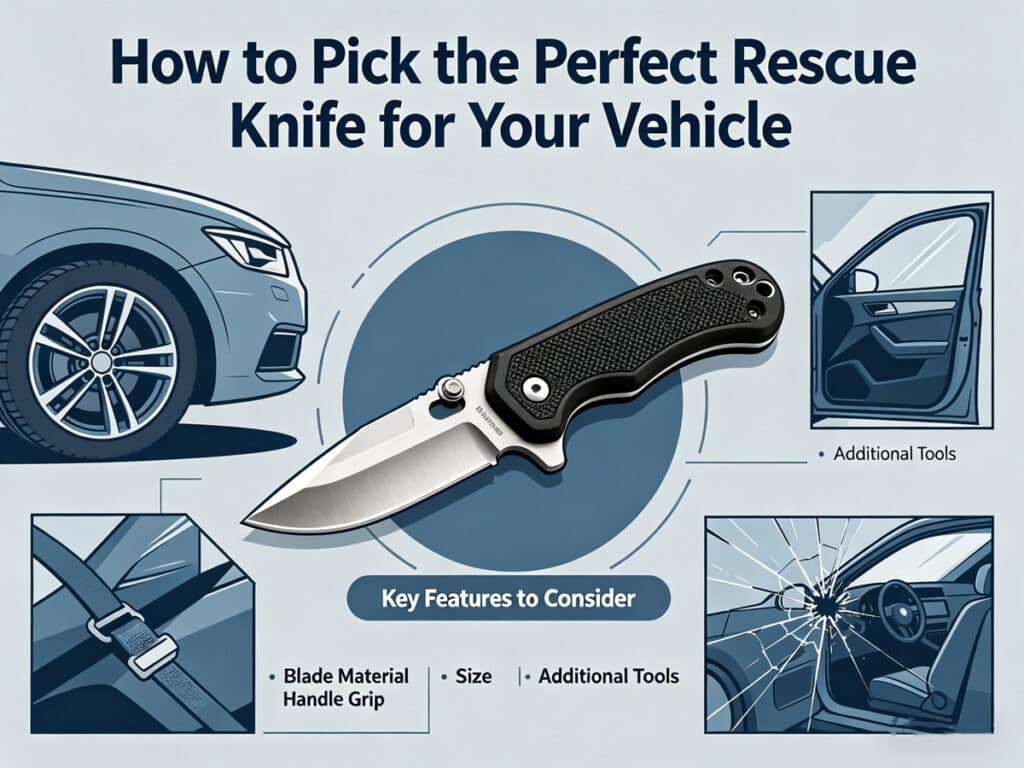
How to Pick the Perfect Rescue Knife for Your Vehicle
In an era where road emergencies—from sudden accidents to natural disasters—are increasingly common, equipping your vehicle with a rescue knife isn’t just prudent; it’s potentially life-saving. Unlike everyday pocket knives, a dedicated rescue tool combines rugged durability, specialized features, and rapid accessibility to handle scenarios like seatbelt jams, broken glass, or trapped passengers. This guide dissects the critical factors in choosing the perfect blade, ensuring you’re prepared for the unexpected without compromising on safety or legality.
I. Defining the Rescue Knife: Beyond Basic Cutting
A true rescue knife prioritizes function over form, designed explicitly for high-stress emergencies. Key distinctions from standard knives include:
- Blade Geometry: A blunt or sheepsfoot tip prevents accidental stabbing during close-contact rescues (e.g., cutting seatbelts near a victim’s body).
- Deployment Speed: Spring-assisted or one-handed opening enables use with gloves or limited mobility.
- Integrated Tools: Many models feature glass breakers (tungsten carbide tips) and seatbelt cutters (hooked, non-slip edges).
Pro Insight: Avoid “tactical” daggers—rescue knives prioritize controlled force, not aggression.
II. Blade Design: The Heart of Reliability
1. Steel Type and Edge Retention
- High-Carbon Stainless Steels (e.g., 440C, D2): Balance corrosion resistance and edge retention, crucial for humid vehicle environments.
- Powdered Metallurgy Steels (e.g., CPM-S30V): Premium choice for extreme durability but at a higher cost.
- Coating: Non-reflective finishes (black oxide, Cerakote) reduce glare and resist rust.
2. Blade Shape and Functionality
- Sheepsfoot/Wharncliffe: Straight-edge blades maximize control for precise cuts.
- Partially Serrated Edges: Combine smooth cutting (for straps) and sawing power (for ropes or fabrics).
- Length: 3–4 inches optimizes versatility—long enough for leverage, short enough for confined spaces.
III. Handle Ergonomics and Material: Grip That Won’t Fail
A slippery handle during rain, blood, or sweat can render a knife useless. Prioritize:
1. Texture and Contouring
- Aggressive Texturing (e.g., G10, TPE rubber): Ensures grip in wet conditions.
- Finger Grooves/Guard: Prevents hand slippage onto the blade during forceful cuts.
2. Material Durability
- G10 Fiberglass: Lightweight, waterproof, and shatterproof.
- Aluminum: Rugged but can be cold in winter; often paired with rubber inserts.
- Avoid: Smooth metals or plastics (e.g., basic polymer) in high-stress scenarios.
IV. Essential Non-Blade Features: Multi-Functionality Saves Lives
1. Glass Breaker
- Tungsten Carbide Tip: Harder than steel, capable of shattering tempered glass with minimal force.
- Protrusion Design: Should extend slightly beyond the handle to prevent hand injury during impact.
2. Seatbelt Cutter
- Hooked, Replaceable Blades: Ensure consistent sharpness; serrated hooks grab webbing instantly.
- Accessibility: Must be reachable without opening the main blade.
3. Mounting/Storage Solutions
- Magnetic Sheaths: Secure knife to door panels or center consoles.
- MOLLE-Compatible Clips: Attach to vehicle emergency kits or under-seat organizers.
V. Environmental and Legal Considerations
1. Temperature Resilience
Vehicles endure extreme heat/cold cycles. Ensure:
- Handle Materials won’t crack in freezing temps.
- Lubricants are rated for -20°C to +60°C.
2. Legality and Accessibility
- Local Laws: Some regions restrict blade length or one-handed opening.
- Storage: Keep visible (e.g., driver-side door) for quick access—not buried in a trunk.
VI. Top Picks and Strategic Integration with Your Kit
A rescue knife shouldn’t work alone. Pair it with:
- Window Escape Tools: Redundancy if the knife’s glass breaker fails.
- Medical Kit: For treating injuries post-rescue.
- Tactical Pens: Write notes, break glass, or defend if separated from your knife.
Where to Buy: Trust brands like Benchmade, Leatherman, or SOG for rigorously tested designs. For specialized combos (e.g., knife + brass knuckle grips for added impact), explore custom options at brassknucklesmaster.com —though verify local legality first.
Final Tip: Test your knife quarterly. Practice cutting seatbelt material (old belts work) and breaking safety glass (at a junkyard). Familiarity breeds efficiency when seconds count.
Your vehicle’s rescue knife is the silent guardian you hope to never need—but when crisis strikes, its quality defines outcomes. Invest wisely, train relentlessly, and drive with confidence.