
Feb
Knowledge of Weapons, Weapons What
Top Features of a High-Quality Tactical Pen
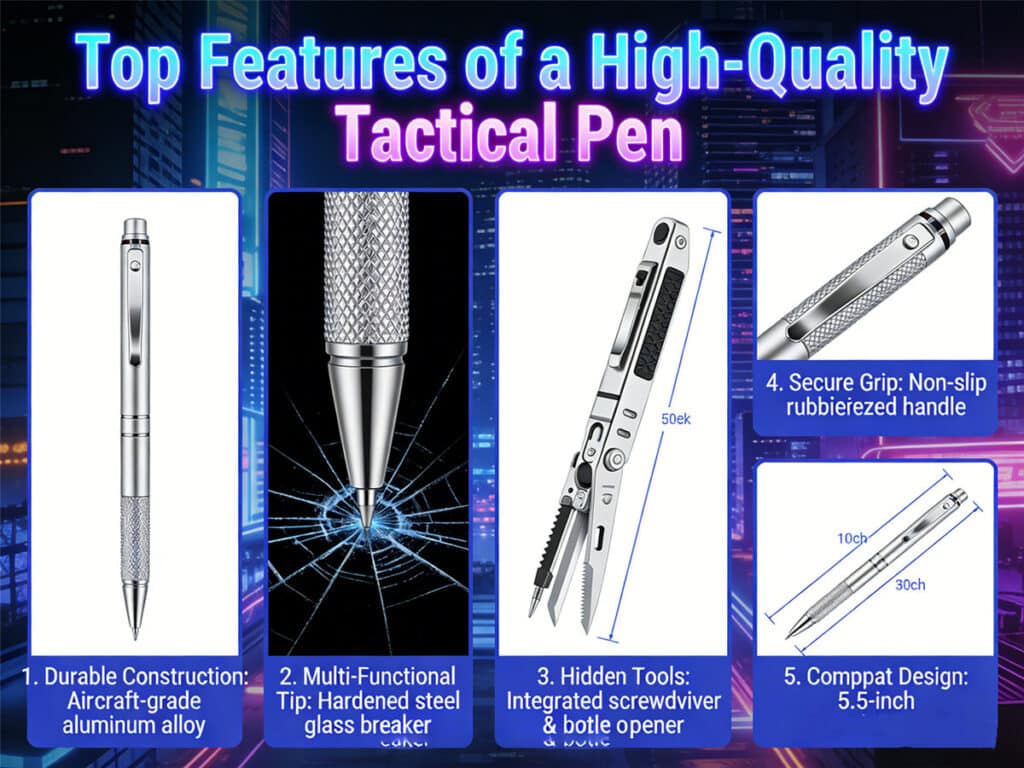
1. Durable Construction That Withstands Real-World Use
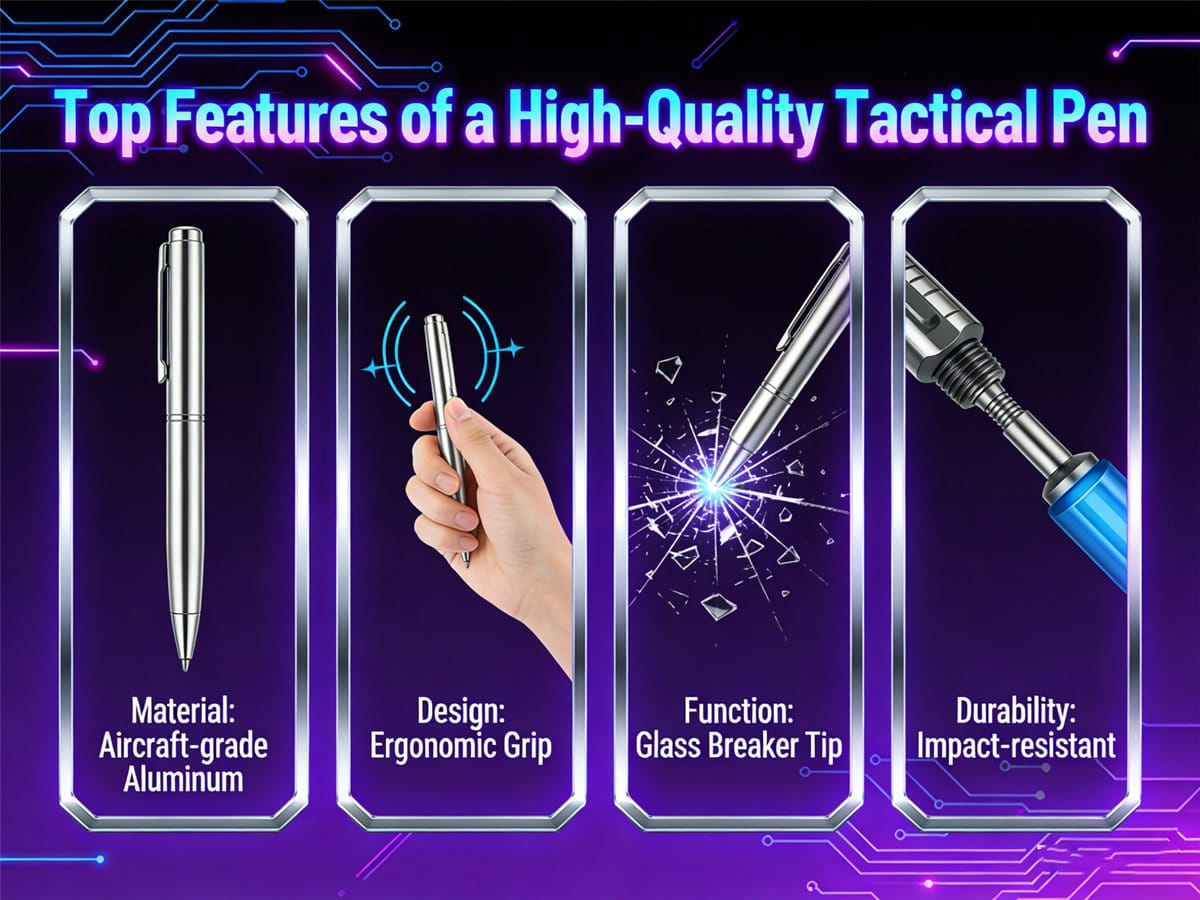
A high-quality tactical pen begins with its construction, because durability is the foundation that separates a serious tool from a novelty item. Unlike ordinary writing instruments made from lightweight plastic, tactical pens are typically crafted from aircraft-grade aluminum, stainless steel, or titanium alloys that can tolerate impact, pressure, and daily wear without bending or cracking.
The choice of material matters not only for strength but also for longevity, especially for users who carry the pen in demanding environments such as construction sites, outdoor settings, emergency services, or field operations. A well-built body resists corrosion, scratches, and dents, ensuring that the pen maintains both its functionality and professional appearance over time.
Weight distribution is another important factor. A high-quality tactical pen should feel solid but balanced in the hand, offering confidence without unnecessary bulk. If the pen feels awkward or poorly weighted, it may become uncomfortable during extended use, reducing its practicality as an everyday carry item.
2. Reliable Writing Performance in All Conditions
While durability often receives the most attention, a tactical pen must first and foremost function as a dependable writing instrument.
A premium model uses high-quality ink cartridges that deliver smooth, consistent lines without skipping, blotting, or drying out prematurely. Many top-tier tactical pens are compatible with widely available refill systems, which makes maintenance simple and cost-effective. This ensures that the pen remains practical long after the original cartridge has been used.
All-Weather Capability
In professional settings, writing may be required in less-than-ideal conditions. A good tactical pen should perform reliably in heat, cold, humidity, or even light rain. Pressurized ink cartridges are often preferred because they can write upside down and on damp surfaces, making them suitable for field notes, inspections, or emergency documentation.
Ultimately, if a tactical pen does not write well, it loses much of its everyday value, no matter how strong or impressive its construction may be.
3. Ergonomic Design for Comfortable Handling
Comfort is frequently overlooked when evaluating tactical pens, yet it plays a major role in long-term usability.
A high-quality tactical pen should feature an ergonomic grip that prevents slipping without feeling overly aggressive against the skin. Subtle texturing or knurling can improve control while maintaining comfort during extended writing sessions. Poorly designed grips may cause discomfort or hand fatigue, especially when the pen is used frequently.
Balanced Length and Diameter
The pen’s dimensions should allow it to fit naturally in the hand and pocket. An overly thick pen can feel cumbersome, while a thin one may not provide sufficient control. Quality manufacturers carefully calibrate size and proportion to achieve a balance between strength and usability.
An ergonomic design enhances not only writing performance but also general handling, reinforcing the pen’s role as a practical daily tool rather than a novelty accessory.
4. Secure and Practical Carry Options
A tactical pen is often intended for everyday carry, so portability is essential.
High-quality models typically include a sturdy pocket clip made from stainless steel or reinforced alloy. The clip should hold firmly without damaging fabric, allowing the pen to remain accessible but secure throughout the day. A weak clip undermines the entire purpose of having a reliable tool readily available.
Some designs also incorporate anti-roll features that prevent the pen from sliding off flat surfaces. This small detail demonstrates thoughtful engineering and adds convenience in real-world environments such as desks, vehicle dashboards, or job sites.
Carrying comfort is closely tied to overall design. A tactical pen should integrate seamlessly into daily routines without drawing unnecessary attention or creating inconvenience.
5. Multi-Function Utility Features
One of the reasons tactical pens have gained popularity is their multifunctional design. While writing remains the primary purpose, many high-quality models include additional practical features.
Some incorporate a glass breaker tip designed for emergencies, such as vehicle escape scenarios. Others may feature integrated stylus tips for touchscreen devices or compact LED lights for low-light conditions. The key is integration without compromise. Extra features should not interfere with writing comfort or structural integrity.
Discretion and Professional Appearance
Despite additional functions, a well-designed tactical pen maintains a discreet and professional look. It should resemble a refined writing instrument rather than an overtly aggressive tool. This balance allows it to be carried in corporate, academic, or formal settings without raising concerns.
The multifunctional aspect should enhance practicality while preserving the pen’s primary identity as a writing instrument.
6. Quality Manufacturing and Brand Reputation
Not all tactical pens are created equal, and differences in manufacturing standards can significantly impact performance and reliability.
Reputable manufacturers invest in precision machining and rigorous quality control processes to ensure consistency. Threads should align smoothly, caps should close securely, and moving parts should operate without wobble or friction. Even small imperfections can signal shortcuts in production.
In addition, established brands often provide clear specifications regarding materials, weight, refill compatibility, and maintenance instructions. Transparent information reflects confidence in product quality and helps buyers make informed decisions.
Long-term customer reviews also offer valuable insight. A high-quality tactical pen will typically receive consistent praise for durability, reliability, and practicality rather than short-lived enthusiasm followed by reports of failure.
7. Legal Awareness and Responsible Ownership
When considering a tactical pen, it is important to understand local regulations and use it responsibly. Although tactical pens are legal in many regions as everyday tools, laws can vary depending on design features and jurisdiction.
Responsible ownership means using the pen primarily as a writing instrument and practical utility tool while respecting applicable regulations. Buyers should verify that the model they choose complies with local rules to avoid complications.
In the broader market of everyday carry items, tactical pens are often discussed alongside products such as a brass knuckle or other personal defense accessories, yet their primary strength lies in combining functionality and durability in a discreet format. For those researching related gear or exploring options from specialized retailers like brassknucklesmaters.com, it is important to prioritize quality, legality, and responsible use above all else.
A high-quality tactical pen stands out not because it tries to be everything at once, but because it performs its core functions exceptionally well. When durability, writing reliability, ergonomic design, practical features, and responsible ownership come together, the result is a tool that serves professionals and everyday users alike with confidence and consistency.