
Feb
Knowledge of Weapons, Weapons What
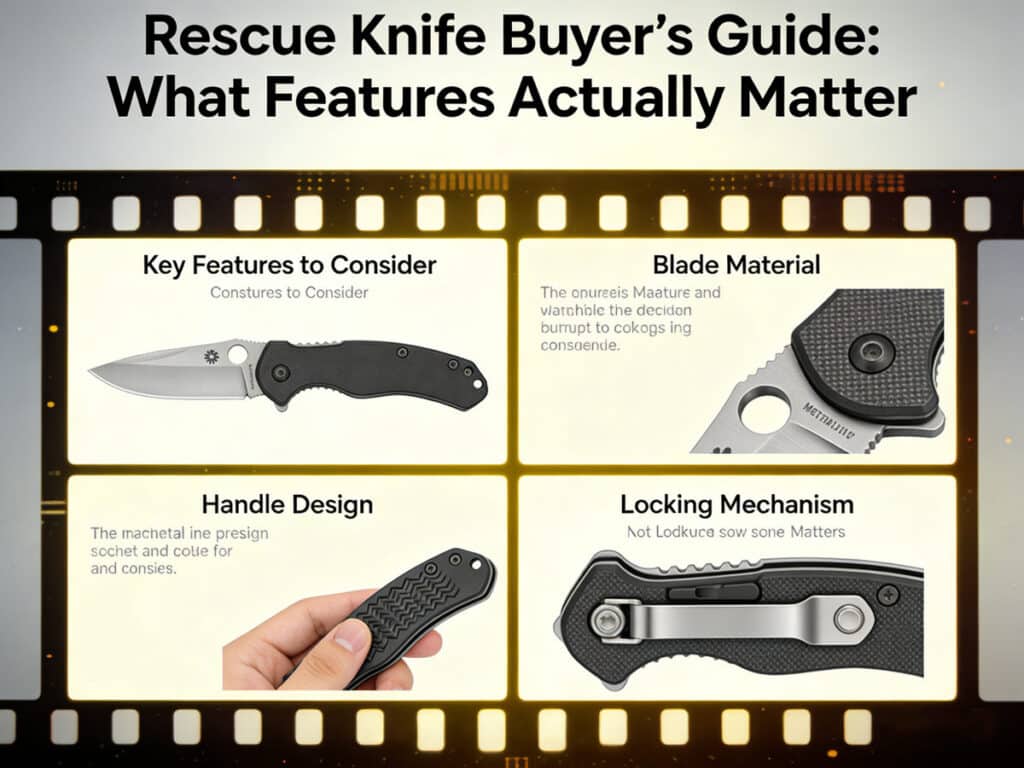
Rescue Knife Buyer’s Guide: What Features Actually Matter
In professional environments where safety equipment must perform flawlessly under pressure, the distinction between a well-designed rescue knife and a poorly engineered novelty blade is not merely academic; it is operationally significant. For fleet managers, safety officers, procurement specialists, and retailers serving emergency responders or vehicle operators, selecting the right rescue knife requires careful evaluation of features that directly influence performance, reliability, and compliance. While marketing materials often emphasize aggressive styling or tactical aesthetics, business decision-makers must focus on measurable functionality and real-world deployment scenarios.
A rescue knife is fundamentally a life-saving tool, intended for use in vehicle extrication, industrial entanglement incidents, marine emergencies, or roadside assistance operations. In such scenarios, users do not have the luxury of hesitation or equipment failure. Therefore, buyers must evaluate design characteristics through a practical lens, considering ergonomics, blade configuration, deployment reliability, material durability, and regulatory context. This guide outlines the features that genuinely matter, helping business owners invest in tools that support safety objectives rather than compromise them.
Understanding the Primary Function of a Rescue Knife
Before evaluating specifications, buyers must clearly define the operational context in which the knife will be used. A rescue knife differs significantly from general-purpose utility knives or collectible blades. Its design is centered on emergency intervention, particularly the rapid cutting of seat belts, rope, webbing, and clothing in confined or hazardous environments.
For commercial vehicle fleets, including towing services, roadside assistance providers, and security patrol units, the rescue knife functions as part of a broader emergency response kit. In these settings, the tool must enable swift action without introducing additional risk to the victim or operator.
Unlike decorative blades marketed for aesthetic appeal, a rescue knife prioritizes controlled cutting. Many models incorporate partially serrated edges that grip fibrous materials effectively. The ability to sever synthetic straps quickly can be decisive in situations where a trapped individual must be freed from a damaged vehicle or overturned machinery.
Business owners should also consider whether the knife will be issued to trained professionals or general employees. Training level influences feature selection, particularly in relation to locking mechanisms and blade exposure. Tools intended for widespread distribution across a fleet should emphasize simplicity and intuitive operation.
Blade Design and Cutting Performance
The blade is the core functional component of any rescue knife, and its design must reflect its intended emergency role rather than aesthetic trends.
Serrated Edge Configuration
A fully serrated or partially serrated blade is typically preferred in rescue applications. Serrations excel at cutting through seat belts, climbing rope, and heavy-duty straps that might resist a straight edge. In real-world conditions—often involving tension, moisture, or debris—a serrated blade reduces cutting effort and time.
However, excessive serration depth can complicate maintenance and sharpening. Procurement teams should evaluate whether in-house maintenance capabilities align with the chosen blade design. Some models strike an effective balance by incorporating a short straight-edge section near the tip for precision tasks, while retaining serrations closer to the handle for aggressive slicing.
Blade Steel and Corrosion Resistance
Rescue knives are frequently exposed to harsh environments, including rain, vehicle fluids, humidity, and temperature fluctuations. Stainless steel alloys with strong corrosion resistance are therefore essential. Lower-grade steel may dull quickly or corrode, undermining reliability.
For fleet deployment, durability reduces replacement frequency and long-term cost. While premium steel may increase upfront expenditure, it often lowers total cost of ownership by extending service life and reducing warranty claims.
Integrated Emergency Tools: Beyond the Blade
A rescue knife that relies solely on its blade may lack the versatility required for comprehensive emergency response. Integrated features significantly enhance practical value.
Seat Belt Cutters
An enclosed seat belt cutter, often integrated into the handle, allows operators to sever restraints without exposing a sharp blade near the victim’s body. This feature minimizes accidental injury risk and simplifies operation for less experienced users.
In vehicle accident scenarios, where time and stability are limited, an integrated cutter can provide a safer alternative to deploying the primary blade. Businesses equipping service vehicles should prioritize models that include this feature.
Glass Breakers
A carbide-tipped glass breaker positioned at the base of the handle enables rapid shattering of tempered glass. In submerged or locked-vehicle emergencies, this capability can be critical. The glass breaker must be securely mounted to withstand repeated impact without loosening.
For roadside assistance fleets, integrating both a seat belt cutter and glass breaker into a single tool reduces equipment redundancy and ensures that critical capabilities are always accessible.
Ergonomics and Deployment Reliability
Emergency tools must function under stress, often in low-light or high-adrenaline conditions. Ergonomic design and dependable deployment mechanisms are therefore non-negotiable.
One-Handed Opening Mechanisms
In many rescue scenarios, one hand may be occupied stabilizing a victim or holding onto a vehicle frame. A rescue knife that allows one-handed opening—through thumb studs, flipper tabs, or assisted-opening systems—provides a practical advantage.
Locking mechanisms must engage securely and resist accidental closure. Liner locks, frame locks, or other reinforced systems should be tested for durability under repeated use. Businesses should request sample units for field evaluation before committing to bulk orders.
Grip Texture and Visibility
Handle materials such as G10, reinforced polymer, or textured aluminum improve grip stability, especially in wet or oily conditions. Brightly colored handles enhance visibility inside vehicle compartments, tool kits, or emergency bags.
From a risk management perspective, improved grip and visibility reduce user error and contribute to overall safety compliance.
Regulatory Awareness and Responsible Merchandising
Retailers and distributors must remain attentive to local and national regulations governing blade length, locking mechanisms, and shipping restrictions. While rescue knives are safety tools, they may still fall under certain legal frameworks depending on jurisdiction.
Clear labeling, accurate product descriptions, and transparent communication protect both the seller and buyer. For online retailers that operate across multiple regions, compliance checks are particularly important.
Businesses that also carry adjacent product categories—such as tactical accessories or items like brass knuckles—must ensure careful product segmentation and responsible marketing. Emergency tools should be clearly distinguished from novelty or restricted items to avoid confusion and maintain professional credibility.
Online platforms including brassknucklemasters.com often serve diverse customer bases. In such environments, responsible positioning of rescue knives as safety equipment, rather than promotional or decorative items, reinforces trust and compliance integrity.
Cost, Durability, and Long-Term Procurement Strategy
Beyond individual features, business owners must evaluate rescue knives within the broader context of cost control, supplier reliability, and long-term operational planning.
Total Cost of Ownership
While budget models may appear attractive initially, inferior materials or weak locking mechanisms can result in higher replacement rates and potential liability exposure. Investing in durable, field-tested designs often yields better long-term value.
Bulk purchasing agreements with reputable manufacturers can reduce unit costs while maintaining quality standards. Warranty coverage and after-sales support should be factored into procurement decisions.
Standardization Across Fleets
For organizations managing multiple vehicles or teams, standardizing rescue knife models simplifies training and maintenance. Uniform equipment ensures that personnel are familiar with operation and deployment, reducing confusion during emergencies.
Seasonal demand patterns should also be considered. For example, regions prone to winter weather may experience increased roadside incidents, creating predictable spikes in demand for emergency tools.
A disciplined procurement strategy that prioritizes reliability, compliance, and operational fit will ultimately strengthen safety readiness and brand reputation. By focusing on the features that genuinely matter—durable blade materials, integrated emergency tools, ergonomic design, and regulatory awareness—business owners can confidently select rescue knives that meet real-world demands rather than marketing hype. Thoughtful selection, combined with responsible merchandising practices and alignment with broader safety objectives, positions retailers and fleet operators to deliver meaningful value to their customers while maintaining professional standards.