
Feb
Knowledge of Weapons
Brass vs Steel vs Alloy Knuckles: Which Material Performs Best?
When you’re choosing a pair of knuckles—whether for EDC collection, self-defense legality where permitted, training, or simply appreciating precision-machined gear—the material matters more than most people realize. The difference between brass, steel, and alloy knuckles isn’t just about weight or appearance. It influences grip comfort, durability, hand fatigue, balance, and even long-term usability.
This Mid Funnel guide breaks down the real-world performance of each material so you can choose confidently. The goal here isn’t to push one option blindly—it’s to give you the same practical decision-making process used by experienced EDC users who also rely on tools like tactical pens, survival knives, and compact daggers.
Why Material Choice Matters
Knuckles function as both impact tools and grip enhancers, which means the material directly affects:
- Weight distribution
- Strength under impact
- Comfort during extended hold
- Heat and cold transfer
- Aging and patina
- Wrist control and fatigue
A well-made pair feels like an extension of your hand. A poorly chosen material makes the tool feel awkward, too light, too heavy, or cheap.
Let’s break it down material by material.
Brass Knuckles: The Classic Standard
Brass has been the go-to material for knuckles for generations—and for good reason. Its density, durability, and warm hand-feel create a balance few other metals can match.
Performance Strengths
- Excellent weight for stable impact and grip reinforcement
- Comfortable in the hand due to brass’s slightly warm, smooth surface
- Highly durable and resistant to corrosion
- Develops a natural patina that only improves the look over time
- Provides a premium, solid feel appreciated by collectors and serious EDC enthusiasts
Ideal For
- Users who want a dependable, long-lasting tool
- Collectors who value craftsmanship
- EDC setups built around metal tools (e.g., brass tactical pens, brass flashlights)
- Anyone who appreciates weight and balance
Potential Downsides
- Heavier than alloy
- Costs more due to solid material value
Verdict:
If you want the best all-around performance and feel, solid brass remains the top choice.
Steel Knuckles: Maximum Toughness
Steel knuckles are built for ruggedness. Stainless steel versions, in particular, deliver incredible durability and feel almost indestructible.
Performance Strengths
- Extremely strong, even under repeated stress
- Very heavy, creating powerful follow-through
- Resistant to deformation
- Great for users who want a more industrial, tactical aesthetic
Ideal For
- Larger hands or stronger grip users
- Anyone who prefers a “tank-like” tool
- Display pieces with a modern metallic look
Potential Downsides
- Heavier than brass—sometimes too heavy
- Feels colder in the hand
- Can cause faster wrist fatigue during extended hold
Steel punches hard, but the weight isn’t for everyone. It’s similar to the difference between choosing a full-size survival knife versus a compact dagger: both are effective, but the feel is very different.
Verdict:
Choose steel if you want maximum durability and striking weight, and you don’t mind extra heft.
Alloy Knuckles: Lightweight and Budget-Friendly
Alloy knuckles—sometimes aluminum or mixed-base “mystery metals”—are common in inexpensive or cosmetic models. They’re not necessarily bad, but they behave very differently from brass or steel.
Performance Strengths
- Very lightweight, easy to carry
- Low cost, accessible for beginners
- Modern anodized finishes add visual appeal
- Good for cosplay, display, or casual handling
Ideal For
- Users with smaller hands
- Beginners testing knuckle ergonomics
- People who prefer lightweight EDC gear
- Decorative collections
Potential Downsides
- Far less durable (can bend or dent under real force)
- Lacks the solid “confidence-in-hand” feel
- No meaningful patina or aging characteristics
- Doesn’t provide the same momentum or balance
If you’re used to the weight of a brass tactical pen or a compact fixed blade, alloy knuckles may feel insubstantial in comparison.
Verdict:
Choose alloy only if you want lightweight, budget-friendly, or purely aesthetic knuckles. Not ideal for serious use.
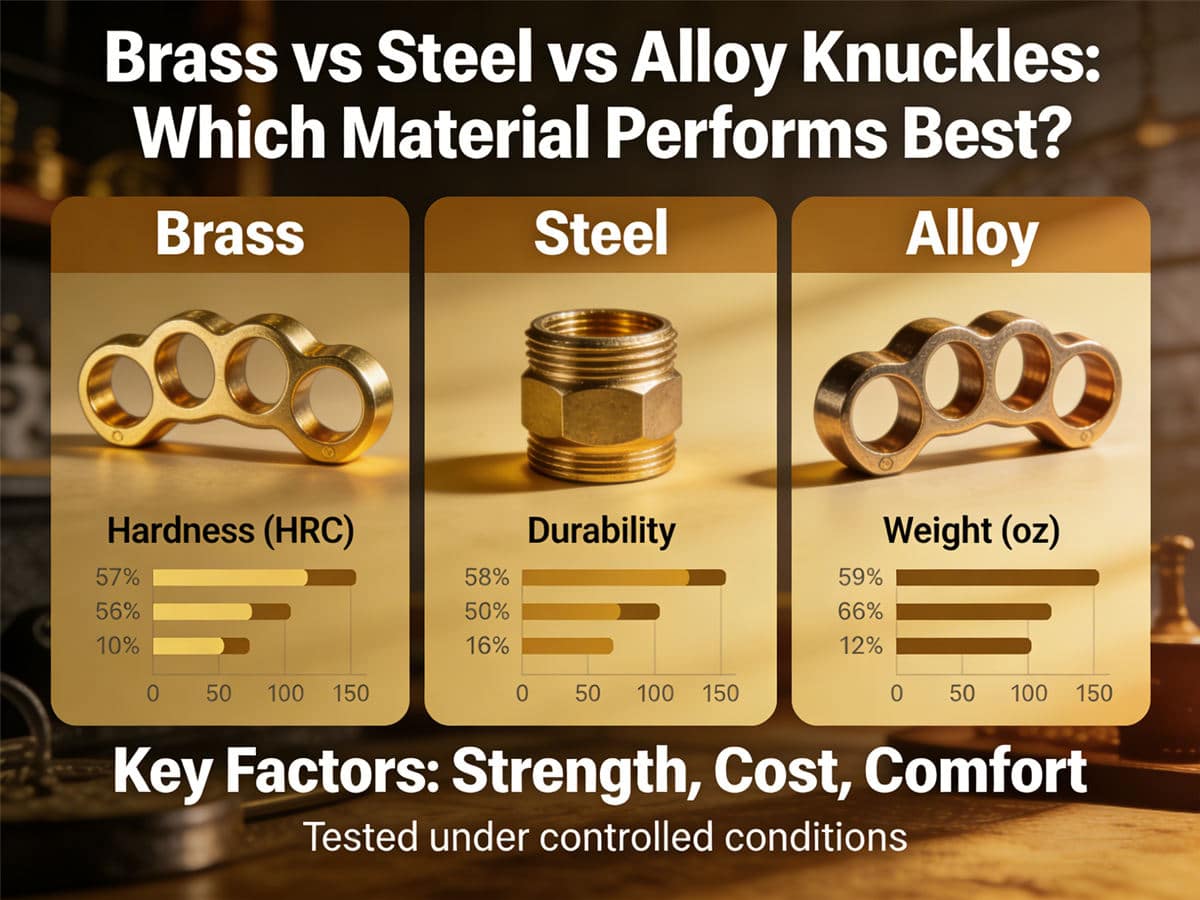
Head-to-Head Performance Comparison
| Feature | Brass | Steel | Alloy |
|---|---|---|---|
| Weight | Medium-Heavy | Heavy | Light |
| Durability | Excellent | Exceptional | Fair-Poor |
| Grip Comfort | Excellent | Good | Moderate |
| Shock Absorption | Very Good | Good | Poor |
| Collectibility | Very High | Medium | Low |
| Patina/Finish Aging | Beautiful patina | Minimal change | None |
| Price | Moderate | High | Low |
Which Material Is Best for You? (Quick Guide)
Choose Brass If You Want…
- The best balance of weight + comfort
- Long-term durability
- A premium feel
- A collectible piece that ages beautifully
Choose Steel If You Want…
- Maximum impact weight
- Almost indestructible strength
- A cold, tactical aesthetic
- Heavier tools similar to full-size survival knives
Choose Alloy If You Want…
- Lightweight carry
- An inexpensive option
- A display piece or training tool
- Something casual rather than performance-focused
How Material Impacts Ergonomics
A material’s density affects how knuckles interact with your hand:
- Heavier materials (brass/steel) stabilize your wrist and improve control.
- Lighter materials (alloy) feel faster but reduce momentum and punch stability.
- Brass hits the ergonomic sweet spot—dense enough for balance, not so heavy that it strains the hand.
Weight, combined with contouring, determines whether the knuckles feel like an extension of your hand or something you need to constantly adjust.
Common Mistakes When Choosing Knuckle Material
Avoid these pitfalls:
- Buying alloy knuckles assuming they perform like brass (they don’t)
- Choosing steel without considering carry comfort
- Mistaking brass-coated alloy for solid brass
- Overlooking finger-hole size when evaluating weight distribution
Material and fit matter equally—don’t sacrifice either.
Final Thoughts
When it comes to choosing the best material for brass knuckles, performance and feel tell a clear story:
- Brass offers the best overall experience
- Steel provides unmatched toughness and weight
- Alloy is lightweight and affordable but limited in performance
Whether you’re building a practical EDC setup or expanding a collection of machined gear like tactical pens, survival knives, or compact daggers, choosing the right knuckle material ensures you get a tool that feels right in your hand and performs the way you expect.