Aug
Knowledge of Weapons
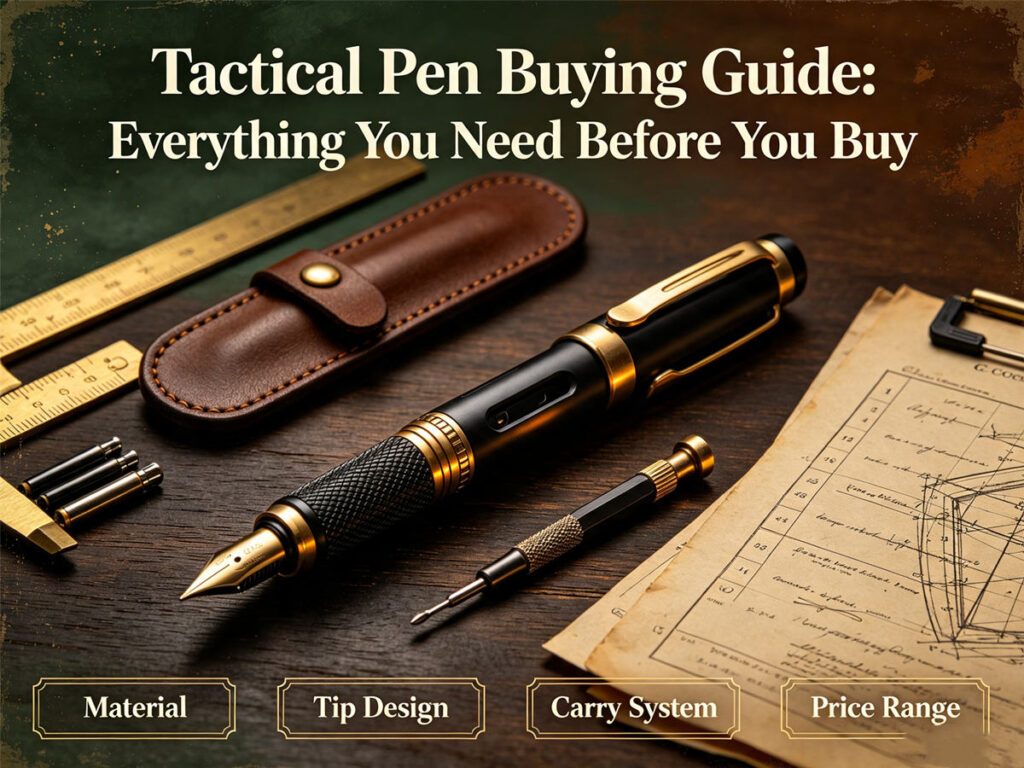
Tactical Pen Buying Guide: Everything You Need Before You Buy
1. Why Most People Regret Their First Tactical Pen Purchase
Here is a pattern we see all the time: someone gets excited about tactical pens, watches a few videos, buys the cheapest option with the most features listed on the box, and three weeks later it is sitting in a drawer. The clip broke, the ink skips, or it just feels cheap in the hand. Sound familiar?
The problem is not that cheap tactical pens are bad across the board. The problem is that buying one without knowing what to look for leads to a mismatch between what you expected and what you got. This tactical pen buying guide exists to close that gap — so the pen you buy is the pen you actually carry.
2. Understanding Price Tiers
Tactical pens range from under fifteen dollars to well over a hundred. Here is what you get at each level.
Budget Range ($10–$25)
Entry-level tactical pens typically use basic aluminum or zinc alloy bodies. They write, they are harder than plastic pens, and they often include a glass breaker tip. The tradeoff is in fit and finish — threads may feel gritty, clips may loosen over time, and the ink cartridges are usually generic. These pens work fine as trial runs to see if you like carrying a tactical pen at all.
Mid-Range ($25–$60)
This is where the value lives for most buyers. Mid-range pens use quality aluminum or stainless steel, have solid threading, and come with better ink systems. The grip textures are more refined, and the overall design feels intentional rather than stamped out of a mold. At BKM, our tactical pen sits in this range — because we believe good gear should be accessible, not exclusive.
Premium Range ($60–$150+)
Premium pens use titanium, high-grade stainless steel, or proprietary alloys. They feature precision machining, superior balance, and often accept name-brand refills. The difference from mid-range is noticeable in the hand — tighter tolerances, smoother action, and a sense of permanence. Whether that difference is worth the price depends on how much you value the finer details.
3. Materials: What to Choose and Why
The body material of your tactical pen affects everything — weight, durability, grip feel, corrosion resistance, and price.
Aluminum
Light, affordable, and resistant to corrosion. Aluminum is the most common tactical pen material for good reason. It is easy to machine into precise shapes, accepts anodized finishes in any color, and holds up well to daily carry. The only downside is that aluminum dents more easily than steel or titanium under hard impact.
Stainless Steel
Heavier and more durable than aluminum. Steel pens feel substantial in the hand and resist scratching much better. They are ideal if you want a pen that doubles as a serious defensive tool — the extra weight translates to more force. The tradeoff is comfort during extended writing sessions and the added weight in your pocket.
Titanium
The lightest of the three premium metals, with strength comparable to steel. Titanium pens are the “buy once, cry once” option — expensive upfront, but they last virtually forever. They also develop a character over time as the surface picks up micro-scratches that give the pen a unique, lived-in look.
What We Recommend for Most Buyers
Start with aluminum. It gives you the full tactical pen experience at a reasonable price. If you find yourself reaching for it daily and wanting more, upgrade to steel or titanium on your next purchase.
4. Grip Design: The Make-or-Break Feature
A tactical pen that slips out of your hand under stress is not a tactical pen — it is a projectile. Grip design deserves more attention than it typically gets in buying guides.
Knurled Grips
Diamond-pattern knurling is the traditional choice. It provides excellent traction and a confident feel. The downside is that aggressive knurling can be uncomfortable during long writing sessions and can snag on fabric when drawing from a pocket.
Fluted or Grooved Grips
Longitudinal grooves or fluted patterns offer a more comfortable hold that still provides solid traction. They are smoother than knurling but less likely to cause hand fatigue. This style works well for people who write frequently and need a pen that performs double duty as a daily writing tool.
Textured Rubber Panels
Some pens add rubber or silicone grip sections near the holding area. These provide the best wet-grip performance but can attract lint and may degrade over time in hot climates.
Our Take
A mid-aggressive knurl or a well-designed fluted grip works for most people. Avoid smooth, untextured bodies unless you plan to use the pen primarily for writing.
5. Ink System: The Overlooked Priority
You will use your tactical pen for writing far more often than for anything else. The ink system matters.
Standard Refills
Parker-style G2 refills are the industry standard. They are available everywhere, come in dozens of brands and ink types, and cost very little. If your pen accepts Parker refills, you will never struggle to find replacements.
Pressurized Cartridges
Fisher Space Pen refills write in any condition — rain, cold, upside down, on glossy surfaces. They cost more but are worth it if you work outdoors or need a pen that performs reliably in extreme environments.
Proprietary Refills
Some brands use custom refills that only they sell. This locks you into their ecosystem and can be frustrating if they discontinue the refill or raise prices. Always check refill compatibility before buying.
Retraction Mechanisms
Click mechanisms are the fastest to deploy but have more moving parts that can fail. Twist mechanisms are more reliable and have a cleaner profile. Cap designs are the simplest — no mechanism to break — but you need to keep track of the cap while writing.
6. Emergency Features: Glass Breaker and Beyond
The glass breaker tip is the signature extra feature of a tactical pen. Not every pen includes one, and not every glass breaker is equally effective.
Tungsten Carbide Tips
The gold standard. Tungsten carbide is harder than steel and maintains its point over time. A quality tungsten tip can crack tempered glass with a focused strike. Look for tips that are integrated into the pen body, not glued on.
Hardened Steel Tips
Less expensive than tungsten but still effective. Steel tips may dull over time with repeated use, but for occasional emergency use they perform adequately.
DNA Collector Crown
A textured cap end that can collect skin cells on contact. A passive feature that does not affect daily carry. It is a nice addition but should not be a deciding factor in your purchase.
7. Making the Final Decision
At Brass Knuckles Master, we have spent a lot of time designing our tactical pen because we believe a tactical pen buying guide should end with one simple truth: the best pen is the one you carry every day.
Start with your carry style — pocket, bag, or clip. Choose a material that matches your budget and weight preference. Test the grip if you can, or read detailed reviews if you are buying online. Make sure the ink system uses readily available refills. And do not get distracted by gimmick features that sound cool on paper but add bulk without adding value.
The right tactical pen becomes part of your daily routine — writing notes, signing papers, and sitting quietly in your pocket or bag until the moment it needs to do something more. Explore the BKM tactical pen collection and find the one that earns its place in your everyday carry.