
Aug
Knowledge of Weapons, Weapons How
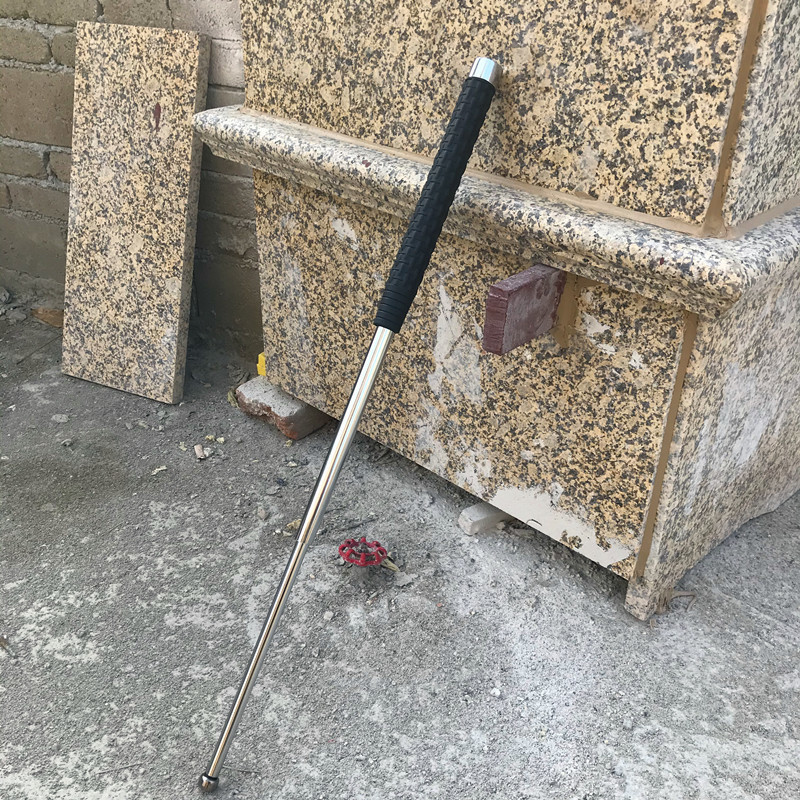
How to Clean and Maintain an Expandable Baton for Longevity
I. Precision Disassembly: Systemic Deconstruction Methodology
Controlled breakdown precedes all maintenance, requiring specialized tooling and protocols:
- Inertial Unlocking: Strike the base cap perpendicularly against dense rubber at 1.8-2.2 m/s velocity to overcome friction-locked sections without damaging threads
- Torque-Regulated Extraction: Apply 0.9-1.3 N·m clockwise rotation using knurled grip wrenches to prevent shaft scoring
- Component Sequencing: Utilize magnetic sorting trays with labeled sectors (Base/Intermediate/Striking Tip) to prevent reassembly errors
Critical measurements pre-cleaning:
- Telescopic section clearance (0.05-0.15mm ideal)
- Spring free-length verification (±2% of OEM specification)
- Locking notch wear depth (<0.3mm maximum)
II. Metallurgical Degradation Mitigation: Material-Specific Cleaning Regimes
A. Chrome Vanadium Steel Components
Electrolytic derusting in 5% citric acid solution at 0.3A/dm² current density removes corrosion while preserving case-hardened surfaces (HRC 58-62). Follow with:
- Micro-abrasive blasting (50μm glass beads at 25psi)
- Passivation treatment in 20% nitric acid for 30 minutes
- Parkerizing conversion coating (94°C zinc phosphate bath)
B. Aerospace Aluminum Alloys
Intergranular corrosion prevention requires:
- Ultrasonic cleaning in enzymatic solution (pH 7.2-7.6)
- Anodizing layer repair via pulsed DC at 18V/12°C
- Ceramic-infused lubricant application in pores
C. Polymer Components
Thermoplastic urethane (TPU) grips demand:
- Non-polar solvent wipe (heptane-based)
- UV stabilizer reapplication (HALS compounds)
- Compression-set testing after 24h/70°C bake
III. Tribological Optimization: Advanced Lubrication Engineering
Boundary layer formation dictates friction reduction:
| Component Interface | Lubricant Type | Application Protocol |
|---|---|---|
| Telescoping Surfaces | Molybdenum disulfide (MoS₂) 5μm | Brush-coating with 90% coverage |
| Locking Mechanism | PTFE-silicone hybrid grease | Syringe injection to cam profiles |
| Spring Coils | Dry film lubricant | Aerosol deposition with 30s curing |
| Threaded Sections | Nickel anti-seize compound | Single helical application pattern |
Re-lubrication intervals:
- Duty Use: 200 extension cycles or quarterly
- Storage: Annual irrespective of deployment
IV. Environmental Protection Systems: Storage Configuration Physics
Corrosion acceleration factors demand controlled environments:
A. Microclimate Regulation
- Relative Humidity: Maintain 35-45% RH with silica gel canisters (replace at 15% saturation)
- Temperature Stability: 15-25°C range to prevent polymer embrittlement
- Galvanic Isolation: Separate aluminum/steel sections with dielectric sleeves
B. Deployment Readiness Preservation
- Storage Orientation: Vertical positioning with tip downward
- Retention Pressure: Adjust collars to 2-3kg retention force monthly
- UV Shielding: Store in closed-cell foam lined with carbon-black impregnated nylon
V. Functional Verification: Dynamic Testing Protocols
Operational validation requires quantifiable metrics:
A. Extension Reliability Testing
- Conduct 50 rapid deployments at ≤0.8 second intervals
- Measure lock engagement force (≥35N for all sections)
- Verify full extension within 0.5° of axis alignment
B. Structural Resonance Analysis
- Strike calibrated test medium (ISO 3302 rubber) with 200N force
- Monitor harmonic vibration decay to <5μm within 0.3 seconds
- Inspect for microfractures using magnetic particle testing (steel) or dye penetrant (aluminum)
VI. Predictive Maintenance Scheduling: Degradation Modeling
Failure probability matrices inform service intervals:
| Usage Profile | Inspection Frequency | Critical Checks |
|---|---|---|
| Daily Carry | Biweekly | Spring tension, locking cam wear |
| Monthly Deployment | Quarterly | Section clearance, surface pitting |
| Storage Reserve | Biannually | Lubricant viscosity, polymer plasticity |
| High-Impact Use | Per 10 strikes | Tip deformation, stress whitening |
Implement digital maintenance logs tracking:
- Cumulative extension cycles (replace springs at 5,000 cycles)
- Impact energy absorption totals (retire at 15kJ cumulative)
- Chemical exposure history (acidic contaminants trigger early inspection)
Material fatigue thresholds:
- Steel sections: Retire at 0.2% permanent deformation
- Aluminum shafts: Discard after 0.15mm diameter reduction
- Composite grips: Replace when hardness drops below Shore 80D
This systematic approach transforms maintenance from reactive cleaning to predictive preservation science, ensuring batons meet manufacturer service life projections of 15+ years despite operational stresses. Through metallurgical consciousness and tribological precision, these tools maintain defensive readiness without compromising structural ethics.