
Aug
Knowledge of Weapons, Weapons How
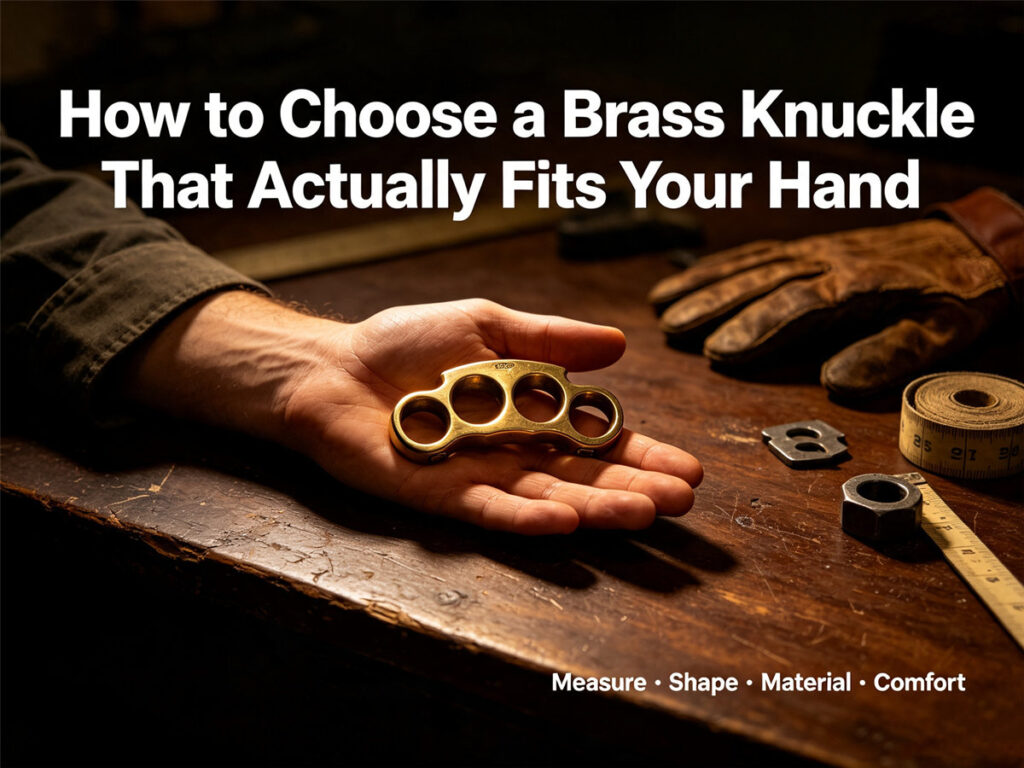
How to Choose a Brass Knuckle That Actually Fits Your Hand
Most people grab the first brass knuckle they see online and call it a day. Two weeks later, it sits in a drawer — too loose, too heavy, or just plain uncomfortable. At Brass Knuckles Master, we’ve talked to thousands of buyers over the years, and the pattern is always the same: the ones who do a little homework before they buy end up carrying theirs every single day. The ones who don’t? They buy twice.
This guide is for anyone who wants to get it right the first time. We’ll walk you through every factor that matters — from finger hole sizing to material selection — so you can choose a brass knuckle that feels like it was made for your hand.
1. Check Your Local Laws First
Before you start comparing finishes and finger counts, take five minutes to understand the legal landscape where you live. This is the single most important step in the buying process, and it’s one that too many people skip. Brass knuckle legality varies wildly — some states in the U.S. allow open carry, others permit ownership but ban carrying, and a handful prohibit them entirely.
At BKM, we always tell customers: know the law before you buy. It protects you, and it helps you make smarter purchasing decisions. If you’re in a state where brass knuckles are legal to own and carry, you have more flexibility in choosing a larger, more visible model. If you’re somewhere with restrictions, you might lean toward a more discreet design. Our guide on how to spot fake vs real brass knuckles also touches on compliance markers that legitimate manufacturers include.
2. Finger Count: One, Two, or Four?
The number of finger holes is the first design choice you’ll face, and it shapes everything else about how the knuckle feels and performs.
The Four-Finger Classic
Four-finger brass knuckles are the most traditional design. They distribute force across your entire fist and give you the most secure grip. If you’re looking for maximum impact and hand protection, this is the style most people picture when they hear “brass knuckle.” At BKM, our four-finger brass knuckle collection remains our bestseller for exactly this reason — they fit naturally into a closed fist and feel like a solid extension of your hand.
Two-Finger and One-Finger Options
Two-finger models are more compact and easier to carry in a pocket. They’re popular with people who want something lightweight but still want the reinforced punch that a knuckle provides. One-finger designs — sometimes called knuckle rings — are the most discreet option. They’re minimal, often mistaken for jewelry, and perfect for anyone who values subtlety over raw power. The tradeoff is clear: less finger coverage means less force distribution, but more portability and concealment.
3. Material: The Heart of the Decision
Not all brass knuckles are made from brass. The name has become a catch-all term, but the actual material varies — and it changes everything about weight, durability, and feel.
Solid Brass
Brass is the classic choice for a reason. It’s dense, it develops a beautiful patina over time, and it has a satisfying heft that signals quality. Solid brass knuckles typically weigh between 8 and 12 ounces — heavy enough to feel substantial, but not so heavy that they’re a burden to carry. If you appreciate traditional craftsmanship and don’t mind a little maintenance, brass is hard to beat.
Steel and Stainless Steel
Steel models are nearly indestructible. They’re the go-to for anyone who prioritizes durability above all else. Stainless steel adds corrosion resistance, which matters if you live somewhere humid or plan to carry your knuckle in your pocket year-round. The downside? Steel is heavier than brass, and it can feel cold against bare skin in winter.
Zinc Alloy
Zinc alloy is the budget-friendly middle ground. It’s lighter than brass, easier to cast into intricate designs, and costs less to produce. For buyers who want a decorative or novelty piece without spending a fortune, zinc alloy delivers solid value. Just know that it won’t have the same longevity as brass or steel — it’s softer and more prone to wear over time.
Titanium and Carbon Fiber
If you’re willing to spend more, titanium and carbon fiber models offer the best strength-to-weight ratio in the business. They’re incredibly light, extremely tough, and they look futuristic. These materials appeal to collectors and EDC enthusiasts who want premium gear that disappears in a pocket. The price tag reflects the quality, but for many buyers, it’s worth every penny.
For a deeper dive into material pros and cons, check out our full breakdown on which knuckle duster material is best.
4. Fit and Hand Size: One Size Does Not Fit All
Here’s something most buying guides skip: hand fit matters more than almost anything else. A brass knuckle that’s too tight will pinch your fingers and cut off circulation. One that’s too loose will shift when you grip, reducing your control and making it uncomfortable to wear.
Measuring Your Hand
Wrap a soft tape measure around the widest part of your palm, just below the knuckles (not including your thumb). Most four-finger knuckles are designed for a palm width between 3 and 3.5 inches. If your hands are on the smaller side, look for models with slightly smaller finger holes or adjustable designs.
Finger Spacing
Not everyone’s fingers are spaced the same distance apart. Some people have uniform spacing; others have a noticeable gap between their ring and pinky fingers. If your fingers are unevenly spaced, a rigid four-finger model might feel awkward. In that case, a two-finger design or a model with more forgiving finger hole geometry could be a better fit.
At BKM, we design our knuckles with real human hands in mind — not just CAD models. That’s why we offer a range of finger configurations, so you can find the one that matches your anatomy.
5. Weight and Balance
Weight is a double-edged sword. Too light, and you lose the inertia that makes a knuckle effective. Too heavy, and you’ll leave it at home because carrying it becomes a chore. The sweet spot for most people is between 6 and 10 ounces — heavy enough to feel purposeful, light enough to carry all day.
Balance is just as important as raw weight. A well-balanced knuckle sits naturally in your hand without tipping forward or backward. Pick it up, make a fist, and shake your hand a few times. If it feels like a natural extension of your grip, you’ve found a good one. If it shifts or feels lopsided, keep looking.
6. Finish and Surface Treatment
The finish on a brass knuckle isn’t just about aesthetics — it affects grip, maintenance, and durability.
Polished vs. Matte
Polished finishes look stunning, especially on brass and steel. They catch the light and showcase the metal’s natural beauty. The tradeoff? Polished surfaces can be slippery when wet, and they show fingerprints and scratches more easily. Matte or brushed finishes offer better grip and hide wear better over time.
Coatings and Treatments
Some manufacturers apply powder coatings, anodizing, or other surface treatments to improve corrosion resistance and add color. Black, gold, and gunmetal gray are popular options. Coated finishes are more durable than raw metal, but they can chip or wear off over time with heavy use. If you’re hard on your gear, a raw brass or stainless steel finish will age more gracefully.
7. Palm Pad and Comfort Features
A feature that separates a good knuckle from a great one is the palm pad — the flat area that rests against your palm when you make a fist. A well-designed palm pad distributes pressure evenly across your hand, reducing fatigue during extended wear.
Look for knuckles with a palm pad thickness of at least 3-4mm. Thinner pads can dig into your skin, especially if you’re gripping tightly. Some models use textured or rubberized pads for extra grip, which is a nice touch if you plan to carry your knuckle in humid conditions or during physical activity.
8. Where to Buy: Why Source Matters
You can find brass knuckles on dozens of websites, but not all sellers are created equal. Cheap knockoffs often use inferior metals, have rough edges, and break under pressure. At Brass Knuckles Master, every piece in our brass knuckle collection is built to last — solid construction, clean edges, and materials that won’t let you down when it counts.
We stand behind what we sell. If a product doesn’t meet our standards, it doesn’t make it to the shelf. That’s the difference between buying from a brand that cares and taking a gamble on an unknown seller.
The right brass knuckle isn’t the flashiest one on the page — it’s the one that fits your hand, matches your lifestyle, and feels like it belongs there. Take the time to measure, compare, and hold a few options before you commit. When you find the one that clicks, you’ll know. At BKM, we believe the best gear is the gear you actually carry — and that starts with choosing something that fits you, not just your budget. Explore our full collection and find the brass knuckle that was built for your hand.