
May
Weapons How
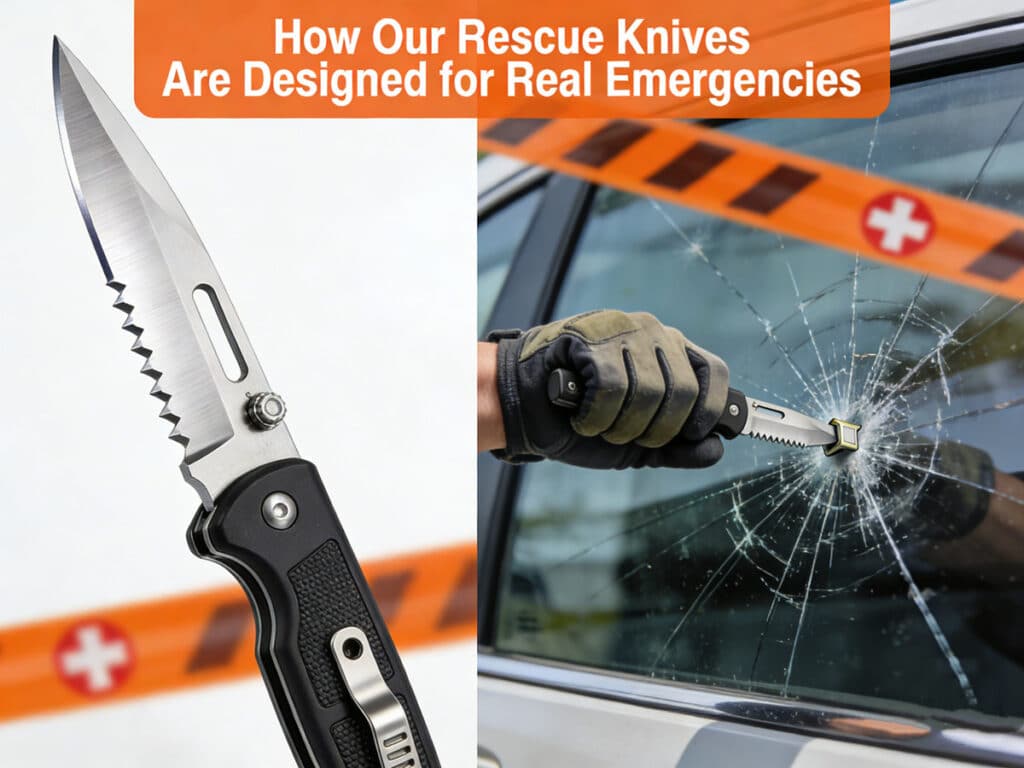
How Our Rescue Knives Are Designed for Real Emergencies
1. Designing for Reality, Not Marketing
Rescue knives are often discussed in abstract terms, framed by promotional language that emphasizes toughness or visual appeal, yet real emergencies rarely unfold in clean, predictable ways, which is why professional design begins with realism rather than marketing narratives. Our approach to rescue knife development starts by examining how people actually encounter emergencies, whether inside vehicles, industrial settings, outdoor environments, or crowded urban spaces, where stress, limited visibility, and reduced fine motor control are common factors. By acknowledging these realities early in the design process, we avoid unnecessary complexity and instead focus on creating tools that function intuitively when seconds matter and clear thinking may be compromised. This philosophy mirrors the way other dependable everyday tools, including tactical pens and structurally simple items like brass knuckles, are evaluated not by appearance but by how naturally they respond to human behavior under pressure.
2. Emergency-Centered Blade Geometry and Cutting Performance
The blade is the heart of any rescue knife, and its geometry must reflect the specific materials and situations it is expected to encounter rather than generic cutting tasks.
Optimized Edges for Emergency Materials
In real emergencies, cutting often involves seatbelts, clothing, ropes, plastic restraints, or soft interior materials rather than clean, static surfaces. Our rescue knives are designed with blade profiles that prioritize controlled cutting through fibrous and flexible materials, reducing the risk of slippage or over-penetration. This approach ensures that the blade performs consistently even when angles are awkward or visibility is limited.
Safety-Oriented Tip Design
Unlike utility or outdoor knives, rescue knives avoid overly sharp, needle-like tips that can increase the risk of accidental injury. Rounded or guarded tips allow users to cut close to the body or trapped individuals with greater confidence, reinforcing the principle that effectiveness in emergencies often comes from restraint rather than raw sharpness.
3. Ergonomics Built for Stressful Conditions
A rescue knife’s handle design is as important as its blade, particularly when used in conditions where hands may be wet, shaking, or gloved.
Grip Security Over Aesthetics
Our designs emphasize grip security through contouring and surface texture that remains comfortable during extended handling while providing sufficient traction in adverse conditions. Overly aggressive textures are avoided, as they can cause discomfort or fatigue, especially during prolonged rescue efforts.
Natural Hand Alignment
Handle geometry is shaped to support natural wrist alignment, minimizing strain and allowing controlled force application even when the user’s posture is compromised. This design consideration reflects an understanding that emergencies rarely allow ideal body positioning.
4. Materials Chosen for Reliability and Longevity
Material selection plays a critical role in ensuring that rescue knives remain dependable over years of carry and use, rather than degrading under environmental stress.
Blade Steels That Balance Strength and Maintenance
The steels used in our rescue knives are selected for their ability to retain functional sharpness while resisting corrosion, recognizing that emergency tools may be stored in vehicles or exposed to moisture and temperature fluctuations. Rather than chasing extreme hardness, we prioritize balanced performance that supports reliability with minimal maintenance.
Handle Materials for Environmental Resistance
Handle materials are chosen to resist cracking, warping, or becoming slippery when exposed to heat, cold, or moisture. This ensures consistent performance regardless of where the knife is stored or deployed.
5. Integration With Everyday Carry Systems
Rescue knives are most effective when they are accessible, familiar, and seamlessly integrated into a user’s broader carry setup.
Carry Options That Encourage Consistent Use
Our designs consider how and where a rescue knife will be carried, offering mounting and storage options that promote accessibility without discomfort. A tool that is left behind because it is inconvenient ultimately fails its purpose, regardless of its technical merits.
Consistency Across EDC Tools
Many users carry multiple tools daily, and consistency in design language and handling characteristics reduces cognitive load during emergencies. Just as tactical pens are valued for their familiar form and predictable function, rescue knives benefit from intuitive operation that does not require conscious thought when time is limited.
6. Designing With Responsibility and Real-World Application in Mind
At the core of our rescue knife design philosophy is a commitment to responsibility, recognizing that emergency tools must support safety rather than create additional risk. By focusing on realistic use cases, controlled cutting performance, ergonomic handling, and durable materials, we aim to deliver tools that inspire confidence through quiet competence rather than exaggerated claims. This perspective aligns with a broader understanding of everyday carry, where even discussions around items such as brass knuckles increasingly emphasize material quality, lawful ownership, and thoughtful design over sensationalism. For those interested in learning more about our design standards and how they apply across a range of professionally crafted EDC tools, the BKM office website at https://brassknucklesmaster.com/ offers deeper insight into our approach to building reliable, purpose-driven equipment designed for real emergencies rather than theoretical ones.