
Mar
History of Weapons
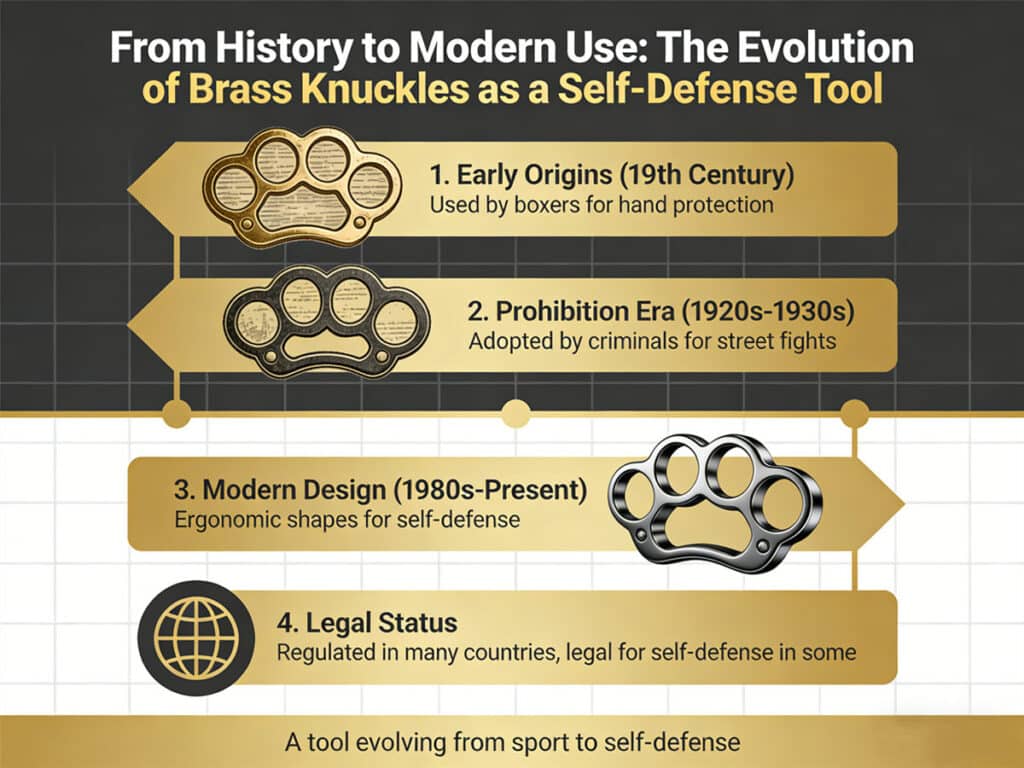
From History to Modern Use: The Evolution of Brass Knuckles as a Self-Defense Tool
1. Early Origins: Reinforcing the Human Fist in Ancient Combat
The story of brass knuckles does not begin with polished metal castings or modern manufacturing processes; rather, it begins with a simple human instinct—to strengthen the natural weapon of the body, the fist. Throughout history, combatants have sought ways to increase striking power while protecting their own hands from injury, leading to the gradual evolution of reinforced hand weapons across multiple civilizations.
Primitive Hand Reinforcements
In ancient Greece and Rome, fighters sometimes wrapped their hands with leather thongs or hardened coverings during boxing matches and gladiatorial contests. The Greek cestus, for instance, incorporated layers of leather that occasionally included hard inserts to amplify impact. While these were not identical to modern brass knuckles, they embodied the same mechanical principle: concentrating force through reinforcement to increase efficiency in close-quarters combat.
Other cultures used cloth wrappings, bone inserts, or hardened materials to shield the knuckles during battle. These early adaptations were practical solutions born out of necessity, as unprotected fists often resulted in fractures or severe hand injuries. The idea of fortifying the hand thus became a recurring theme in the evolution of personal combat tools.
2. The Emergence of Metal Knuckle-Dusters in the 19th Century
The recognizable form of brass knuckles began to appear in the 19th century, particularly during periods of rapid industrialization and urban expansion. Advances in metallurgy and machining made it possible to produce small, durable metal objects efficiently and affordably.
Industrial Manufacturing and Accessibility
As metalworking techniques improved, knuckle-dusters—typically cast in brass for its durability and resistance to corrosion—became more widely available. Their design was simple yet effective: a solid bar with finger holes that fit snugly across the knuckles, distributing impact force and reducing the likelihood of injury to the user’s hand.
The industrial era made it easier for civilians and soldiers alike to acquire compact defensive tools. In environments where personal confrontations were more common, such as crowded cities or frontier territories, portability and concealment were significant advantages.
Military and Civil War Context
During the American Civil War, some soldiers carried knuckle-dusters as secondary weapons for close combat. In certain cases, hybrid designs combined blades with reinforced knuckle guards, creating multipurpose tools suited for battlefield conditions. This marked an important stage in the historical narrative, as brass knuckles transitioned from improvised reinforcements to purpose-built defensive instruments.
3. Cultural Symbolism in the Early 20th Century
As the 20th century progressed, brass knuckles began to take on symbolic meanings that extended beyond their physical function. Urbanization, economic hardship, and organized crime all contributed to shifting perceptions.
Association with Street Defense
In densely populated cities, knuckle-dusters became associated with street altercations and gang conflicts. Their compact size and concealability made them accessible tools in environments where carrying larger weapons was impractical or prohibited. Over time, this association influenced public attitudes and media portrayals.
Media and Pop Culture Representation
Films, novels, and pulp crime stories frequently depicted brass knuckles as tools of vigilantes or criminals, reinforcing a dramatic and sometimes exaggerated image. These portrayals shaped cultural memory, often overshadowing the object’s historical roots as a practical reinforcement device.
This dual identity—practical tool and cultural symbol—played a significant role in how societies approached regulation and public policy regarding possession and use.
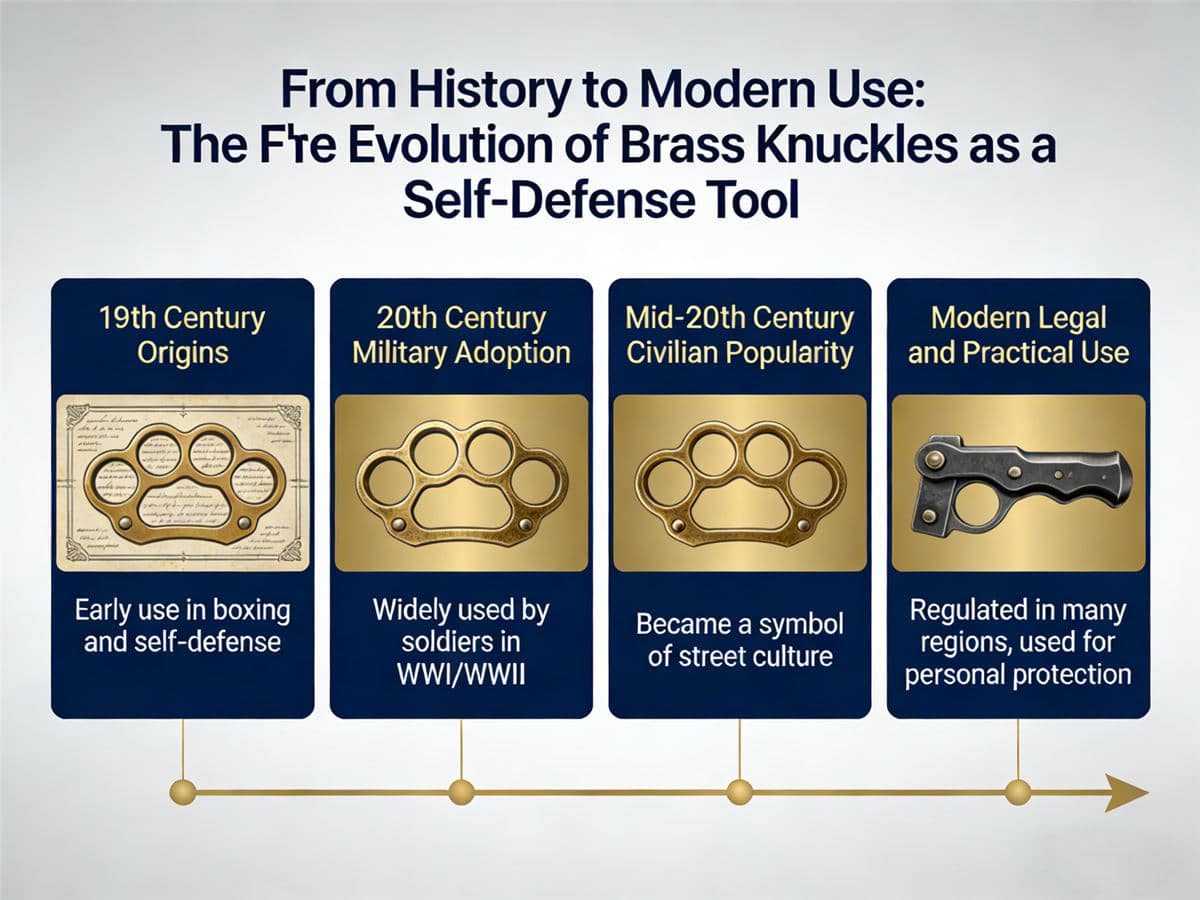
4. Legal Regulation and Modern Policy Perspectives
The growing visibility of brass knuckles in both crime reports and entertainment media prompted legislative responses in many regions.
State and National Restrictions
In the United States, laws governing brass knuckles vary significantly by state. Some jurisdictions classify them as prohibited weapons, while others permit ownership under specific conditions. Internationally, many countries impose strict bans, grouping them with other impact weapons due to their perceived potential for misuse.
These legal variations reflect broader societal debates about personal defense, public safety, and individual rights. The shifting regulatory landscape demonstrates how public perception can influence legislation over time.
The Importance of Legal Awareness
For modern consumers, understanding local laws is essential. Regulations may change, and possession without proper knowledge can result in legal consequences. Responsible ownership requires ongoing awareness and compliance with regional statutes.
5. The Rise of Everyday Carry (EDC) and Contemporary Interest
In recent years, the Everyday Carry movement has revived discussions around compact personal defense tools, including brass knuckles, though often within a more nuanced and legally conscious framework.
Preparedness and Practicality
EDC philosophy emphasizes preparedness and the carrying of items that may prove useful in emergencies. For some enthusiasts, brass knuckles represent a historical artifact of personal defense design, valued for their compactness and mechanical simplicity. However, modern EDC discussions typically stress legality and responsible decision-making.
Material and Design Innovations
Contemporary manufacturing techniques have produced variations in materials, finishes, and ergonomic refinements. While traditional brass remains common, some designs incorporate alternative alloys or aesthetic customization. Despite these updates, the core principle remains unchanged: reinforcing the natural striking surface of the hand to increase force concentration.
Modern interest often blends historical appreciation with contemporary craftsmanship, though practical considerations must always include legal compliance and ethical use.
6. Balancing History, Responsibility, and Modern Perspectives
The evolution of brass knuckles reflects broader themes in human history—innovation driven by necessity, cultural reinterpretation, and regulatory response. What began as a simple reinforcement concept in ancient combat evolved into a recognizable metal device shaped by industrial progress and social dynamics.
Today, discussions surrounding a brass knuckle frequently intersect with debates about personal defense rights and responsible ownership. While some view it as a historical artifact or collectible, others approach it within the context of modern self-defense philosophy. Retail platforms such as brassknucklesmaster.com may provide product information and historical background, yet potential buyers must carefully research local regulations and consider the ethical implications before making any purchasing decision.
From ancient leather wrappings to modern machined metal designs, the journey of brass knuckles illustrates how tools evolve alongside society itself. Their transformation over centuries underscores the enduring human desire for protection, balanced by the equally important need for regulation and accountability in contemporary life.