
Jan
Knowledge of Weapons, Weapons What
Essential Tools for Road Trips & Emergency Preparedness
1. Why Emergency Preparedness Matters on the Road
Road trips are often associated with freedom and discovery, yet even the most carefully planned journey can be disrupted by unpredictable circumstances such as mechanical failure, sudden weather changes, or unexpected detours through remote areas. Emergency preparedness is not about anticipating disaster at every turn, but about acknowledging that travel places you outside controlled environments, where response times may be slower and self-reliance becomes more important. Having the right tools on hand transforms stressful situations into manageable ones, allowing drivers and passengers to respond calmly rather than react in panic, which is often the difference between inconvenience and genuine risk.
2. Vehicle-Based Safety Essentials
Every road trip should begin with a basic set of vehicle-focused tools that address the most common roadside emergencies.
Tire, Power, and Visibility Tools
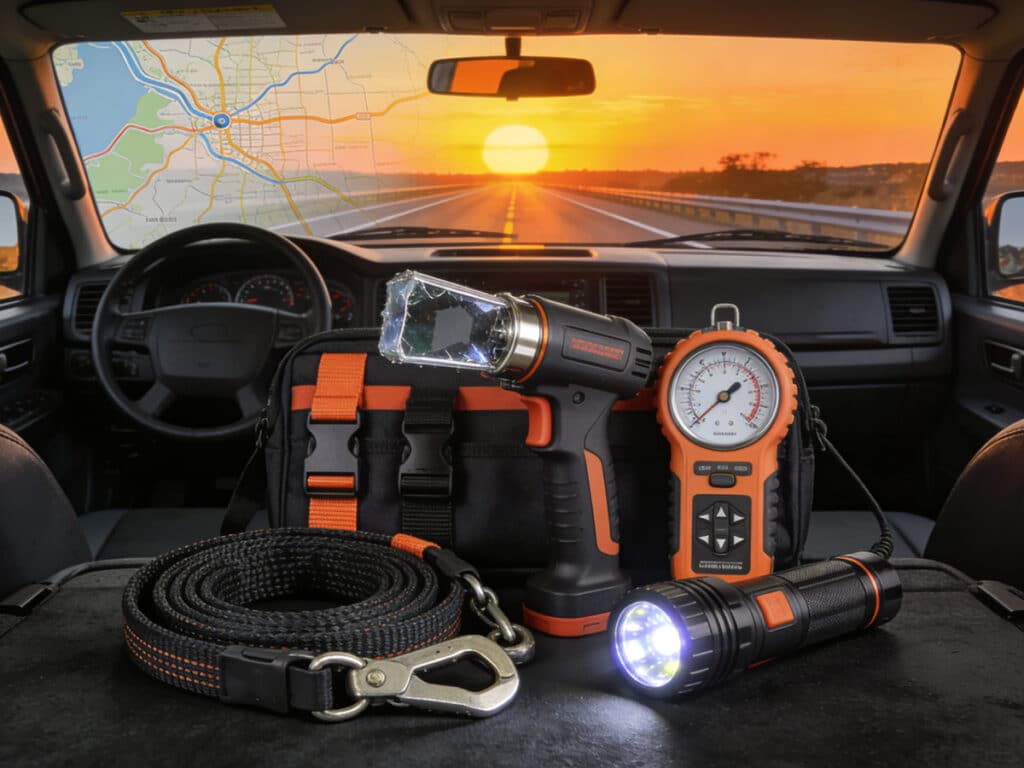
A reliable tire inflator, jumper cables or a portable battery booster, and a high-visibility flashlight form the foundation of any emergency kit. These tools address issues that occur far more frequently than major accidents and can quickly restore mobility or visibility when conditions deteriorate.
Emergency Signaling and Awareness
Reflective triangles, flares, or LED warning lights help alert other drivers to your presence, particularly during night stops or roadside repairs. Visibility is often underestimated, yet it plays a critical role in preventing secondary accidents while a vehicle is stationary.
3. Personal Safety Tools for Unexpected Situations
Beyond vehicle mechanics, personal safety tools offer another layer of preparedness, especially when travel extends into unfamiliar environments.
Compact Tools for Immediate Access
Items designed for personal carry ensure that safety remains accessible even when you are away from the vehicle, whether stopping at a rest area or exploring unfamiliar locations. These tools should be lightweight, discreet, and intuitive, encouraging consistent carry rather than occasional use.
Balancing Discretion and Readiness
The most effective personal tools are those that blend into daily life without drawing attention. This balance allows travelers to remain prepared without feeling encumbered or uncomfortable during routine activities.
4. Cutting, Breaking, and Escape Capabilities
Certain emergencies require rapid action, particularly when mobility or exit is compromised.
Seatbelt Cutters and Glass Breakers
Tools designed for cutting restraints or breaking windows are essential during vehicle-related emergencies, where seconds matter. These devices are engineered to work under stress, requiring minimal force or precision to perform effectively.
Accessibility and Placement
Rescue tools should be placed where they can be reached quickly, even if the vehicle is inverted or visibility is reduced. Accessibility is as important as the tool itself, as a buried device offers little value during critical moments.
5. Everyday Carry Tools That Support Preparedness
Everyday carry items bridge the gap between full emergency kits and personal readiness.
Multi-Function Design and Reliability
Tools that combine multiple functions into a single, compact form reduce clutter while increasing capability. Their value lies not in complexity but in thoughtful design that prioritizes reliability and ease of use.
Tactical Pens as Low-Profile Options
Among EDC items, Tactical Pens are often chosen for their durability and discreet appearance. While commonly used as writing instruments, their solid construction and ergonomic grip allow them to serve secondary roles in emergency scenarios, making them a practical addition to a road trip carry setup.
6. Environmental and Situational Awareness Tools
Preparedness extends beyond physical tools to include awareness of surroundings and conditions.
Navigation and Communication
Offline maps, emergency radios, and backup communication devices help maintain orientation and contact when cellular service is unavailable. These tools support informed decision-making, which is often more valuable than physical intervention.
Weather and Terrain Considerations
Understanding the environment you are traveling through influences which tools matter most. Desert travel, mountainous routes, and winter driving each present unique challenges that should shape preparedness choices.
7. Organization, Maintenance, and Routine Checks
Even the best tools lose value if they are poorly maintained or disorganized.
Storage Systems That Make Sense
Organizing emergency tools into dedicated pouches or compartments reduces response time and frustration. Clear organization ensures that tools can be located quickly, even under stress.
Regular Inspection and Replacement
Batteries should be tested, blades inspected, and components checked periodically. Routine maintenance reinforces reliability and builds familiarity, which contributes to confidence during actual emergencies.
8. Building a Practical, Balanced Emergency Kit
A well-rounded emergency preparedness strategy is built on thoughtful selection rather than excess. Vehicle-based essentials address common breakdowns, while personal carry items ensure readiness beyond the driver’s seat. Discreet tools such as Tactical Pens complement larger safety equipment, and symbolic or compact items like brass Knuckles may be considered by some users as part of a broader everyday carry philosophy focused on awareness and confidence. Ultimately, preparedness is about informed choices, responsible ownership, and realistic expectations. For those exploring durable, thoughtfully designed tools and learning more about everyday carry options, resources like brassknucklesmaster.com offer insight that supports practical decision-making for road trips and emergency readiness alike.