
Feb
Knowledge of Weapons, Weapons What
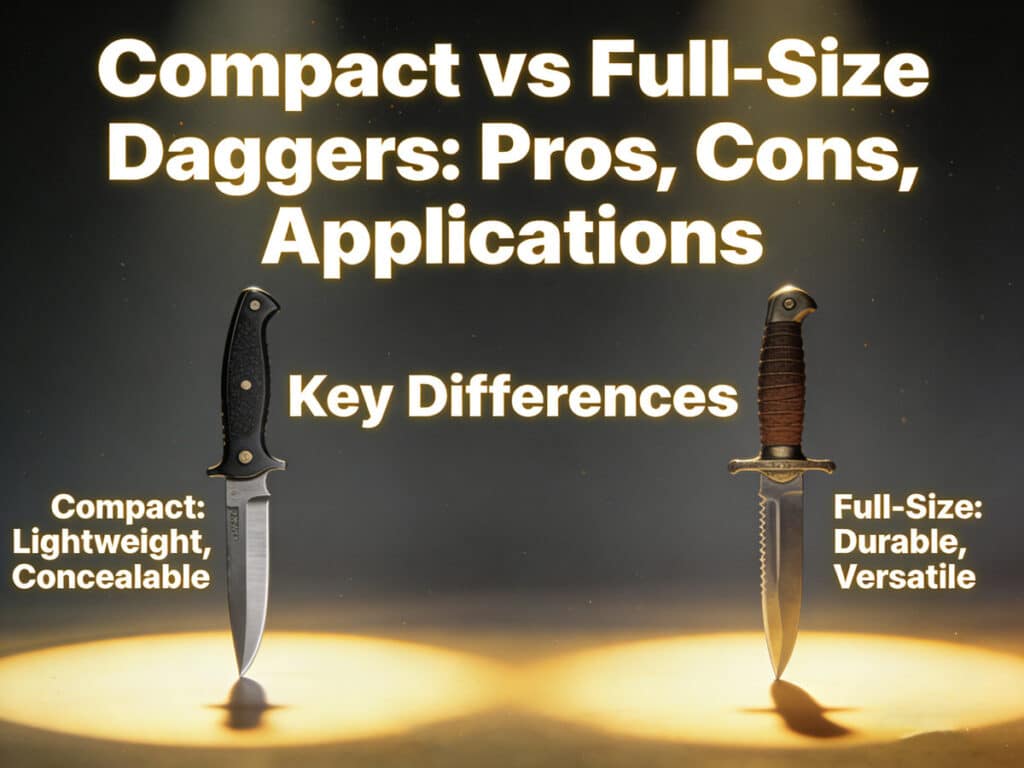
Compact vs Full-Size Daggers: Pros, Cons, Applications
The market for edged tools and collectible blades has evolved significantly over the past decade, shaped by shifting consumer preferences, legal considerations, outdoor lifestyle trends, and the growth of specialized online retail platforms. Among the most frequently debated categories in this space is the distinction between compact daggers and full-size daggers, each of which offers unique advantages depending on intended use, carry requirements, and customer demographics. For business owners, retailers, and product developers operating in the edged tool segment, understanding these differences is essential not only for merchandising strategy but also for inventory planning, compliance management, and brand positioning.
Although daggers are often associated with historical or tactical imagery, in modern commercial contexts they serve diverse roles, ranging from collectible display pieces and reenactment props to outdoor utility tools and personal carry items where legally permitted. Deciding whether to emphasize compact or full-size models in a product lineup requires a practical evaluation of ergonomics, materials, portability, storage, and market demand. The following analysis explores these factors in depth, offering industry-level insights tailored to decision-makers rather than casual enthusiasts.
Design Fundamentals and Structural Differences
At a foundational level, the distinction between compact and full-size daggers begins with overall length, blade proportion, handle configuration, and weight distribution. These characteristics directly influence not only user experience but also packaging, shipping costs, and regulatory classification.
Compact daggers typically feature shorter blades and reduced handle length, making them easier to store, transport, and discreetly display. Their lighter weight contributes to portability and ease of carry, particularly in regions where blade length restrictions apply. Full-size daggers, by contrast, emphasize extended blade reach, more substantial hand guards, and often enhanced visual presence, which can appeal strongly to collectors and specialty buyers.
From a manufacturing standpoint, material selection plays a significant role in cost structure. Larger blades require more raw steel, longer machining cycles, and additional finishing work. This increases production cost but also raises perceived value, particularly when premium steels or ornate handle materials are used. Compact daggers, while requiring precision engineering, typically allow for higher production volume and lower shipping expenses, which can benefit retailers operating on tighter margins.
For businesses expanding into complementary product categories—such as self-defense accessories or novelty items often found alongside brass knuckles in specialty retail environments—the size distinction becomes even more important. Shelf space allocation, visual merchandising, and cross-selling strategies are directly influenced by product footprint.
Portability and Everyday Carry Considerations
One of the primary advantages of compact daggers lies in their portability. Consumers who prioritize discreet storage or limited carry weight often gravitate toward smaller designs. For retailers serving urban markets or regions with restrictive legal frameworks, compact models may align more closely with customer needs.
Ease of Concealment and Storage
Compact daggers are easier to store in small safes, display cases, or portable gear kits. They require less sheath material and often integrate more seamlessly into multipurpose storage solutions. From a distribution perspective, this translates into lower packaging volume and more efficient inventory handling.
Full-size daggers, while more imposing, can present logistical challenges in terms of concealment and transport. Their length may limit portability and restrict usage scenarios depending on local laws. Retailers must ensure that customers are fully informed about compliance requirements, as improper carry can lead to legal complications.
Weight and Balance
Weight distribution is another important consideration. Compact daggers, due to reduced blade length, generally offer lighter overall mass, making them comfortable for extended carry. However, lighter weight may reduce perceived durability in some consumer segments.
Full-size daggers provide a more substantial feel in hand, often appealing to buyers seeking traditional craftsmanship or historical authenticity. For collectors and reenactment communities, this weight can enhance realism and aesthetic satisfaction.
Performance and Functional Applications
While daggers are not typically marketed as general-purpose utility knives, their design characteristics can influence functional performance in various controlled applications such as outdoor use, display, or collection.
Compact daggers may be better suited for situations requiring precise handling and minimal encumbrance. Their shorter blade length can provide improved maneuverability in confined environments, making them practical for controlled cutting tasks where legal and appropriate.
Full-size daggers, by contrast, excel in applications where reach and visual prominence are prioritized. In historical reenactment, theatrical production, or display contexts, a larger blade often aligns more closely with traditional representations.
From a commercial standpoint, understanding customer intent is critical. Retailers who also carry items like brass knuckles or tactical accessories must clearly segment products according to intended use and legal classification, ensuring responsible marketing practices and transparent communication.
Market Demand and Consumer Segmentation
The customer base for daggers is not monolithic. It includes collectors, outdoor enthusiasts, historical reenactors, hobbyists, and in some regions, legally compliant personal defense buyers. Each segment exhibits distinct purchasing behaviors and price sensitivities.
Collector Market
Collectors often favor full-size daggers due to their visual impact and historical accuracy. Ornate handles, engraved blades, and limited-edition runs tend to command premium pricing. Retailers serving this segment may prioritize craftsmanship over portability.
Compact daggers, while smaller, can also attract collectors when designed with artistic detail or thematic coherence. Limited production compact models can create exclusivity without requiring the material investment of full-size designs.
Outdoor and Utility Buyers
Outdoor buyers may prefer compact options for ease of packing and weight management. While daggers are not substitutes for dedicated survival knives, certain compact models can serve as secondary tools within a broader gear system.
Retailers operating through online platforms such as brassknucklemasters.com often observe that customers browsing edged tools may also explore related accessories, making cross-category merchandising an important revenue strategy. In such environments, offering both compact and full-size options allows businesses to capture a wider spectrum of buyer intent.
Operational Considerations for Retailers and Distributors
From a business management perspective, product size influences more than just aesthetics—it affects warehousing, shipping, insurance, and compliance processes.
Compact daggers generally reduce freight costs due to smaller packaging dimensions and lighter weight. This can improve margin performance, particularly in direct-to-consumer e-commerce models. They also allow retailers to stock higher quantities within limited storage space.
Full-size daggers, while potentially higher in retail price, require more careful packaging and may increase shipping expenses. Damage risk during transit can be higher due to blade length, necessitating reinforced packaging materials and stricter quality control protocols.
Insurance considerations also differ. Some jurisdictions classify longer blades under stricter regulatory frameworks, potentially increasing compliance documentation requirements. Retailers must stay informed about local and international shipping regulations to avoid delays or legal exposure.
Strategic assortment planning should therefore balance unit profitability with logistical efficiency. Offering a curated mix of compact and full-size daggers enables businesses to manage inventory risk while appealing to multiple consumer profiles.
Brand Positioning and Long-Term Product Strategy
Ultimately, the decision to emphasize compact or full-size daggers should align with a broader brand strategy. Businesses targeting premium collectors may build their identity around high-end, full-size pieces that showcase craftsmanship and heritage aesthetics. Those focusing on accessibility and everyday practicality may highlight compact models that prioritize portability and affordability.
Product photography, descriptive content, and compliance disclosures all play important roles in responsible marketing. Clear communication regarding blade dimensions, materials, and intended use enhances consumer trust and reduces return rates.
As the edged tool market continues to evolve, diversification remains a prudent strategy. Maintaining a balanced portfolio allows retailers to adapt to regulatory shifts, seasonal trends, and changing consumer preferences without overexposing capital to a single product category.
In evaluating compact versus full-size daggers, business owners should focus on operational efficiency, legal compliance, customer segmentation, and margin sustainability rather than purely aesthetic considerations. A thoughtful approach to inventory selection, combined with transparent and responsible marketing practices, positions retailers for steady growth in a competitive and highly scrutinized market environment.