
Dec
Knowledge of Weapons, Weapons What
Brass Knuckles vs. Other Self-Defense Gear: Which Should You Choose?
Brass Knuckles vs. Other Self-Defense Gear: Which Should You Choose?
In a world where personal safety is an ever-present concern, selecting the right self-defense tool can mean the difference between feeling empowered and being caught off guard. With countless options flooding the market—from chemical deterrents to melee weapons—many people find themselves debating which gear aligns best with their lifestyle, comfort level, and safety needs. Among these choices, brass knuckles stand out as a classic yet controversial option, often pitted against more modern tools like pepper spray, expandable batons, and tactical gear. This comprehensive comparison will unpack the key factors that set brass knuckles apart from other self-defense tools, helping you make an informed decision that prioritizes your safety without compromising practicality or legality.
I. The Core Purpose of Self-Defense Gear: What to Prioritize
Before diving into specific tools, it’s critical to define the foundational goals of any self-defense device: deterrence, accessibility, ease of use, and minimizing risk (both to yourself and others). The ideal tool should allow you to respond quickly to a threat, require minimal training to use effectively, and align with local laws to avoid legal consequences. For most people, non-lethal options are preferred, as they reduce the risk of permanent harm or criminal liability. With these priorities in mind, we can evaluate how brass knuckles stack up against other popular self-defense gear, weighing their unique advantages and drawbacks in real-world scenarios.
II. Brass Knuckles: A Closer Look at Design and Function
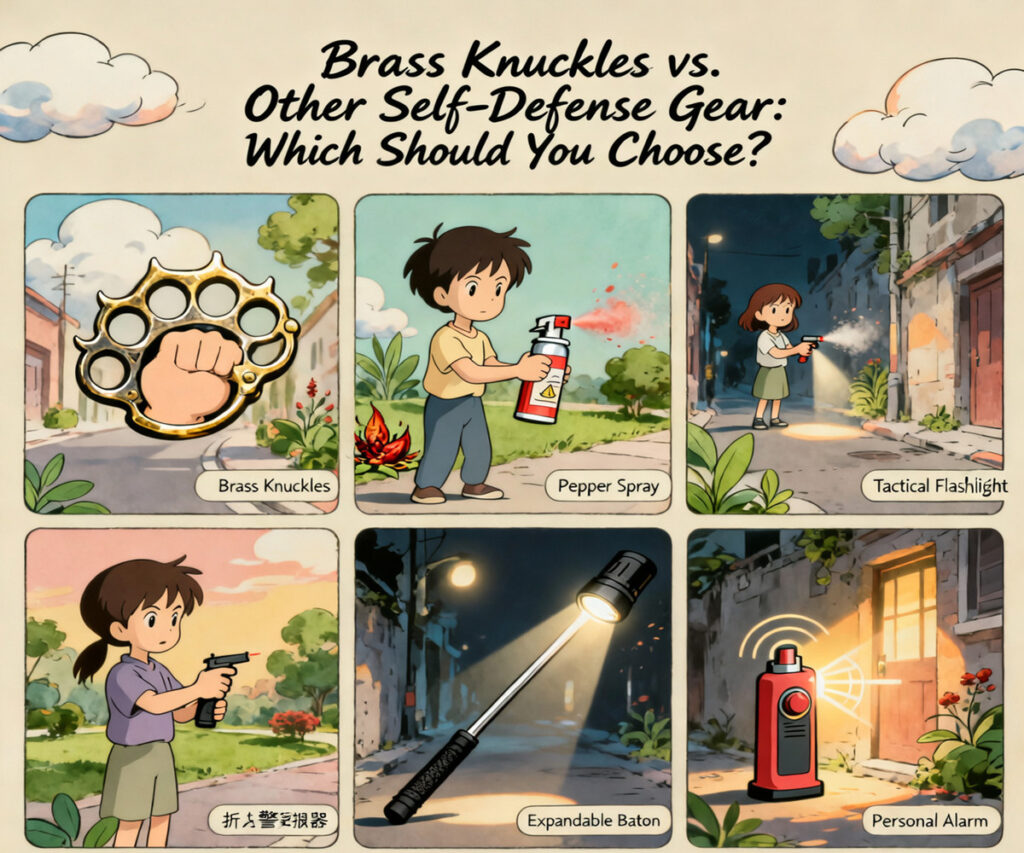
Brass knuckles (also known as knuckle dusters) are compact, hand-held weapons typically made of metal (brass, steel, or aluminum) designed to fit over the knuckles, amplifying the force of a punch. Their simple yet effective design has made them a staple in self-defense for decades: by concentrating impact on a small surface area, they can deliver significant blunt-force trauma to an attacker, disabling them without requiring excessive strength from the user. Unlike bulky tools, brass knuckles are ultra-portable—fitting easily in a pocket, purse, or waistband—and require no assembly or activation, making them accessible in high-stress situations where every second counts. However, their effectiveness hinges on the user’s willingness to engage in close-quarters combat, as they require physical contact with the attacker, which may not be ideal for those who prefer to maintain distance.
III. Comparing Brass Knuckles to Other Self-Defense Gear
Pepper Spray: The Non-Lethal Distance Tool
Pepper spray (or OC spray) is one of the most popular self-defense tools globally, and for good reason: it delivers a chemical irritant that causes temporary blindness, coughing, and skin inflammation, allowing the user to escape without physical contact. Unlike brass knuckles, pepper spray works at a distance (typically 10–15 feet), making it ideal for users who want to avoid close combat. It requires minimal training—just point and spray—and is legal in most regions, even for minors in some cases. However, pepper spray has notable limitations: wind can redirect the spray, affecting the user instead of the attacker; it may be ineffective against attackers under the influence of drugs or alcohol; and it offers no physical deterrence if the attacker closes in before deployment. For those prioritizing distance and non-lethal force, pepper spray is a strong alternative to brass knuckles, but it lacks the tactile impact that some users seek for self-assurance.
Expandable Batons: The Extended Melee Option
Expandable batons (telescopic batons) bridge the gap between brass knuckles and pepper spray, offering both physical impact and extended reach (up to 26 inches when fully extended). Like brass knuckles, they deliver blunt-force strikes, but their length allows users to maintain distance from attackers, reducing the risk of being grappled. They are also collapsible for portability, though bulkier than brass knuckles when collapsed. However, expandable batons require more training than brass knuckles or pepper spray—users must master the extension mechanism and proper striking technique to avoid injury or disarmament. They are also subject to stricter legal restrictions in many areas, often classified as prohibited weapons in the same category as brass knuckles. For users comfortable with moderate training and seeking a balance of reach and impact, expandable batons are a viable alternative, but they lack the discreetness of brass knuckles.
Personal Alarms: The Deterrence-First Choice
Personal alarms are non-violent self-defense tools that emit a loud, high-pitched sound (up to 130 decibels) to attract attention and deter attackers. They require no physical contact or training—just a press of a button—and are legal everywhere. Unlike brass knuckles, which rely on offensive action, personal alarms focus on passive deterrence, leveraging the attacker’s desire to avoid witnesses. However, they offer no direct means of disabling an attacker; if the alarm fails to attract help, the user may be left vulnerable. Personal alarms are best suited as a supplementary tool rather than a primary defense, making them less effective than brass knuckles for users who need to actively disable a threat.
IV. Key Factors to Guide Your Decision
When choosing between brass knuckles and other self-defense gear, three critical factors should dominate your decision: legal compliance, personal comfort, and lifestyle compatibility. Laws regarding brass knuckles vary drastically by region—many places ban them outright, while others classify them as “dangerous weapons” requiring permits. Before purchasing any tool, research local regulations to avoid fines or criminal charges. Next, consider your comfort with physical confrontation: if you hesitate to engage an attacker directly, brass knuckles (and expandable batons) may not be the best fit, as they require active use. Finally, evaluate how the tool fits your daily life: brass knuckles are ideal for discreet carry in urban settings, while pepper spray may be more practical for outdoor activities like hiking. Training is also a key consideration—brass knuckles require minimal practice, but tools like expandable batons demand proficiency to be effective.
V. Finding the Right Tool for Your Safety
Ultimately, the best self-defense gear is the one you feel confident using, can carry consistently, and use within the bounds of the law. Brass knuckles excel in discreetness, simplicity, and raw impact, making them a strong choice for users comfortable with close-quarters combat and living in regions where they are legal. However, they are not a one-size-fits-all solution—pepper spray offers safer distance, expandable batons provide reach, and personal alarms offer passive deterrence. For many users, a combination of tools may be the most effective strategy: pairing a brass knuckle for close-range defense with a tactical pen (a discreet, multi-functional tool that doubles as a writing instrument and striking device) ensures versatility in different scenarios. Whether you choose brass knuckles or an alternative, the most important step is to invest time in understanding your tool, practicing its use, and staying informed about safety best practices—because true self-defense empowerment comes from preparation, not just gear.