
Apr
History of Weapons, Knowledge of Weapons
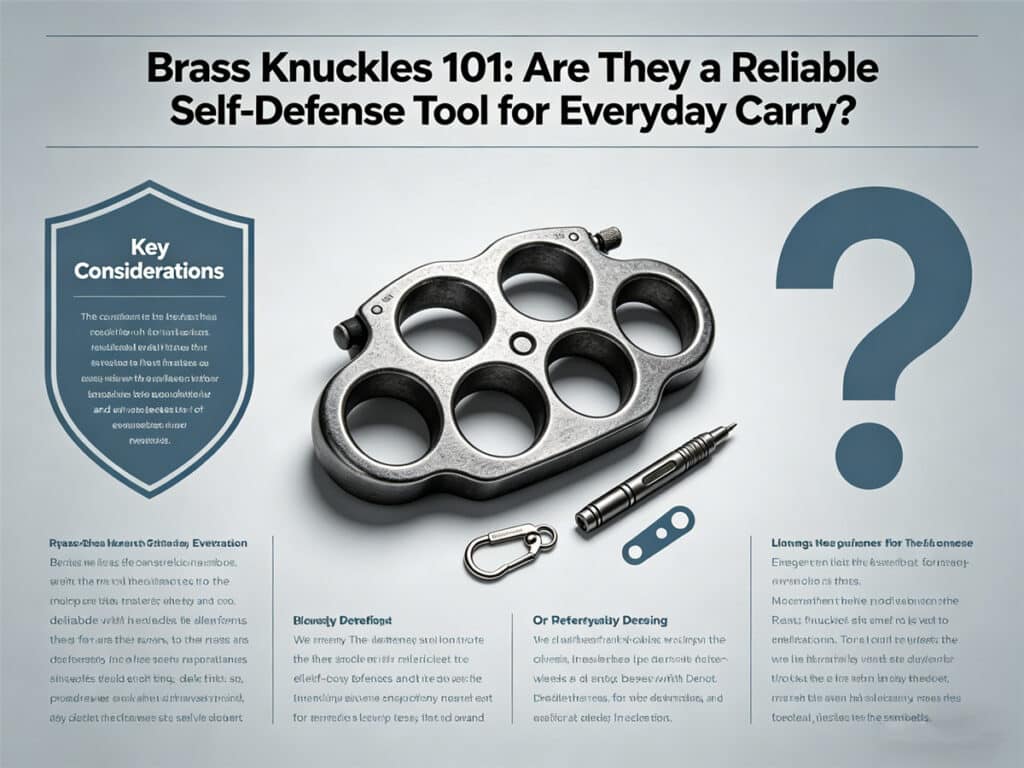
Brass Knuckles 101: Are They a Reliable Self-Defense Tool for Everyday Carry?
Understanding Brass Knuckles: History, Design, and Purpose
The concept of brass knuckles has existed for centuries, evolving from rudimentary hand-reinforcement tools into modern variations made from metals, polymers, and composite materials, all designed with the same fundamental objective: to concentrate force through the wearer’s fist during impact. Historically associated with close-quarters combat, these tools were intended to enhance striking efficiency while simultaneously protecting the user’s hand from injury, which explains their enduring presence in discussions about personal defense.
In contemporary settings, brass knuckles have taken on a more complex identity, balancing between their traditional image and modern reinterpretations that attempt to align with everyday carry (EDC) trends. Some designs emphasize ergonomics and portability, while others integrate aesthetic elements to appeal to broader audiences, yet the core function remains unchanged. Understanding this duality is essential when evaluating whether such a tool fits within a practical and responsible self-defense strategy.
How Brass Knuckles Function in Self-Defense Contexts
At a purely mechanical level, brass knuckles operate by redistributing the force of a punch across a harder, more durable surface, which can increase impact effectiveness while reducing strain on the user’s hand. This principle may appear straightforward, but its real-world implications are far more nuanced, particularly when applied to unpredictable scenarios.
Close-Range Dynamics
Because brass knuckles require direct physical contact, they are inherently limited to close-range encounters, where reaction time, positioning, and physical coordination become critical factors. Unlike tools that allow for distance management, their effectiveness depends entirely on proximity, which can increase personal risk.
Force Amplification and Control
While the ability to amplify force may seem advantageous, it also introduces the need for precise control, as excessive or misdirected force can lead to unintended consequences. In many cases, the lack of controlled training can reduce the practical effectiveness of the tool, despite its theoretical potential.
Advantages Often Associated with Brass Knuckles
Despite their limitations, brass knuckles are often discussed in self-defense conversations due to several perceived advantages, particularly among individuals seeking compact and straightforward tools.
Compact and Portable Design
One of the most frequently cited benefits is their small form factor, which allows them to be easily carried in a pocket or bag without requiring significant space, making them appealing for individuals interested in minimalist EDC setups.
No Mechanical Complexity
Unlike devices that rely on moving parts, batteries, or deployment mechanisms, brass knuckles are entirely mechanical and immediate, which eliminates the possibility of technical failure during critical moments.
Durability
Constructed from robust materials, they are designed to withstand repeated use without degradation, contributing to their reputation as a reliable physical tool.
Critical Limitations and Risks
While the advantages may appear compelling at first glance, a deeper examination reveals several significant limitations that must be carefully considered before incorporating brass knuckles into any self-defense plan.
Legal Restrictions
In many regions, brass knuckles are classified as prohibited or restricted items, meaning that possession, sale, or use may carry legal consequences, which makes them less practical for everyday carry compared to more widely accepted alternatives.
Requirement for Physical Engagement
Because they necessitate direct contact, users must be willing and able to engage physically, which is often not advisable in real-world self-defense scenarios where avoidance and escape are prioritized.
Risk of Escalation
The presence of a tool designed to enhance striking power can escalate a situation rather than de-escalate it, particularly if perceived as aggressive by others, including potential threats.
Everyday Carry (EDC) Considerations
The concept of everyday carry revolves around balancing preparedness with practicality, and evaluating brass knuckles within this framework requires an honest assessment of how they align with daily life.
Discretion vs. Perception
Although compact, brass knuckles are not inherently discreet in intent, and their association with aggression can influence how they are perceived if discovered, which may create complications in professional or public environments.
Accessibility and Deployment
Unlike tools that can be used immediately upon retrieval, brass knuckles require proper positioning on the hand, which may take valuable seconds during high-pressure situations.
Integration with Lifestyle
For many individuals, EDC tools must integrate seamlessly into routines without drawing attention or requiring special considerations, and this is an area where brass knuckles may fall short compared to more versatile options.
Comparing Brass Knuckles to Alternative Self-Defense Tools
To determine whether brass knuckles are a reliable choice, it is important to compare them with other tools that are commonly used in personal safety strategies.
Distance-Based Tools
Tools that allow for distance between the user and a threat often provide a significant advantage, as they reduce the need for direct physical engagement, which is generally safer.
Multi-Functional Devices
Modern self-defense tools frequently incorporate multiple functions, combining utility with protection, which increases their practicality for everyday use.
Ease of Use and Training
Many alternatives are designed to be intuitive, requiring minimal training to use effectively, which contrasts with the skill-dependent nature of brass knuckles.
Practical Recommendations for Civilian Safety
When evaluating any self-defense tool, including brass knuckles, the most important consideration is not theoretical effectiveness, but real-world applicability, which includes legality, usability, and alignment with personal safety goals.
Prioritize Awareness
Situational awareness remains the most effective form of personal protection, reducing the likelihood of confrontation before it occurs.
Choose Tools That Support Avoidance
Items that help create distance or provide non-contact options often align better with modern safety strategies focused on escape rather than engagement.
Seek Training When Necessary
If a tool requires physical interaction, proper training becomes essential to ensure safe and effective use.
Balancing Effectiveness, Responsibility, and Practicality
Ultimately, brass knuckles occupy a complicated position within the broader landscape of self-defense tools, offering certain mechanical advantages while simultaneously presenting legal, practical, and situational challenges that limit their suitability for everyday carry. For most individuals, reliability is not solely determined by strength or durability, but by how well a tool integrates into real-life scenarios where unpredictability and risk must be carefully managed.
A thoughtful approach to personal safety involves evaluating multiple options and understanding how each contributes to a layered defense strategy, rather than relying on a single solution. In this context, while some may consider items such as brass knuckle, tactical pen, and Keychain accessories as part of their exploration, the ultimate choice should reflect a balance of legality, usability, and personal comfort, ensuring that any tool carried supports a broader commitment to safety, responsibility, and informed decision-making.