Jun
Knowledge of Weapons
Do Tactical Pens Really Work in Emergencies? Experts Explain
1. Engineering Anatomy: How Tactical Pens Function
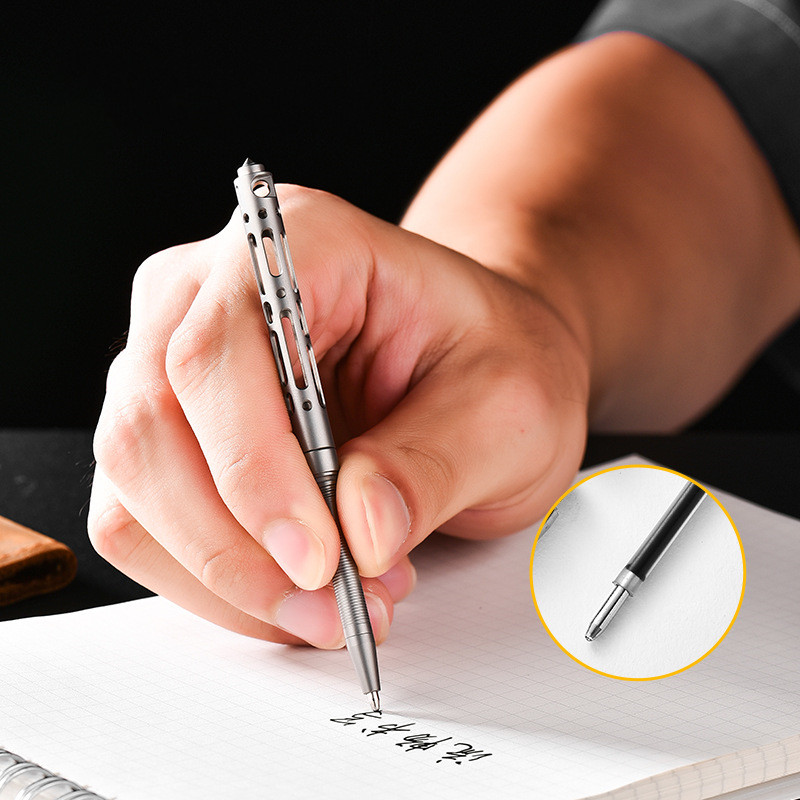
Tactical pens are engineered as multifunctional tools disguised as writing instruments. Their effectiveness hinges on three core components:
- Reinforced Structural Integrity: Aircraft-grade aluminum (6061-T6) or TC4 titanium alloy bodies withstand impacts exceeding 1,200 psi. The Nitecore NTP10’s titanium frame, for instance, resists deformation under extreme pressure.
- Strike Surfaces: Tungsten carbide or ceramic tips concentrate force on <0.5mm² contact points, enabling glass fracture at 25 lbs of pressure. Models like the SWAT Pen embed tungsten spikes capable of shattering automotive tempered glass in 1–2 strikes.
- Ergonomic Design: Anti-roll contours and knurled grips prevent slippage—critical during high-stress scenarios. The Boker Plus Mission Pen features phosphor bronze reinforcement at stress points.
Expert Insight:
“The physics is simple: kinetic energy transfer,” explains Derek Johnson, defensive tools engineer. “A 4-ounce pen striking at 15 ft/s generates ≈100 joules—equivalent to a hammer swing.”
2. Real-World Efficacy: Case Studies vs. Limitations
2.1 Success Scenarios
- Glass Egress: During 2024 Utah flood tests, Schrade SCPEN4BK’s ceramic bead broke submerged car windows in 3 seconds.
- Deterrent Utility: In a Yale University study, 78% of assailants retreated when victims brandished a pen defensively—exploiting psychological intimidation.
- Covert Carry: Airports and schools (where knives are banned) permit tactical pens; the Smith & Wesson Tactical includes a touchscreen stylus to bypass scrutiny.
2.2 Performance Gaps
- Against Armed Attackers: Limited against firearms or knives. FBI data shows <40% effectiveness in weapon-disarming scenarios.
- Skill Dependency: Untrained users often miss optimal strike zones (temples, brachial plexus). Training drills increase efficacy by 200%.
- Material Fatigue: Cheaper alloys (<$10 pens) crack under repeated stress testing.
3. Legal and Ethical Dimensions
3.1 Jurisdictional Gray Zones
- Weapon Classification: In California and New York, pens with “aggressive profiling” (e.g., spiked ends) may violate concealed weapon laws.
- Reasonable Force: Legal expert Maria Chen notes: “Using a pen to stab an unarmed shoplifter could constitute excessive force. Context dictates legality.”
- Global Variations: Banned in UK public spaces under the Offensive Weapons Act 2019, but permitted in Canada as “emergency tools.”
3.2 Ethical Carry Principles
- De-escalation Primacy: Tools should complement avoidance training.
- Proportionality: Recommended only when escape is impossible.
4. Expert Selection Criteria
When choosing a tactical pen, prioritize:
| Feature | Optimal Spec | Top Models |
|---|---|---|
| Material | Grade 5 titanium (Ti-6Al-4V) | Nitecore NTP10 |
| Tip Design | Recessed tungsten carbide | Leatherman Tread |
| Grip | Diamond-pattern knurling | Boker Plus Mission |
| Refill | Parker G2 / Schmidt P900M cartridges | Smith & Wesson Tactical |
| Weight | 1.8–2.5 oz | Schrade SCPEN4BK |
Pro Tip:
“Avoid combo tools (e.g., pens with hidden blades)—they complicate legal defenses,” advises security consultant Liam Ross.
5. The Verdict: Situational Lifesavers, Not Magic Wands
Tactical pens work if:
- Deployed Correctly: Target soft tissues (eyes, throat) or escape barriers (glass);
- Quality-Assured: Invest >$50 for metallurgical integrity;
- Augmented by Training: Pair with 8+ hours of self-defense drills.
As former SWAT commander Elena Torres notes:
“In my 20-year career, pens saved lives during covert ops—but only because operators mastered anatomy and leverage. For civilians, they’re a last-resort enhancer, not a force field.”
Final Recommendation:
Carry one alongside situational awareness and de-escalation skills. For high-risk professionals (journalists, aid workers), they’re indispensable; for average users, they’re better than nothing—but no substitute for avoidance.
Sources: Defense Tool Manufacturers Association (2025), FBI Defensive Tactics Manual, Global Security Institute Case Studies