
Dec
Knowledge of Weapons, Weapons Why
Brass Knuckles for Women: Are They Practical, Comfortable, and Effective?
1. Framing the Question in a Modern Context
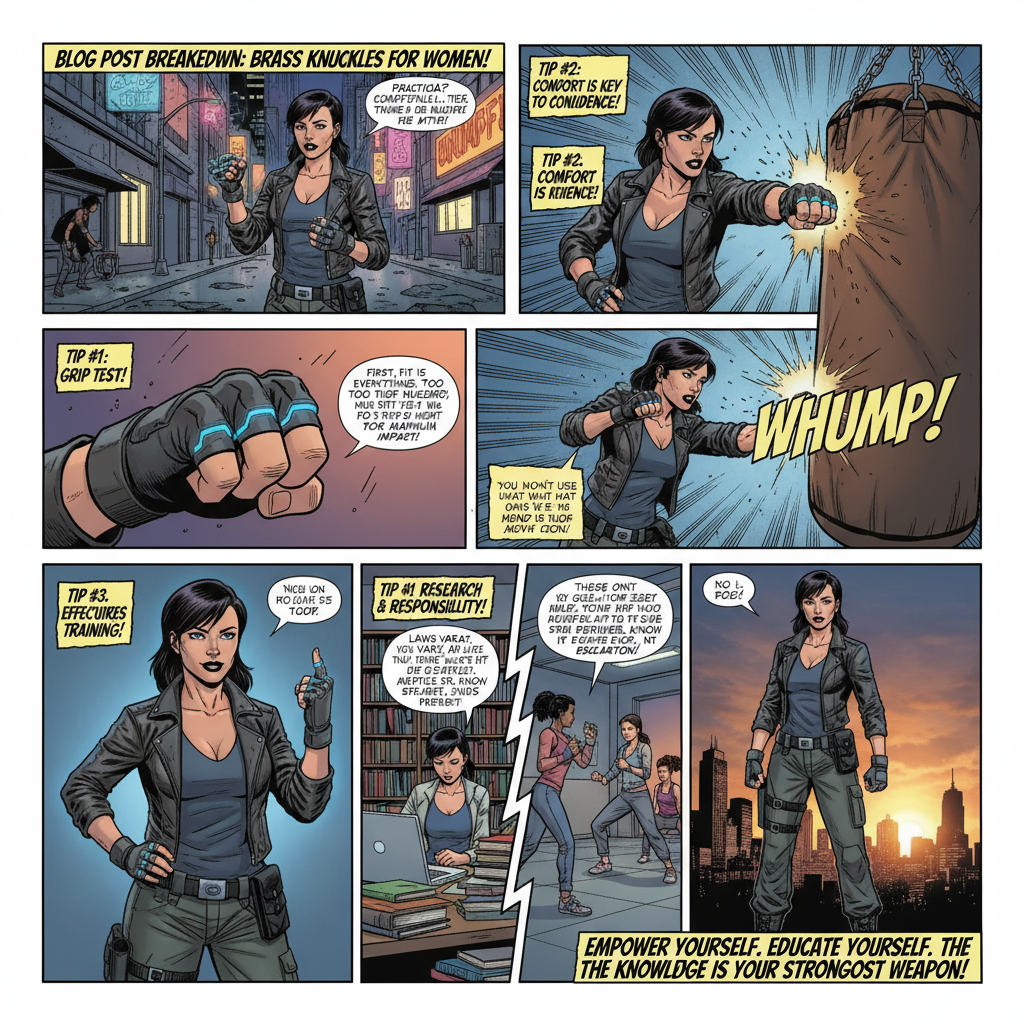
As conversations around personal safety become increasingly nuanced and inclusive, many women are reassessing traditional self-defense tools through the lens of practicality, comfort, and long-term responsibility rather than raw power or symbolic toughness, and within this evolving dialogue, brass knuckles often surface as a controversial object that raises more questions than answers. Historically associated with close-quarters defense and cultural imagery of strength, brass knuckles today sit at the intersection of legality, ergonomics, and ethical self-defense philosophy, making them particularly complex when evaluated for women’s everyday safety needs. Rather than assuming effectiveness based on reputation alone, a thoughtful examination requires understanding how real-world factors—such as hand size, grip comfort, emotional readiness, and legal exposure—shape whether such a tool is appropriate or even beneficial in modern life.
This discussion does not aim to promote or discourage ownership outright, but instead seeks to unpack whether brass knuckles genuinely align with the practical realities women face when considering personal safety, especially in environments where discretion, legality, and proportional response matter more than raw physical reinforcement.
2. Historical Perception Versus Contemporary Reality
2.1 Where the Image Comes From
The popular image of brass knuckles is deeply influenced by media portrayals, historical anecdotes, and cultural symbolism that emphasize toughness and confrontation, often detached from the actual conditions under which people navigate daily life today. These portrayals tend to present brass knuckles as equalizers, implying that compact size automatically translates to effective self-defense, yet this narrative rarely accounts for the emotional, legal, and situational complexity of real encounters, particularly those involving women in public or professional environments.
2.2 Shifting Expectations of Self-Defense
Modern self-defense philosophy increasingly emphasizes awareness, avoidance, and de-escalation, placing less importance on tools that require close physical engagement, and this shift fundamentally alters how brass knuckles are evaluated. For many women, personal safety strategies prioritize maintaining distance, preserving mobility, and avoiding legal complications, which contrasts sharply with tools historically designed for direct physical confrontation.
3. Practicality in Everyday Scenarios
3.1 Carry Considerations
One of the first practical questions women ask is whether brass knuckles can be carried discreetly and responsibly within the rhythms of everyday life, including work environments, social settings, and travel situations. Because brass knuckles are visually distinctive and often classified as prohibited or restricted items in many regions, carrying them can create logistical challenges that undermine their perceived convenience, especially when compared to everyday objects that blend naturally into personal belongings.
3.2 Accessibility Under Stress
Practicality also involves how easily an object can be accessed during moments of stress, and tools that require deliberate positioning or specific hand alignment may be less reliable when adrenaline rises and fine motor skills diminish. This reality is particularly relevant for individuals who do not regularly train under stress conditions, as the gap between theoretical effectiveness and real-world usability can be significant.
3.3 Situational Limitations
Brass knuckles are inherently designed for extremely close-range interaction, which means their practical usefulness depends heavily on scenarios that many women actively seek to avoid, such as confined physical struggle. For those whose safety strategies emphasize early recognition of risk and maintaining physical distance, this limitation becomes a central concern.
4. Comfort, Ergonomics, and Physical Fit
4.1 Hand Size and Grip Dynamics
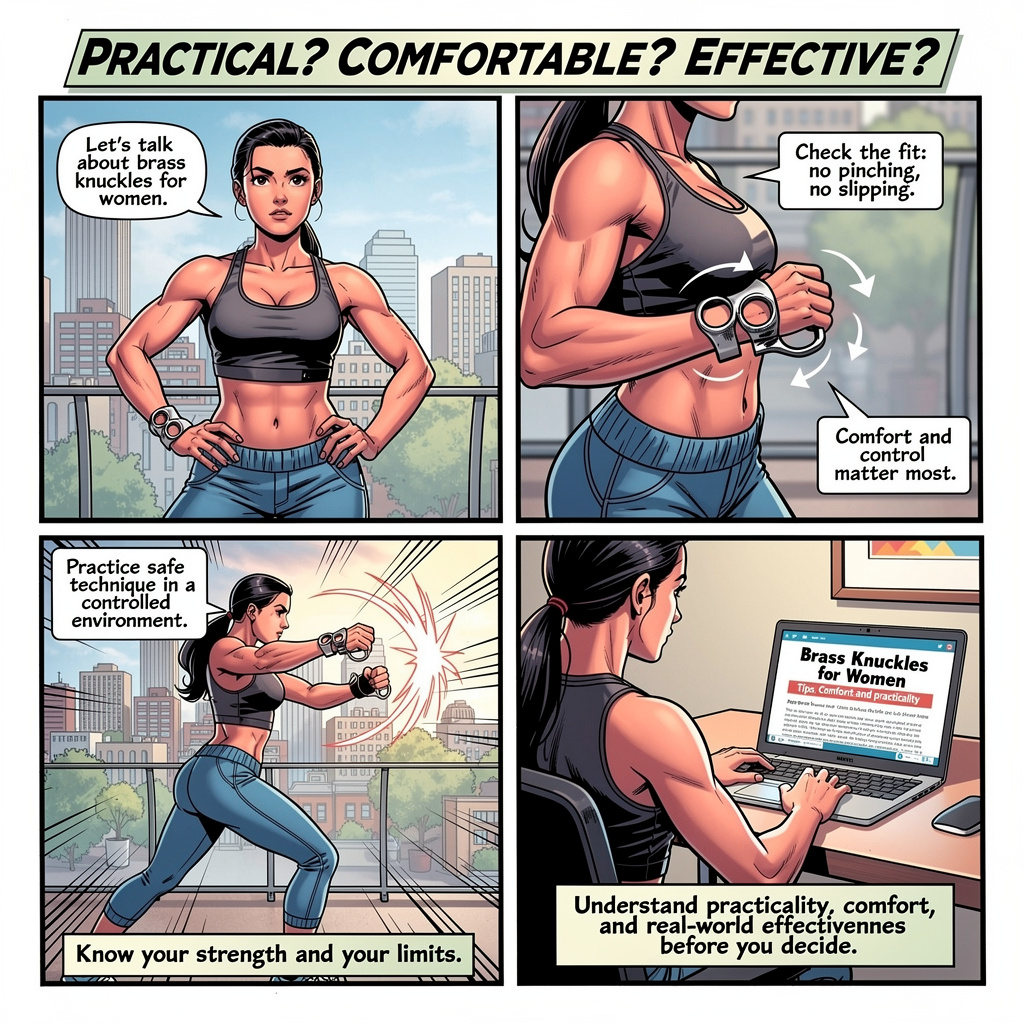
Comfort is often overlooked in discussions about self-defense tools, yet it plays a critical role in whether a device can be used safely and confidently, and brass knuckles, with their rigid finger holes and fixed dimensions, may not accommodate the wide variation in women’s hand sizes. Poor fit can lead to discomfort, restricted circulation, or difficulty maintaining a natural grip, all of which undermine confidence rather than enhance it.
4.2 Long-Term Carry Comfort
Even outside of high-stress situations, carrying an object daily requires that it feel unobtrusive, lightweight, and compatible with clothing choices, and many women find that brass knuckles conflict with these requirements. Whether stored in a bag or carried discreetly, their shape and weight may create discomfort or inconvenience that discourages consistent carry, reducing their practical value over time.
4.3 Psychological Comfort and Confidence
Comfort is not purely physical; psychological comfort matters just as much, and some women report feeling uneasy carrying objects strongly associated with violence or legal risk. Confidence in a self-defense tool comes not from fear or aggression but from trust that the object aligns with personal values, emotional readiness, and realistic safety goals.
5. Effectiveness Through the Lens of Safety and Responsibility
5.1 Effectiveness Beyond Physical Impact
While discussions of effectiveness often focus narrowly on physical impact, responsible self-defense evaluates effectiveness in terms of risk reduction, escape opportunity, and legal aftermath, and from this broader perspective, brass knuckles present significant challenges. Their use inherently involves close contact and potential for serious injury, which increases legal and ethical stakes even in situations where self-defense may be justified.
5.2 Legal Implications and Risk Exposure
Effectiveness cannot be separated from legality, and brass knuckles occupy a legally sensitive space in many jurisdictions, where possession alone may carry penalties regardless of intent. For women seeking peace of mind rather than additional anxiety, this legal uncertainty can erode the sense of safety a self-defense tool is supposed to provide.
5.3 Training and Responsibility
True effectiveness also depends on training, emotional control, and situational judgment, and tools that demand high levels of responsibility without offering proportional benefits may not serve beginners or those without access to professional instruction. Many self-defense educators caution that reliance on tools perceived as force multipliers can distract from developing the awareness and decision-making skills that prevent danger in the first place.
6. Alternatives and the Broader Self-Defense Landscape
6.1 The Rise of Discreet Defensive Tools
As women increasingly seek self-defense options aligned with modern lifestyles, interest has grown in tools that prioritize discretion, legality, and everyday integration, reflecting a shift away from objects that signal aggression or invite scrutiny. This evolution highlights the importance of selecting tools that support calm confidence rather than escalating risk.
6.2 Non-Tool-Based Safety Strategies
It is also important to recognize that many effective safety strategies do not involve tools at all, including situational awareness, boundary-setting, environmental scanning, and stress management techniques that enhance clarity under pressure. These skills empower women across all environments, regardless of what they carry, and often reduce reliance on physical interventions altogether.
6.3 Personal Fit Over Cultural Narrative
Ultimately, the best self-defense choice is one that fits the individual rather than conforming to cultural narratives about toughness or empowerment. Women benefit most from options that align with their daily routines, emotional comfort, and legal environment, reinforcing safety without introducing unnecessary complications.
7. A Balanced Perspective on Choice and Preparedness
When evaluated through the combined lenses of practicality, comfort, and effectiveness, brass knuckles present a complex and often conflicting picture for women seeking reliable self-defense options, particularly in a world where legal scrutiny, social context, and personal values weigh as heavily as physical capability. While they carry historical significance and cultural symbolism, their modern application raises questions that extend far beyond physical reinforcement, encouraging deeper reflection on what true preparedness means. For many women, this reflection leads toward tools and strategies that emphasize discretion, adaptability, and risk awareness, whether that involves comparing options like a tactical pen, which blends into everyday life, or understanding the regulated, professional context of a baton, rather than relying on objects whose reputation may outweigh their practical benefits. In the end, informed choice, grounded in responsibility and self-knowledge, remains the most effective foundation for personal safety.